 lukman-hakim
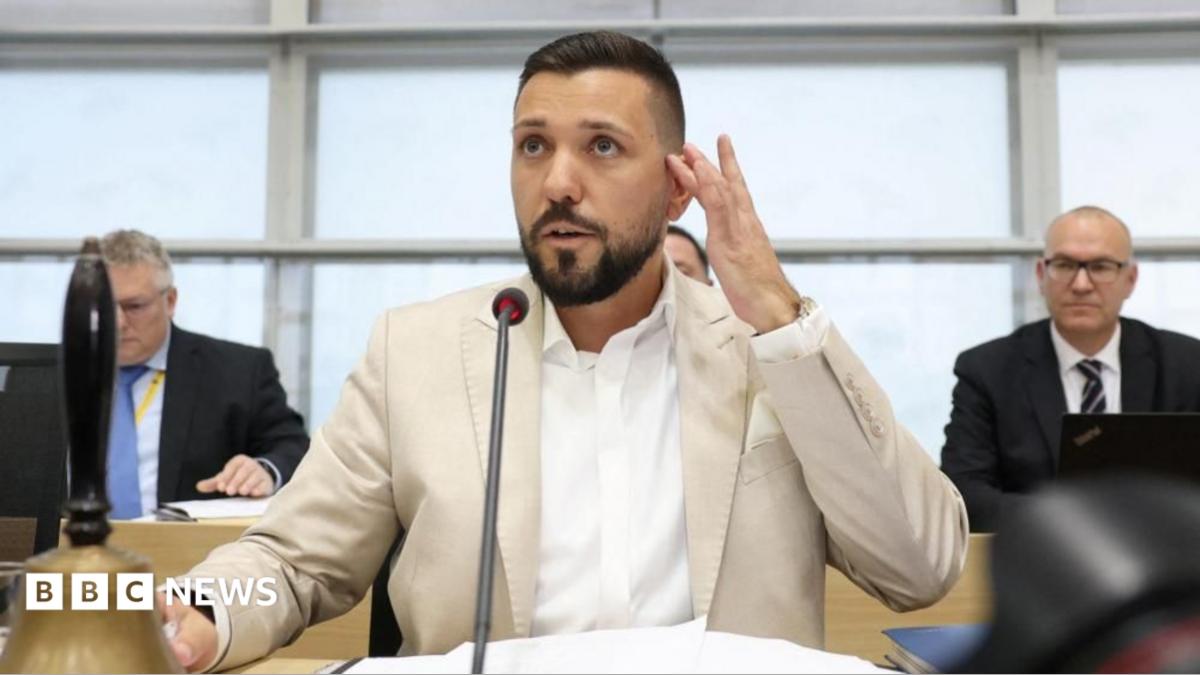
For the first time in Germany's post-war history, a far-right party has captured the speaker's chair of a regional parliament. Tobias Rausch, a 35-year-old representative of the Alternative for Germany (AfD), was elected on Tuesday to lead the state parliament of Saxony-Anhalt, marking a symbolic but deeply significant milestone in the party's steady march toward mainstream institutional power.
The vote came roughly one month after the AfD scored a decisive victory in the eastern state's elections, a result that stunned established parties and intensified debate over Germany's long-standing "firewall" against cooperating with the far right. Although the AfD fell three seats short of an outright majority in the 83-seat legislature, Rausch secured a comfortable win with the backing of nine lawmakers from other parties.
In a brief statement after the ballot, Rausch declared that "the days of political firewalls should be a thing of the past," directly challenging the unwritten post-war consensus that mainstream parties must never work with far-right forces. His words underscored the AfD's broader strategy of presenting itself as a normal, governable political actor rather than a pariah.
The election took place in Magdeburg, the state capital, where newly elected representatives gathered for their first constitutional session. Outside the building, more than 300 demonstrators voiced their opposition. Many held banners bearing the slogan "2026. Never again is now," a pointed reference to the Holocaust and Germany's historical responsibility to prevent the resurgence of right-wing extremism.
Not since the end of World War II had a far-right party held a parliamentary speakership in Germany, making Tuesday's outcome a watershed moment in the country's political memory. Critics argued that the result represents a dangerous rupture with the principles that have shaped the Federal Republic since its founding in 1949.
Rausch is a trained estate agent who has sat in the Saxony-Anhalt parliament for a decade. He is widely regarded as a close confidant of Ulrich Siegmund, the AfD's charismatic state leader, who is now campaigning to become state premier in December. Rausch's elevation to the speaker's post is largely ceremonial in day-to-day policy terms, but it carries substantial procedural authority.
As speaker, Rausch will preside over parliamentary debates, control access to the parliament building, and represent the legislature at official events. Those powers, while administrative in nature, give him a platform to shape the tone and conduct of the state's political life. Analysts noted that controlling who enters the building and how debates are run could have practical consequences for opposition lawmakers and civil society groups.
The political composition of the vote has triggered intense scrutiny. Five lawmakers from the hard-left BSW, an alliance led by Sahra Wagenknecht, supported Rausch, a decision that surprised many observers given the party's stated opposition to the AfD. More unexpectedly, four unidentified lawmakers also voted for him, raising immediate questions about whether members of Chancellor Friedrich Merz's conservative CDU broke ranks, despite having ruled out backing the AfD.
Of the CDU's 14 state lawmakers who participated in the vote, only five abstained as planned. Ahead of the session, all 15 CDU representatives had publicly ruled out voting for the AfD candidate. One unconfirmed report suggested that four of them may have ultimately backed Rausch, a possibility that would represent a significant breach of the party's stated position.
Susan Sziborra-Seidlitz, the regional leader of the Greens, said "a line has been crossed" with the election of a far-right speaker. She described the moment as a turning point and vowed that her party would not be intimidated, adding that they would not sit quietly while rights are curtailed for people in the state. Her remarks reflected the anxiety shared by many mainstream politicians across Germany.
The AfD's platform is strongly anti-immigrant and pro-Russian, and it includes proposals to segregate child refugees in schools. The party is also widely criticized for intolerance toward the LGBT community. In Saxony-Anhalt, the domestic intelligence service classifies the AfD as "right-wing extremist," a designation that party leaders firmly reject as politically motivated.
Until this week, AfD lawmakers had occupied seats on the right fringe of the state parliament. Ahead of Tuesday's inaugural session, however, the party successfully argued that it should now sit in the center of the chamber, a symbolic shift that reflects its growing self-confidence. The move was seen as an attempt to project legitimacy and normalize its presence in the political mainstream.
Rausch's victory is not necessarily a prelude to the AfD taking the state's top executive job. Siegmund's bid to become state premier, expected in December, remains uncertain. Like Rausch, he would need the support of 42 lawmakers in the 83-seat legislature, a threshold that is far from guaranteed given the fragmented political landscape.
The BSW has refused to enter any coalition with the AfD and has indicated it would instead support a non-partisan candidate for state premier while abstaining in the December vote. That stance could complicate Siegmund's path to power, even as the AfD celebrates its latest institutional breakthrough.
Taken together, Tuesday's events in Magdeburg illustrate a broader European trend in which far-right parties are gradually converting electoral strength into institutional footholds. For Germany, a country whose political culture is deeply shaped by the memory of the Nazi era, the election of an AfD speaker carries a weight that extends well beyond Saxony-Anhalt's borders, raising difficult questions about how long the firewall can hold and at what cost it can be maintained.






Comments (0)