 yudi-kurniawan
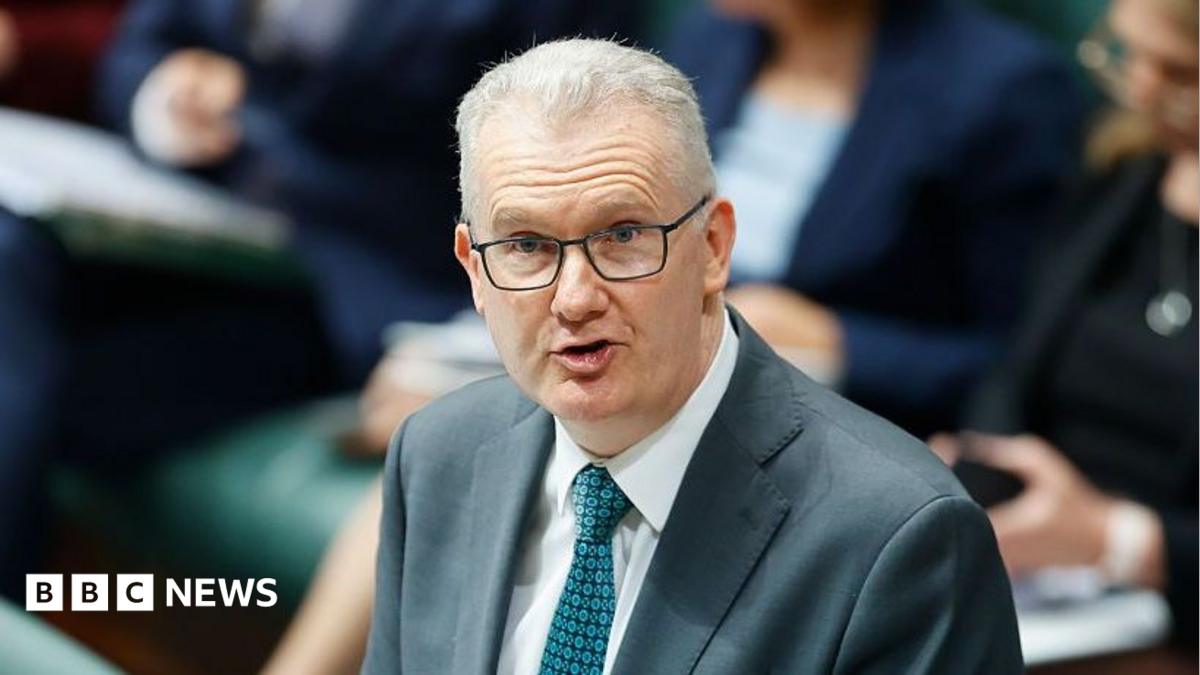
Australia has announced a comprehensive set of stricter immigration measures aimed at significantly curbing net overseas migration. The new policy specifically targets international students, individuals engaged in repeated visa switching, and overseas backpackers.
Delivering an address titled "The work of managing the migration program: who arrives, who stays, who leaves," Home Affairs Minister Tony Burke outlined the federal government's roadmap to rein in arrival numbers. Burke emphasised that while immigration remains an essential strength for the country, a high degree of control is vital to ensure sustainable intake levels. Under the government's outlined plan, authorities are aiming to reduce net overseas migration to 225,000 individuals by the year 2028.
A central pillar of the newly unveiled policy focuses on tightening the rules governing higher education pathways. Under the revised framework, international students and graduate visa holders will no longer be permitted to automatically bring family members into the country alongside them.
The government has confirmed that certain carve-outs will apply to these family restrictions. Prospective students applying from South East Asian and Pacific nations will remain exempt, as will foreign scholars who are already residing within Australia. Furthermore, doctoral candidates pursuing PhD degrees will still be permitted to bring their dependants, with Burke noting that their personal circumstances differ markedly from those enrolled in undergraduate degree programs.
The overhaul also directly addresses the practice commonly termed "visa hopping." This tactic involves students completing an initial qualification and subsequently enrolling in a secondary, frequently lower-tier course, occasionally through questionable educational providers, simply to prolong their stay in the country. Moving forward, authorities will only grant extensions to students advancing up the academic ladder, such as an undergraduate graduate progressing directly into a master's degree program.
Significant reforms have likewise been introduced for the working holiday visa scheme, an arrangement popular with international backpackers aged between 18 and 30 that serves as an important source of temporary labour for regional agricultural businesses.
Under the existing framework, working holidaymakers are permitted an initial 12-month stay, with the option to secure a second year by completing three months of regional employment, followed by a potential third year if they undertake six months of regional work.
Under the newly instituted framework, qualifying for subsequent years will no longer guarantee visa extensions. Instead, candidates meeting the requirements for a second-year stay will be placed into a competitive ballot capped at 45,000 places, representing a marked decrease from the 57,000 individuals who secured approval in the preceding year.
The threshold will tighten even more dramatically for third-year applicants. The allocation for third-year working holidaymakers will be restricted to a ballot limit of just 5,000 participants, representing a steep drop from the 31,000 individuals who qualified under the previous year's arrangements.
Backpackers arriving from the United Kingdom will be shielded from these working holiday restrictions. Due to the bilateral terms negotiated under the existing Australia-UK Free Trade Agreement, British nationals will remain unaffected by the newly imposed caps and balloting system.
The policy announcements coincide with fresh demographic data released by the Australian Bureau of Statistics. The official figures revealed that the nation's total population expanded by 1.4 percent across the 12-month period leading up to March 2026, reaching 27.9 million people. This annual increase incorporated standard natural population changes alongside a net overseas migration intake of 292,100 individuals.
Migration policy has emerged as a central flashpoint within domestic political discourse, heavily driven by ongoing public concerns regarding escalating living expenses, housing supply constraints, and growing pressures on essential public infrastructure.
The government has faced heightened pressure from populist political factions, including the right-wing One Nation party. Known for its staunch anti-immigration stance, the party recently secured its first lower house seat and proposed an aggressive plan to reduce temporary visa allocations by 750,000 over three years, while capping annual net overseas arrivals at 130,000.
Burke strongly rejected One Nation's alternative framework, warning that enacting such severe, across-the-board cuts would risk inflicting widespread damage on critical sectors of the Australian economy.
The latest announcement builds upon preceding adjustments enacted by the government in July. Those earlier reforms prioritised onshore family and skilled permanent residency applications over prospective migrants applying from overseas, while simultaneously halting working holiday visa applications across 24 separate nations, excluding the UK.
Despite the government's strategic focus on moderating intake, the measures have attracted concern from migration advocacy organisations. Violet Roumeliotis, representing Settlement Services International, argued that public debate around immigration is being disproportionately dictated by short-term political motives rather than long-term national interest, cautioning that restricting family visas for international students could hinder Australia's capacity to attract top-tier global talent.









Comments (0)