 nadia-rahmawati
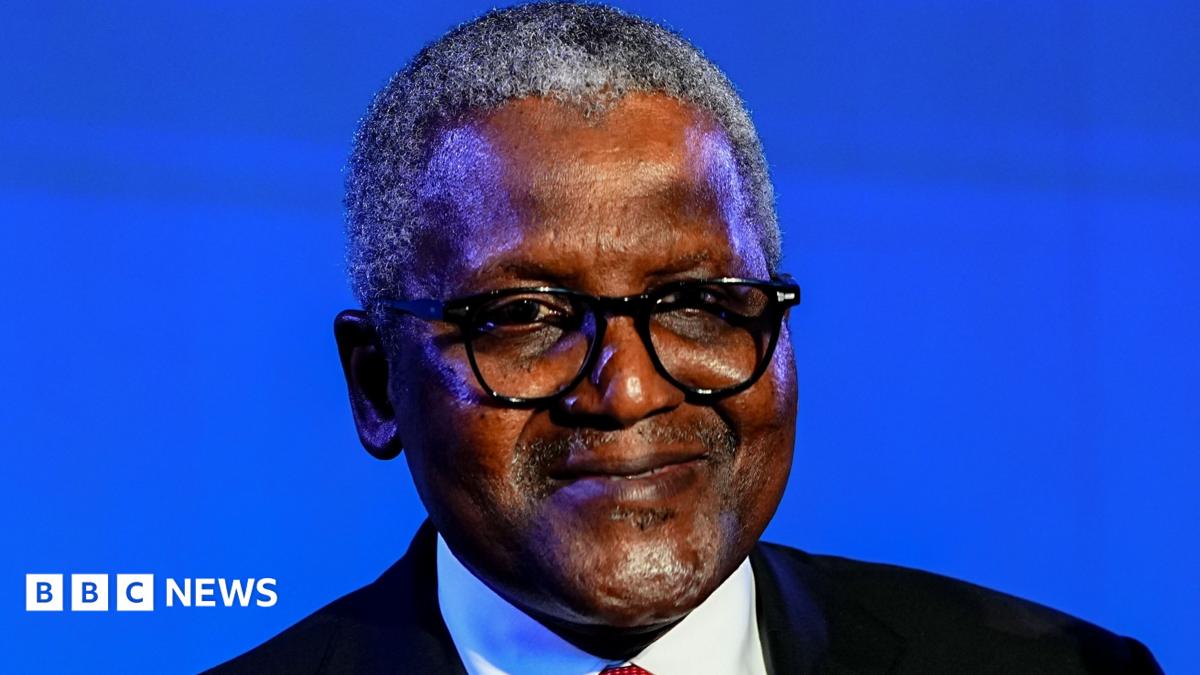
Nigerian industrialist Aliko Dangote and Kenyan President William Ruto are preparing to officially launch construction of a $16bn (£12bn) crude oil refinery on Kenya's northern coast, a project that would become East Africa's largest industrial development by processing capacity. The groundbreaking ceremony in Lamu is scheduled for 1 November, marking the most significant infrastructure undertaking in Kenya since the country gained independence.
Once operational, the facility is designed to handle 700,000 barrels of crude oil per day, a scale that dwarfs existing industrial projects across the region. For context, the refinery's capacity matches that of Dangote's flagship plant in Nigeria, which operates at the same 700,000-barrel daily throughput. East Africa currently lacks any functioning oil refinery, meaning the Lamu project would introduce an entirely new industrial capability to the region.
The scale of the investment places it well above Kenya's previous record infrastructure project, the $5.1bn (£3.9bn) Standard Gauge Railway. The refinery will also incorporate a 1,000-megawatt power plant, which Dangote views as essential infrastructure to support both the refinery's operations and the broader industrial ecosystem he expects to develop around Lamu.
Ahead of the official launch, however, the project has encountered resistance from some local residents who have taken to the streets demanding greater compensation for land acquired for the refinery. The protests highlight tensions that frequently accompany large-scale land acquisitions in the region, particularly when communities feel their interests are not adequately addressed.
Dangote, speaking to the BBC's Focus on Africa programme, downplayed the demonstrations, attributing them to what he described as manoeuvres by local marketers and international competitors. He rejected claims that compensation had been inadequate, stating that his company only took the portion of land it required from what the Kenyan government had made available for the project.
"To come and say some people are demonstrating, demonstrating about what? Have you ever seen people demonstrating against themselves in terms of development?" Dangote asked, signalling that the protests would not alter the project's timeline. His remarks suggest a confidence that the economic benefits of the refinery will ultimately outweigh local grievances.
The billionaire, whose fortune was built initially in cement before expanding into oil and other sectors, projected that the refinery would generate 60,000 jobs at the peak of construction. He emphasised that the economic impact would reach beyond direct employees, arguing that ancillary industries and service sectors would also benefit from the influx of activity.
"Are we going to bring robots? Of course, the people will benefit," he said, dismissing suggestions that the project would rely primarily on foreign labour or automation.
Questions have been raised about the wisdom of situating a major refinery in Kenya, a country that does not produce crude oil domestically. Some observers have pointed to Tanzania and Uganda as more logical locations, given that both nations are advancing towards oil exports through the East African Crude Oil Pipeline. The choice of Lamu has therefore sparked debate about the project's long-term economic logic.
Kenya's Energy and Petroleum Minister, Opiyo Wandayi, defended the decision, telling the BBC that the refinery's location does not tie it to regional crude supplies. He noted that refineries typically source crude oil from international markets rather than relying solely on local production.
Dangote reinforced this position by drawing a comparison with Singapore, a nation that possesses no domestic oil reserves yet hosts a substantial refining industry. "Singapore doesn't produce a single drop of oil, yet they have a lot of refineries," he said, suggesting that Kenya could replicate a similar model of importing crude and processing it for regional distribution.
Beyond the refinery itself, Dangote has outlined ambitious plans for power generation across Africa. He currently has approximately $50bn (£38bn) worth of projects in development, including a target of building 10,000 megawatts of generating capacity across the continent by 2030, with the possibility of doubling that figure depending on demand. The Lamu power plant fits into this broader strategy of addressing what he identifies as a critical constraint on African industrialisation.
Dangote has argued that unreliable electricity supplies have prevented mineral-rich African nations from processing their raw materials locally rather than exporting them in unrefined form. His vision involves creating industrial hubs where reliable power enables manufacturing and value addition, with Lamu serving as a test case for this approach.
"The power is there and what you do is what we call plug and play," he explained, describing how the plant would be designed to serve both his own operations and other industries expected to establish themselves in the area.
Kenyans currently contend with relatively high fuel prices, and expectations have been raised that greater domestic refining capacity could eventually translate into lower pump prices. However, the price of crude oil, which is determined by international markets, remains the dominant factor in retail fuel costs, limiting the extent to which local refining can influence what consumers pay.
The Lamu refinery represents Dangote's most substantial proposed investment outside his native Nigeria. His Nigerian refinery, also with a capacity of 700,000 barrels per day, is set to double its processing capability following a share offering earlier this month, in which 4.1 million ordinary shares were floated in an effort to raise up to $2.1bn.
The project's success will depend on multiple factors, including securing consistent crude supplies, navigating local opposition, and completing construction on schedule by the target date of 2030. For Kenya, the refinery offers the prospect of industrial transformation and job creation; for Dangote, it represents another step in his expansion across the African continent.






Comments (0)