 yudi-kurniawan
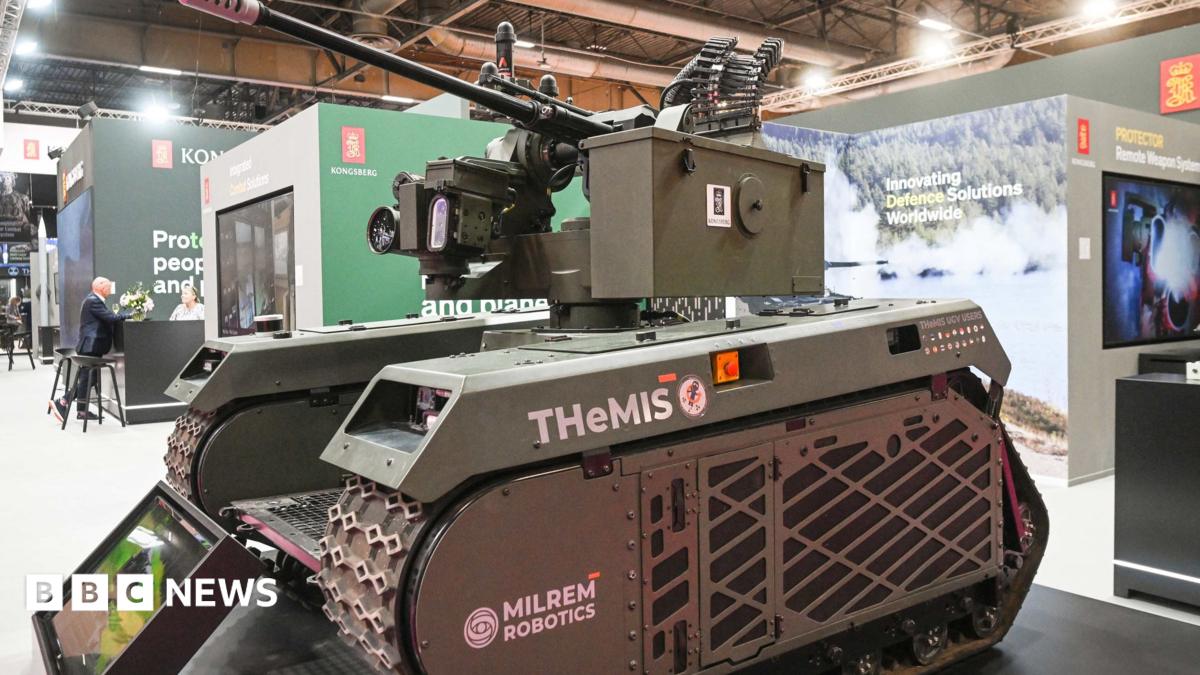
Estonian officials have publicly accused Russia of directing an arson attack on a defense company in Tallinn, marking a significant escalation in what authorities describe as a broader campaign of sabotage across Europe. The attack targeted Milrem Robotics, a prominent Estonian firm that manufactures unmanned military vehicles for Ukraine, on the night of August 14-15.
Prime Minister Kristen Michal stated that Russian special services ordered the attack, though he did not provide specific details about the operation. The accusation represents one of the most direct allegations by a NATO member state against Moscow for hostile actions on its territory since Russia's full-scale invasion of Ukraine began in February 2022.
Foreign Minister Margus Tsahkna reinforced the government's position, citing information gathered by Estonia's Internal Security Service. He stated that authorities could "conclude with certainty" that the arson was an act of sabotage orchestrated by Russian intelligence agencies. The foreign minister characterized the attack as part of a wider Russian strategy aimed at intimidating European nations and weakening their commitment to supporting Ukraine.
Security service chief Margo Palloson revealed that three suspects had been arrested in connection with the attack. According to Palloson, the perpetrators were Latvian nationals who had been residing in Russia and had participated in previous attacks. The suspects were apprehended in Latvia earlier this month and subsequently extradited to Estonia to face justice. Palloson noted that while Russia continuously plans and seeks opportunities to recruit individuals for such operations, this particular arson represented Moscow's first successful attack in Estonia this year.
The security chief also warned that individuals recruited for these operations may be misled or manipulated by Russian handlers, who provide false justifications to conceal the state's involvement. This tactic, according to Kapo, Estonia's internal security service, complicates efforts to trace attacks directly back to Moscow.
Russian officials have denied any involvement in the attack. Kremlin spokesman Dmitry Peskov dismissed the accusations as baseless and lacking any foundation in reality, stating that Russia cannot and will not take such claims seriously. This response follows a consistent pattern of denial from Moscow regarding similar allegations across multiple European countries.
The international response to Estonia's accusation was swift and supportive. French President Emmanuel Macron condemned what he described as a dangerous escalation by Russia, warning that such hostile actions would ultimately lead Russia into a dead end. Macron referenced a separate incident at Leipzig airport in Germany in August, where an explosive-laden drone was discovered near Ukrainian cargo planes, as evidence of a broader pattern of Russian aggression against European nations.
NATO Secretary-General Mark Rutte urged European governments to remain calm while continuing their support for Ukraine. He characterized Russia's actions as a reckless campaign of hostile measures against alliance members, designed to weaken resolve and halt military assistance to Kyiv. Rutte emphasized that these efforts are failing, noting Russia's lack of success both on the Ukrainian battlefield and in its attempts to undermine Western unity.
The European Union also expressed solidarity with Estonia, with a spokesman confirming that the 27-member bloc would not waver in its support for Ukraine despite such provocations. The unified response from EU and NATO leaders underscores the seriousness with which Western nations view Russia's apparent campaign of hybrid warfare.
The attack on Milrem Robotics fits a disturbing pattern observed across Europe throughout August alone. During that single month, Russia was either accused or suspected of involvement in multiple incidents: the Leipzig airport drone incident in Germany, a major fire at a Bulgarian defense firm's warehouse, a large explosion at a munitions factory near Rome, an attempted arson attack on a Ukrainian-owned drone manufacturer in Slovakia, and two suspicious fires in Poland.
These incidents, collectively described as hybrid warfare or hybrid attacks, involve non-military methods such as cyber-attacks, sabotage, and disinformation campaigns designed to exert pressure and destabilize targeted nations. The frequency and geographic spread of these operations suggest a coordinated strategy rather than isolated incidents.
Estonia's Internal Security Service indicated that Russia continues to seek additional opportunities for sabotage and other hostile acts. The agency's warning highlights the ongoing threat facing NATO members, particularly those providing significant military support to Ukraine. Milrem Robotics, as a manufacturer of unmanned ground vehicles used by Ukrainian forces, represents a high-value target for Russian intelligence operations seeking to disrupt military supply chains.
The extradition of suspects from Latvia demonstrates regional cooperation in addressing these security threats. However, the fact that the alleged perpetrators were Latvian nationals living in Russia illustrates the complex nature of modern hybrid warfare, where operatives may be recruited from multiple countries to obscure the sponsoring state's direct involvement.
The incident has intensified discussions among NATO members about strengthening counterintelligence capabilities and protecting critical defense infrastructure. Estonia, as a frontline NATO state sharing a border with Russia, has long warned about the threat posed by Russian intelligence operations and hybrid tactics. The attack on Milrem Robotics validates these concerns and may prompt other European nations to reassess their security measures.
Russia's persistent denial of involvement, despite mounting evidence and testimonies from arrested suspects, reflects Moscow's strategy of maintaining plausible deniability while continuing operations designed to destabilize Western nations. The gap between Russian statements and the intelligence assessments of multiple European governments continues to widen, complicating any potential diplomatic resolution to these tensions.
The attack on Milrem Robotics and the broader pattern of suspected Russian sabotage across Europe represent a significant challenge to NATO's collective security framework. How the alliance responds to these hybrid threats will likely shape European security policy for years to come, as member states balance the need for vigilance against the risk of escalation with a nuclear-armed adversary.





Comments (0)