 lukman-hakim
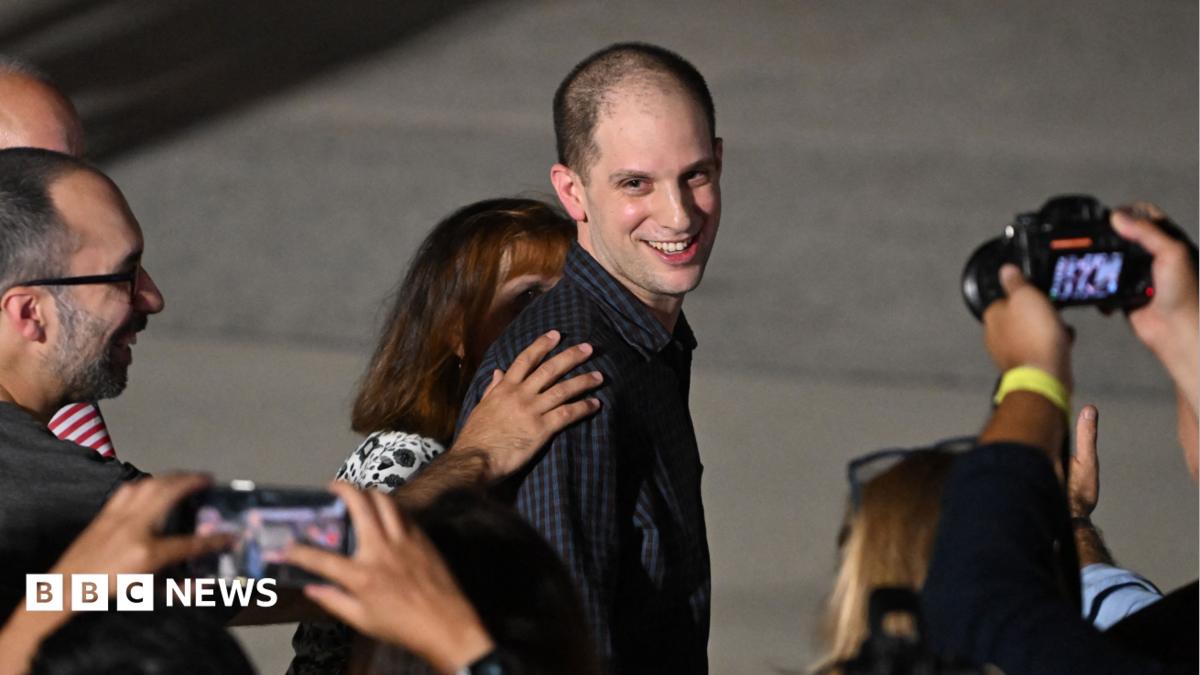
Wall Street Journal reporter Evan Gershkovich has disclosed that he understood he was being deliberately framed by Russian authorities at the precise moment masked security agents surrounded him in a restaurant in 2023, describing how he recognized that his arrest was a calculated move to turn him into a bargaining chip for the Kremlin rather than a genuine espionage investigation.
Speaking to BBC Radio 4's Today programme, the 34-year-old American journalist recounted the events of his detention in Yekaterinburg, a city roughly 1,600 kilometres east of Moscow, where he had travelled to meet an individual he believed was a source for a news story. Instead of conducting a routine interview, Gershkovich found himself encircled by approximately six masked men who entered the half-empty dining hall and informed him, in an oddly polite manner, that they had booked his table.
Gershkovich described the phrase as peculiar on its surface but upon reflection recognized its cleverness in disarming the target, freezing him in place physically and mentally. He and the man he had come to meet stood up, and Gershkovich was told he was under arrest by the FSB, Russia's powerful domestic security service. "When it's the FSB, you know it's been planned," he said, adding that the moment made him understand the situation was extremely serious. The contact he had been meeting vanished into the crowd, disappearing from view as the arrest unfolded.
Rather than being subjected to interrogation or torture, which are commonly employed tactics by Russian security services against suspected spies, Gershkovich said he experienced what he described as an unusual sense of relief washing over him. He concluded that the absence of such treatment meant he was not being handled as a genuine spy but rather as a commodity, an asset to be traded rather than an enemy of the state to be broken.
That realization, he explained, gave him both stability and discipline during his imprisonment, while also offering him an unusual framework for predicting what would come next. He reasoned that Moscow's intention was to hold a high-profile prisoner that could eventually be exchanged for one of its own operatives, and he suspected the deal would ultimately involve a Russian assassin serving a life sentence in Germany.
His assessment proved correct. Vadim Krasikov, convicted of murder in Germany, became the centrepiece of a prisoner exchange that secured Gershkovich's release after 16 months in detention, despite the journalist having been sentenced to a 16-year prison term on espionage charges that he, his employer and the US government have always maintained were fabricated. Gershkovich noted that Moscow managed to execute the operation without facing any sanctions, commenting that from a cynical perspective, the Russian state played its hand shrewdly.
During his captivity, Gershkovich was held at Moscow's notorious Lefortovo jail, a facility that has housed numerous high-profile political prisoners and dissidents over the decades. The prison was particularly associated with the Great Terror under Joseph Stalin in the 1930s, when torture and executions were routine. Gershkovich described his confinement as a profoundly isolating experience in a very small space, acknowledging that such conditions wear on a person psychologically, though he added that he was treated acceptably, being allowed to sleep and receiving adequate food.
Throughout his court appearances in Moscow, Gershkovich deliberately smiled for the cameras, photographs that were broadcast globally. He explained that this was an intentional act of defiance, a way of signalling to the outside world that he was holding up. He reasoned that since the case against him was fabricated, and since the proceedings functioned as theatre, there was no reason to allow Moscow to stage the narrative entirely on its own terms.
At the same time, Gershkovich was careful to distinguish his treatment from that of other prisoners, emphasizing that far too many people in Russian detention face torture, are psychologically broken, deprived of food and hot water and told they will never see their families again. He pointed specifically to the case of Ukrainian journalist Viktoriia Roshchyna, who died in Russian captivity in 2024 at the age of 27. When her body was eventually returned months later, reports indicated signs of torture and that her organs had been removed.
Gershkovich learned three weeks before the swap that a deal was in motion, a period he described as excruciating because each day became painfully long. When the exchange finally took place on 1 August 2024, he experienced what he called pure joy. Yet that euphoria proved fleeting, as the adrenaline subsided and he was confronted with the reality of rebuilding a normal life. He acknowledged that the transition period was difficult and at times overwhelming, a common challenge for released detainees adjusting to freedom after prolonged confinement.
The interview offers a rare first-person account of how Russia's security apparatus constructs espionage cases against foreign journalists, and it underscores the broader trend of journalists being detained as leverage in geopolitical negotiations. For news organizations, the case highlights the mounting risks faced by correspondents operating in hostile environments where the line between reporting and being targeted has become dangerously blurred.
Gershkovich's account also raises uncomfortable questions about the effectiveness of international responses to such detentions. While Western governments have celebrated prisoner swaps that bring wrongfully detained citizens home, critics argue that these deals may inadvertently incentivize further detentions. Gershkovich himself seemed to acknowledge this tension by noting wryly that Moscow faced no sanctions for its actions, suggesting that the Kremlin calculated the costs and determined the benefits outweighed them.








Comments (0)