 lukman-hakim
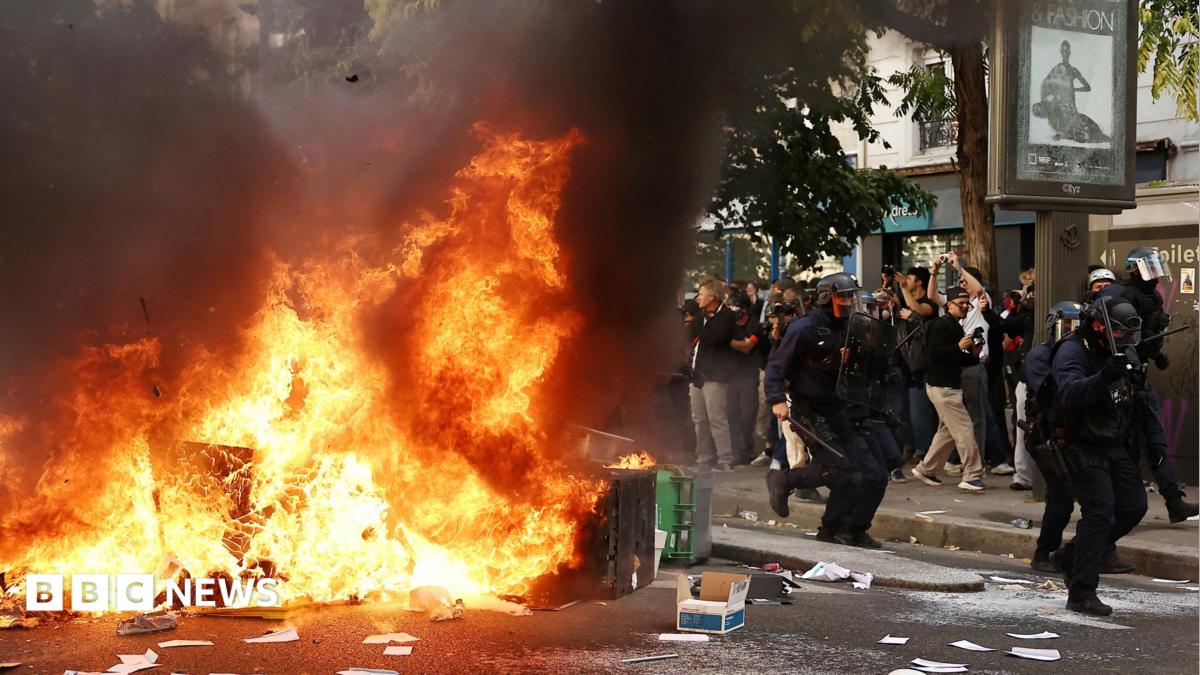
France has decided to pause the use of stun grenades in policing the wave of student protests unfolding across the country, following an incident earlier this week in which a 15-year-old boy had his hand blown off. Interior Minister Laurent Nuñez announced that he had asked for the suspension to remain in place until the circumstances of Monday's event in the northern town of Lens have been fully "clarified," noting that protesters and officials have given sharply differing accounts of what happened.
The decision comes amid mounting accusations that police have used excessive force against teenagers during demonstrations that have expanded well beyond their original base. What began with high school pupils has grown into a broader movement that now includes parents, university students and labour unions, all voicing anger over conditions in French schools.
Nuñez told the French radio station RTL that the IGPN, the national police watchdog, has launched 18 separate investigations into whether officers behaved "proportionately" during the demonstrations. He singled out the Lens case as one that "raises questions for all of us within the Ministry of the Interior," and confirmed that stun grenades would not be used again "until the facts surrounding this case have been clarified."
According to authorities, the 15-year-old's hand was severed when a so-called anti-encirclement grenade was fired in circumstances that remain unclear near the Auguste Béhal high school in Lens, a city close to Lille in northern France. Officials have claimed the boy picked up the device and that it detonated afterwards, while students have alleged that an officer fired it directly at him. The local prefect said the incident unfolded when police were confronted by a group of roughly 200 to 250 students who were throwing stones and fireworks.
Although stun grenades are classed as a non-lethal weapon, they release small rubber pellets when they explode. The controversy they have generated is not limited to Lens. Last week, a 14-year-old was struck in the face by a tear gas grenade at Saint-Ouen-l'Aumône, north-west of Paris. The boy's lawyer said he lost several teeth and sustained a fractured jaw, and a police officer has since been charged in connection with the case.
On Wednesday, prosecutors revealed that a separate investigation for attempted murder had been opened after a 17-year-old student protester alleged that an officer "held his head underwater" while trying to arrest him near a river in the north-eastern city of Belfort. Taken together, the cases have intensified scrutiny of police tactics at a moment when the government is already under significant pressure.
The unrest, which began in mid-September, continued on Wednesday with more than 500 schools either fully or partially shut, according to official figures. Prime Minister Sébastien Lecornu is due to address the school protests in an evening speech, as the government searches for a way to defuse the crisis.
Tuesday's demonstrations drew hundreds of thousands of people into the streets to demand better school conditions. In some cities, police deployed tear gas and water cannon. The interior ministry reported that 488 people were arrested and that 43 members of the security forces were injured during the day's events.
The scale of the mobilisation has been significant. Government figures put the number of protesters at more than 250,000, while student unions claim the true figure was closer to 450,000. Student organisations say a fourth round of protests is planned for Thursday in Paris and other cities, suggesting the movement has yet to lose momentum.
Lecornu has condemned the violence seen at some demonstrations, pointing out on Tuesday that 215 students, 85 staff members and 715 police officers have been hurt since the protests started. The interior ministry added that more than 6,500 people have been stopped or arrested over the same period.
At the political level, President Emmanuel Macron convened an emergency meeting late on Tuesday with Lecornu and other key ministers to discuss how to resolve the crisis. The gathering followed a day in which nearly a quarter of all lycées, or high schools, across France were disrupted.
Student leaders have directed their anger partly at the interior minister. Ryad Rani, head of the USL high school union, told French radio on Wednesday: "We are telling M. Nuñez, calm your police officers down and call for restraint." The remark reflects the distrust that has built up between demonstrators and the authorities as accounts of individual incidents continue to diverge.
Nuñez, for his part, insisted that the government's priority is the safety of young people, saying: "When there is suspicion of disproportionate force, there are always judicial investigations," and affirming that the state was "here to protect high school students." Whether that message reassures students and parents remains to be seen, particularly with further protests already scheduled.
The grievances driving the movement are wide-ranging, spanning overcrowded classrooms, teacher shortages and dilapidated school buildings. Some students have also pointed to overheated classrooms during this year's heatwaves. What started in the Ile-de-France region around Paris has since spread to cities nationwide, turning a localised complaint about school conditions into one of the most serious challenges the French government has faced in recent months.
With the suspension of stun grenades now in effect and multiple investigations under way, the coming days will test whether the government can restore calm without further inflaming tensions. The prime minister's address and Thursday's planned demonstrations are likely to shape the next phase of a protest movement that continues to widen in both size and scope.






Comments (0)