 lukman-hakim
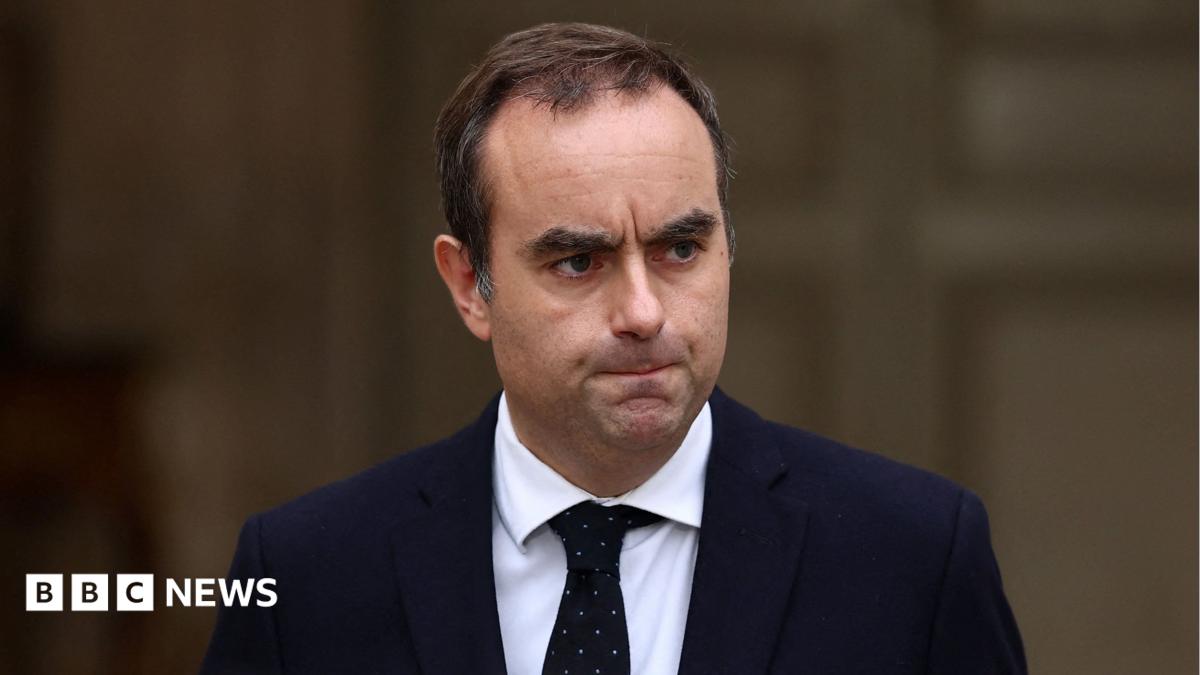
French Prime Minister Sébastien Lecornu has issued a stark warning against any further escalation of the student protest movement sweeping the country, describing such a development as "irresponsible" after 164 people were arrested on Monday. The demonstrations, which began in the Paris region and have since spread to multiple areas across France, have seen teenagers blockading their schools for days in protest over conditions including overcrowded classrooms and persistent teacher shortages.
In a statement posted on X, Lecornu condemned reported incidents of violence during the school blockades, writing: "Fireworks, fires, violence near high schools: nothing justifies endangering students, staff, or police officers." The prime minister's comments came as authorities tallied the fallout from a day of widespread disruption that affected 180 schools across the country, according to Interior Minister Laurent Nuñez.
Nuñez confirmed that 12 members of the security forces, 12 students and three school staff members sustained injuries during Monday's protests. He did not provide additional details about the circumstances surrounding the 164 arrests, leaving questions about the nature of the charges and the ages of those detained. The interior minister's figures underscored the scale of the unrest, which has moved well beyond the initial blockades that first emerged last week.
The movement at French lycées — equivalent to sixth form colleges in the UK or high schools in the US — originated in the Île-de-France region surrounding Paris before spreading to other parts of the country. According to the AFP news agency, four high schools were reportedly blockaded in the southern regions of Alpes-Maritimes and Var. Protests have also been reported in Marseille, the northern Lille area and Sedan in the north-eastern Ardennes, indicating the movement has taken on a national character.
The Union Syndicale Lycéenne, a French union representing high school students, defended the protests as a "legitimate response" to the conditions students face. In a social media post, the organisation listed grievances including "lack of teachers and staff, dilapidated schools, overcrowded schedules and classes, stress caused by Parcoursup" — the web platform used in France for students applying to the first year of higher education. The union argued these issues "are by no means inevitable, but simply the result of 10 years of Macron's policies and the lack of resources in the national education system."
Calling on students to blockade schools again on Tuesday, the union framed the action as a defence of "their rights and against budget austerity." The call to continue the movement suggests that despite the government's warnings, the underlying grievances driving the protests remain unresolved. The student union's explicit reference to Macron's decade in power signals a broader political dimension to the unrest, linking educational funding shortfalls to the president's policy priorities.
The timing of the student protests coincides with a broader wave of social discontent in France. Teacher unions, along with organisations representing hospital staff and civil servants, called for a day of walkouts on the same day to protest against issues including low wages and deteriorating working conditions. This convergence of grievances across multiple sectors — education, healthcare and public administration — points to a wider dissatisfaction with the government's handling of public services and public sector pay.
In response to the student movement, Lecornu attempted to strike a balanced tone, acknowledging that "the difficulties of high schools must be heard and addressed" while insisting that "violence must be condemned unequivocally, and its perpetrators must answer for their actions." The prime minister also accused the far-left France Unbowed (LFI) party of encouraging students to expand the movement, a charge that reflects the increasingly charged political atmosphere surrounding the protests.
Jean-Luc Mélenchon, the leader of France Unbowed, pushed back against the government's narrative, blaming Lecornu's administration for having "ordered the crackdown" on the protest. He characterised the high school students taking part in the demonstrations as "harmless," directly contradicting the interior minister's depiction of the events. The exchange between Lecornu and Mélenchon highlights how the protests have become a political battleground, with the left accusing the government of heavy-handedness and the government accusing the left of stoking disorder.
Interior Minister Nuñez offered a sharply different assessment of the protests than that put forward by the student union. He described the demonstrations and blockades as "not very typical protest movements," adding: "It is much more like urban violence, with a number of individuals who were masked, equipped with fireworks in tubes, equipped with projectiles, who clearly wanted to confront the internal security forces." Nuñez concluded that "it wasn't about making demands; it was really violence in its purest form," rejecting the framing of the protests as legitimate expressions of student grievance.
Since the protests began, several incidents involving violence between students and police officers have been reported. In one case, a police officer reportedly fired a round from a grenade launcher used for crowd control, injuring a high school student, according to France's BFMTV. Investigations have been launched into these incidents, the broadcaster added, suggesting that questions remain about the proportionality of police tactics used during the demonstrations.
The contrasting accounts from government officials and student representatives paint a complicated picture of events on the ground. While the interior minister emphasises orchestrated violence by masked individuals equipped with projectiles, the student union and left-wing politicians frame the protests as a spontaneous response to years of underinvestment in education. The truth likely involves a mix of both dynamics, as genuine grievances over school conditions have been accompanied by confrontational tactics that authorities say crossed the line into violence.
The French education system has faced mounting pressures in recent years, with teacher shortages forcing schools to rely on substitutes and contract staff, while classrooms in some areas remain overcrowded. The Parcoursup platform, introduced in 2018 to streamline university admissions, has itself become a source of anxiety for students, who must navigate a complex selection process that critics say produces stress and uncertainty. These structural issues form the backdrop against which the current protests have unfolded, giving them a resonance beyond the immediate incidents of the past week.
The government now faces the difficult task of de-escalating tensions while addressing the root causes of the unrest. Lecornu's public acknowledgment that high school difficulties "must be heard and addressed" suggests an openness to dialogue, but the interior minister's characterisation of the protests as "violence in its purest form" signals that the government may prioritise a law-and-order response. With unions calling for further blockades and walkouts, the coming days will test whether France can avoid a deepening cycle of protest and confrontation.
The situation remains fluid, with student organisations vowing to continue their movement and the government warning against escalation. How authorities balance the right to protest with public order concerns — and whether they can credibly address the grievances that sparked the demonstrations — will determine whether the current wave of unrest subsides or intensifies in the weeks ahead.








Comments (0)