 nadia-rahmawati
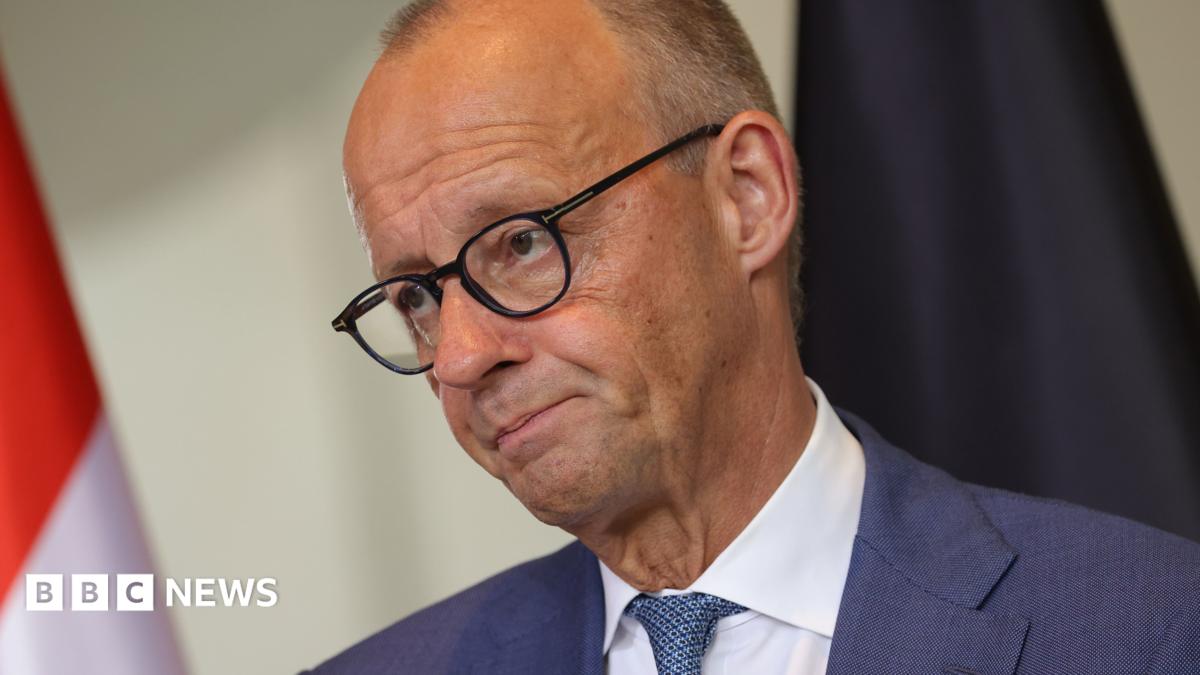
Eight conservative state premiers have banded together to publicly endorse Chancellor Friedrich Merz, attempting to silence intense speculation surrounding his political future and his ongoing leadership of the Christian Democratic Union (CDU).
The joint intervention by the CDU regional leaders emphasized that rebuilding confidence among voters requires responsive governance rather than internal division. In their collective statement, the state leaders insisted that restoring public trust in the party must be achieved through listening and taking concrete political action, rather than engaging in destabilizing personnel debates.
The statement was signed by the premiers of Schleswig-Holstein, Saxony, Hesse, Rhineland-Palatinate, Saxony-Anhalt, Thuringia, Berlin, and North Rhine-Westphalia. Together, they underscored that Germany’s current political landscape demands stability more than ever, reiterating that the federal republic requires a dependable, capable administration that maintains its own working majority in the Bundestag.
This display of internal solidarity comes at a critical juncture for Merz, who has occupied the chancellorship for just 16 months. His tenure has been weighed down by slumping public approval ratings and growing unease within political circles regarding his combative public communication style.
A recent opinion survey published by the Bild newspaper highlighted the extent of public dissatisfaction, revealing that merely 14 percent of respondents viewed Merz as the right person to lead the federal government. Such poor numbers have accelerated debate about whether the chancellor is turning into an electoral liability for his party.
Talk of a potential "Kanzlertausch"—a mid-term chancellor swap—has circulated for several months, but the chatter intensified dramatically following the CDU’s devastating performance in the eastern state of Saxony-Anhalt at the start of September.
In that regional election, the anti-immigration, far-right Alternative for Germany (AfD) surged to 43.8 percent of the vote, while the CDU plummeted to a distant second place with just 17.2 percent. The outcome represented the first time since the end of the Second World War that a far-right political party has come so close to securing control of a German state.
The AfD fell just three seats short of an absolute majority in Saxony-Anhalt. While Germany’s mainstream political parties have consistently maintained a firewall by refusing to enter into governing coalitions with the far-right group, the AfD could still attempt to establish a minority administration in the state.
Following the stinging defeat, Merz adopted a confrontational stance against the AfD. He characterized the surging party as a destructive political force that seeks to rebuild ties with Russia, and went on to argue that its hardline migration agenda amounted to an ethnic cleansing of skilled international workers needed by the economy.
In response to those pointed accusations, the AfD announced that it was submitting a formal defamation complaint against the chancellor. The far-right party denounced Merz's characterizations as baseless, inflammatory, and disgusting.
Alongside the support of the eight CDU premiers, Merz has also received backing from Markus Söder, the premier of Bavaria and leader of the Christian Social Union (CSU), the Bavarian sister party to the CDU.
Nevertheless, Merz’s leadership faces an immediate electoral trial on Sunday, with voters heading to the polls for crucial state elections in Berlin and Mecklenburg-West Pomerania. The AfD is widely projected to make further gains in both contests, threatening to inflict fresh losses on the conservative establishment.
To manage the anticipated political fallout, CDU officials are scheduled to convene on Sunday to coordinate the party's official strategy and response to the regional results, according to an unnamed party source cited by Reuters.
In Berlin, polling indicates a closely fought contest, with the CDU and the left-wing Die Linke contending for the top spot, closely followed by the Greens and the AfD. In Mecklenburg-West Pomerania, the AfD is projected to lead ahead of the centre-left Social Democratic Party (SPD), though it appears likely to fall short of an outright majority.
For Merz, the worst-case electoral scenario would involve the CDU losing its governing power in Berlin while failing to reach the minimum vote threshold required to even enter the state parliament in Mecklenburg-West Pomerania.
Replacing a chancellor outside of a standard federal election remains rare under German political norms. Although a chancellor could theoretically face a vote of no confidence or be pressured into resigning, such mechanisms are widely viewed as improbable in this scenario. While no internal rival has officially stepped forward to challenge Merz, names including Söder, North Rhine-Westphalia Premier Hendrik Wüst, and federal Interior Minister Alexander Dobrindt have circulated among observers as potential successors.
Merz's long political journey has often been marked by friction within his own ranks; it took him three attempts over several years to secure the CDU chairmanship, and he historically lost an initial parliamentary confirmation vote to become chancellor despite holding a formal coalition pact with the SPD. Having previously won international acclaim for mobilizing a massive €500 billion defense infrastructure fund and championing European security, the determined chancellor has vowed to stay in office and appears intent on holding onto the power he sought for decades.









Comments (0)