 lukman-hakim
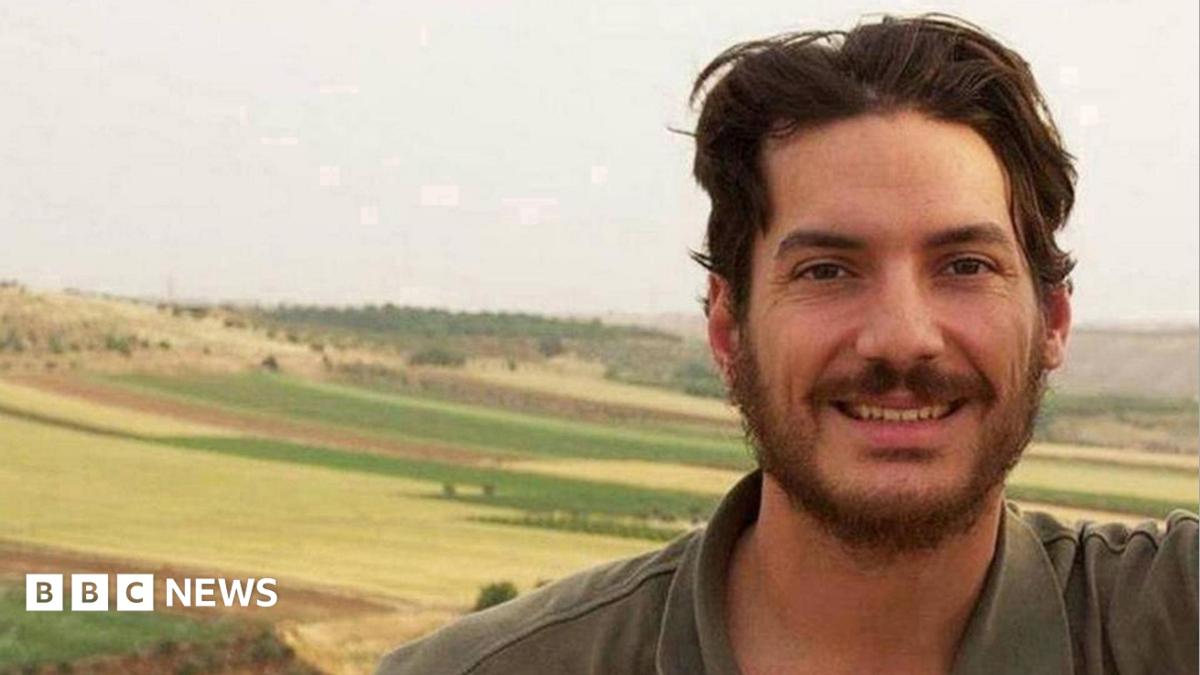
The disappearance of American journalist Austin Tice in Syria more than a decade ago was the result of a meticulously planned operation authorized at the highest tier of the Syrian government, rather than a spontaneous capture at a military checkpoint, according to findings from a BBC investigation.
For years following his 2012 capture, it was widely believed that Tice had accidentally run into a government checkpoint while traveling with a driver he considered trustworthy. However, fresh evidence reveals that his abduction was premeditated and developed over the course of more than a month before he was seized.
The revelations are featured in the BBC podcast series "Where is Austin Tice?", hosted by journalists Josh Baker and Sara Obeidat. The multi-year inquiry into the disappearance uncovered internal records, audio recordings, and firsthand testimony detailing the covert mechanics behind the abduction of the reporter, who was covering the Syrian civil war at the time.
A key account comes from a former operative identified as Abu Ali, who previously served in the National Defence Forces (NDF), an armed militia fiercely loyal to the Syrian administration. Abu Ali confirmed that the driver transporting Tice had secretly been collaborating with the regime as an informant.
According to the testimony, the driver alerted Sakr Rustom, a prominent NDF figure and the nephew of Bassam al-Hassan, who led the NDF and served as one of the most trusted security officials to then-President Bashar al-Assad. The informant reported that Tice was traveling across rebel-held territories to document the activities of the Syrian opposition.
Upon receiving the report, Hassan reportedly contacted Assad directly to discuss the American reporter. Abu Ali stated that Assad explicitly ordered the abduction, instructing his security officials with the words, "Bring him to us," an approval that was subsequently relayed down the command chain in Hassan's office.
Rather than apprehending the journalist immediately, the militia opted to maintain extended surveillance. The driver advised his handlers to hold off on the capture to gather further intelligence on Tice's network and activities, reassuring the operatives that the American completely trusted him.
During the surveillance period, the driver warned his handlers that Tice’s conduct appeared suspicious. Tice, a Georgetown University law student and former captain in the US Marines, occasionally drew on his past military background to advise rebel fighters and correct their handling of weapons, which led regime operatives to suspect he was an operative for the CIA.
The BBC found no evidence supporting the regime's suspicions regarding espionage. Furthermore, a former senior United States government official who was involved in handling Tice's case explicitly denied that the reporter had any ties to American intelligence agencies.
As the surveillance escalated in the days leading up to his disappearance, the driver executed an exceptionally bold maneuver while Tice was preoccupied interviewing opposition fighters. The driver secretly removed Tice's backpack—which contained his MacBook, a satellite transmitter, and various personal belongings—and delivered it to regime operatives for thorough inspection.
Tice had earned international recognition for his courageous dispatches, venturing into hazardous, opposition-held territories to deliver front-page reporting for The Washington Post at a time when the Assad administration was aggressively repressing journalists documenting state-perpetrated human rights abuses.
On August 11, 2012, Tice celebrated his 31st birthday at an opposition safehouse situated on the western periphery of Damascus, only a few miles away from Assad's presidential palace. In what would be his final post on social media, Tice described the gathering with Free Syrian Army members, music by Taylor Swift, a swimming pool, and whiskey, calling it the "best birthday ever" shortly before making arrangements to depart the country.
Shortly after his departure, Tice vanished. More than a month later, a distressing video surfaced showing him blindfolded in captivity, marking the final visual evidence of him alive and sparking a high-profile international campaign by his family and government officials to secure his release.
Following the collapse of the Assad administration 12 years later, tens of thousands of detainees were released from government-run detention facilities, but Tice was not among them. Search teams investigated multiple coordinates provided by intelligence sources regarding potential confinement sites for over a month, yet found no trace of the missing American.
Despite the lack of physical remains, the investigation uncovered hundreds of pages of internal Syrian intelligence files, offering the first indisputable documentary proof that the regime had detained Tice. While a former Syrian military commander has alleged that Tice was executed, that claim remains contested by other figures, and no remains have ever been located.
Throughout the years of uncertainty, Tice's mother, Debra Tice, has tirelessly lobbied successive United States presidents to maintain pressure on Damascus and uncover the truth behind her son's disappearance, keeping one of the most significant missing-person cases of the Syrian war in the global spotlight.










Comments (0)