 lukman-hakim
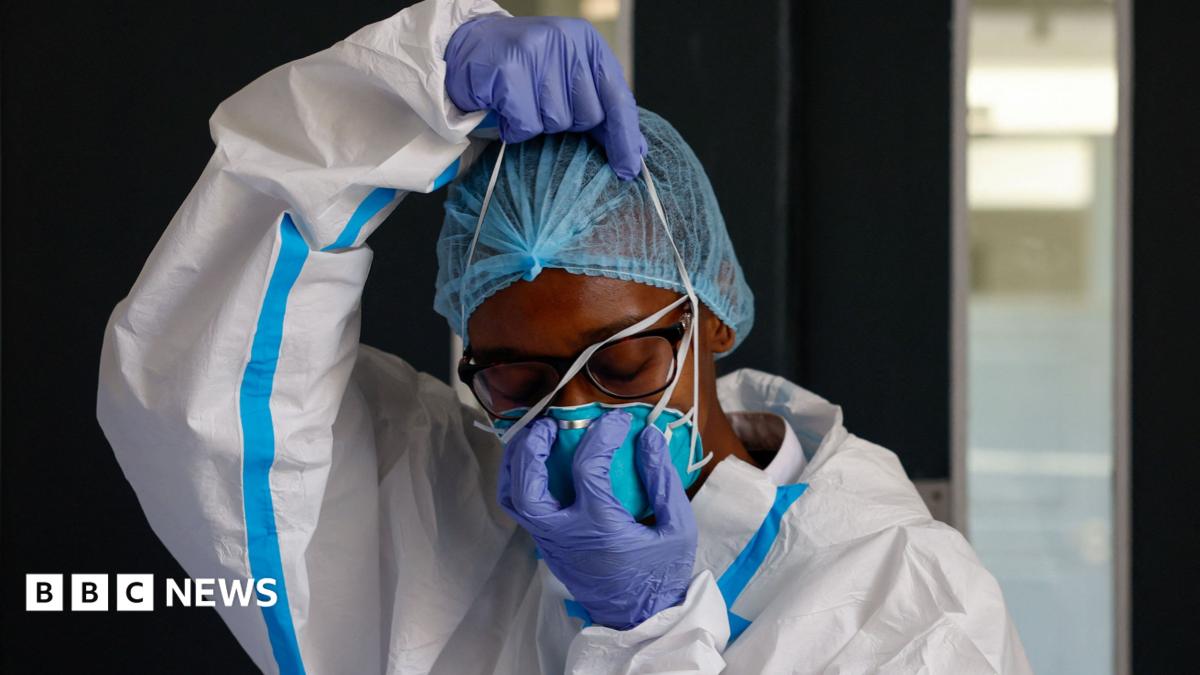
Kenyan health authorities have placed ten people under quarantine after they came into contact with a man who died of Ebola in Nairobi this week, marking the country's first confirmed case of the disease. Officials are simultaneously searching for 57 additional contacts linked to the patient, who arrived in Kenya from the Democratic Republic of Congo (DRC) before succumbing to the virus in a Nairobi hospital on Monday.
The case has triggered alarm across East Africa, not only because of its fatal outcome but because of how the patient moved through multiple countries and cities without being detected as ill. According to the Africa Centres for Disease Control and Prevention (Africa CDC), the man had been sick for roughly a month before his death, yet he passed through numerous checkpoints undetected.
Jean Kaseya, the director-general of Africa CDC, detailed the patient's long journey in an interview with the BBC's Focus on Africa programme. He said the man left Buta, a city in northern DRC, and drove to Kisangani. From there, he boarded a flight to Beni, then travelled by road into Uganda, and finally flew from Uganda to Nairobi. "What are symptoms he was presenting? Why was he not detected?" Kaseya asked, underscoring the puzzling nature of the case.
Ebola is transmitted through direct contact with the bodily fluids of an infected person, including blood, vomit, and sweat. The current outbreak in DRC, which was declared in May, is caused by the Bundibugyo species of the virus—a relatively rare strain for which no approved vaccine or treatment exists, although clinical trials are underway. This makes containment efforts more challenging than in outbreaks caused by the more common Zaire species, for which vaccines have been developed.
The patient's ability to travel undetected has raised serious questions about the effectiveness of screening measures at airports and land border crossings across the region. Dr Dennis Miskellah, a representative of Kenya's main doctors' union, told the BBC's Newsday programme that the case did not surprise him or many of his colleagues. He said he had personally witnessed "lapses" at various border points, including those shared with Uganda and Tanzania, as well as at Kenya's main international airport. "How could you have been sick for almost a month plus in DR Congo, come all the way to the country through not just any small border point, but the main entry point, the main gateway into the country and pass unnoticed?" he asked, echoing the concerns of many Kenyans.
Kenyan health ministry official Patrick Amoth offered a possible explanation, suggesting the patient may have taken medications that masked his symptoms, allowing him to pass through screening without raising red flags. After landing at Nairobi's airport, the man was taken by a relative to a city hospital, where he later died. He was buried on Tuesday in accordance with health safety guidelines designed to prevent post-mortem transmission.
In response to the case, Kenyan authorities have urged the public not to panic. The health ministry has assured citizens that surveillance has been heightened at airports and border crossings, and that a joint response involving county administrations, humanitarian partners, and other stakeholders is now in effect. President William Ruto stated that surveillance and rapid response teams are on the ground, building on systems the country put in place after the DRC outbreak was declared in May.
A spokesman for the president added that Kenya has the capacity to detect, isolate, and manage suspected Ebola cases. So far, more than 650,000 travellers have been screened and 267 samples tested, according to official figures. Isolation facilities have been established at four major hospitals, including the Nairobi Hospital where the first patient died. Those quarantined are being kept under constant observation at an Ebola isolation facility.
The Africa CDC is investigating the case alongside Congolese authorities, and a team from the organisation was scheduled to meet Kenyan health officials. Kaseya said his organisation is working with countries across the region to reinforce response mechanisms. While he described Kenya as "well prepared" and therefore able to receive the case immediately, he cautioned that "it is not the case for all other countries." He stressed that a regional approach is now more important than ever to stop the outbreak, noting that rapid testing is not yet available at border points, and temperature checks alone cannot reliably identify infected individuals.
Uganda's health ministry moved quickly to reassure the public, emphasising that the country remains free of Ebola and continues to maintain strong surveillance measures. The ministry confirmed that the Kenyan patient had transited through Uganda for less than 24 hours and that screening teams had observed he had a normal temperature at the time of departure. Uganda had reported two Ebola deaths shortly after the DRC outbreak was declared in May, but the World Health Organization declared the country free of the disease in August.
The case has also reignited debate in Kenya over a controversial US plan to establish an Ebola treatment facility at a military base in the central town of Nanyuki. The proposal, announced in June, sparked furious reactions among Kenyans concerned about the risk of cross-border infection, and the plan was halted by the courts. On Wednesday, Health Minister Aden Duale told local television station NTV that pending the outcome of the court case, the government is considering converting the facility into the region's first infectious disease hospital to handle outbreaks like Ebola.
More than 4,000 people have died from Ebola in DRC this year alone, making it the second most deadly outbreak of the disease on record. The scale of the crisis in DRC, combined with the movement of people across porous borders, has heightened fears that the virus could spread further across East Africa. The Bundibugyo strain's lack of approved medical countermeasures adds another layer of urgency to containment efforts.
As Kenya grapples with its first Ebola case, health officials face the delicate task of containing the virus while maintaining public calm. The quarantine of ten contacts and the ongoing search for dozens more reflect the meticulous contact-tracing work required to break chains of transmission. At the same time, the case has laid bare the limitations of current screening protocols, prompting calls for stronger regional coordination and investment in rapid diagnostic tools at border points. For now, Kenyan authorities say they are relying on heightened surveillance, isolation facilities, and the systems built after the DRC outbreak to prevent further spread.







Comments (0)