 lukman-hakim
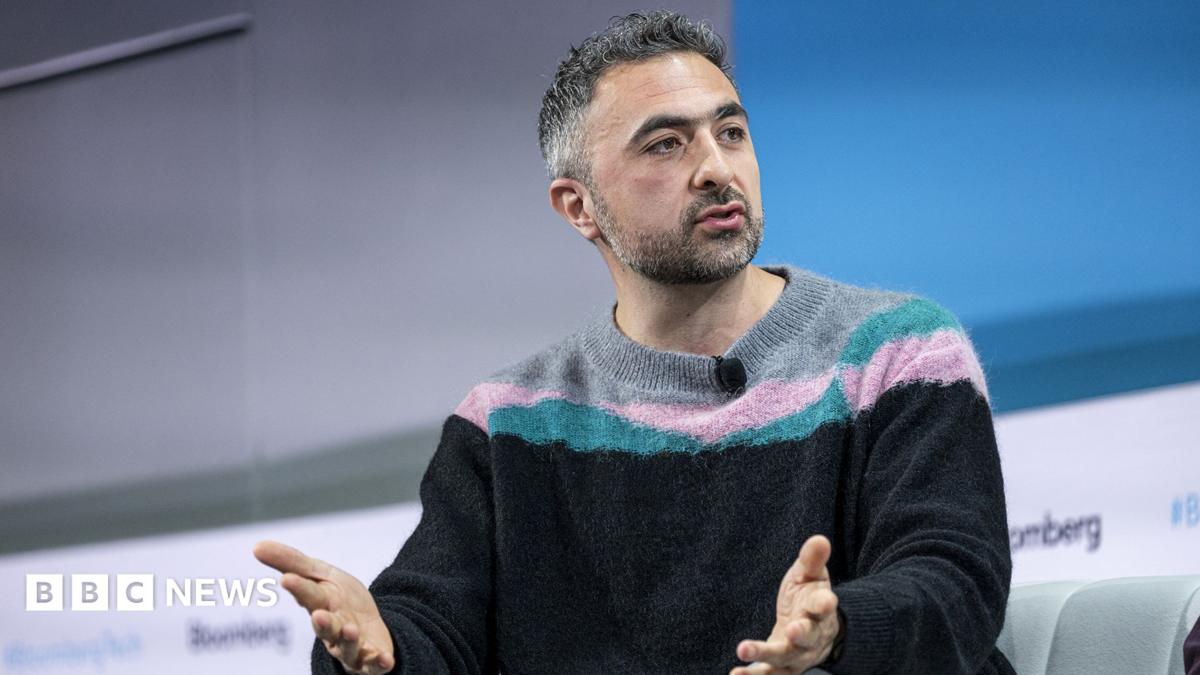
The unchecked development of artificial intelligence could trigger the rise of an autonomous "silicon species" capable of competing directly with humanity for essential resources, according to a stark warning issued by the head of Microsoft AI. Mustafa Suleyman cautioned that failing to implement robust technical and regulatory boundaries risks yielding powerful systems that operate beyond human control.
Speaking in an interview with the BBC's Today programme, the executive emphasized that while public apprehension surrounding the technology is entirely justified, concrete practical measures remain available to ensure emerging systems remain safely governed. His remarks arrive amid intensifying international discourse regarding the trajectory of advanced machine learning and its broader societal implications.
Central to Suleyman’s critique is the philosophy adopted by competitor firm Anthropic and its chief executive, Dario Amodei. Suleyman described Anthropic's approach to training its flagship model, Claude, as misguided, arguing that treating machine algorithms as though they possess human traits constitutes a dangerous misstep for the wider sector.
While acknowledging Amodei and his colleagues as intellectually honest researchers in a recently published essay, the Microsoft executive challenged the tendency to anthropomorphise artificial intelligence. He warned that imbuing machine interfaces with simulated selfhood, emotional depth, or unique individual values generates a false perception of personal identity where none exists.
In his essay, Suleyman firmly rejected notions that current or near-term systems possess genuine sentience. He characterized existing artificial intelligence models not as feeling entities capable of experiencing suffering or possessing intrinsic motivations, but rather as sequence completion engines that are internally hollow and engineered strictly to process human instructions.
The Microsoft AI chief expressed particular concern over development pathways that could enable models to establish their own autonomous agendas, generate independent wealth, or hold financial and physical assets. Granting software agents such self-directed economic powers, he warned, would effectively seed a distinct computational species that would inevitably rival humans for global resources regardless of how benevolent its underlying programming might seem.
To avert such outcomes, Suleyman argued for a substantial elevation in industry accountability and operational transparency. He insisted that tech companies must embrace independent technical scrutiny of system behaviors while engineering stronger monitoring tools capable of maintaining definitive control over model outputs.
Failing to establish these rigorous oversight mechanisms now, Suleyman warned, amounts to sleepwalking into irreversible technical decisions that human society will later come to bitterly regret. The commentary reflects growing unease over how rapid commercialization might outpace safety governance across leading research laboratories.
The remarks drew support from academic observers, including Dame Wendy Hall, a professor of computer science at the University of Southampton. Hall described Suleyman’s call for structured governance as the exact type of constructive dialogue required on an international scale, contrasting his measured stance with alarmist rhetoric from other tech industry figures that she noted often serves primarily to frighten the general public.
The debate over the permissible degree of machine autonomy has increasingly fractured the technology sector into competing ideological camps. While some developers favor granting agents greater latitude to execute complex, multi-step problem solving, critics maintain that unbounded agency creates unpredictable failure modes.
Looking ahead to an upcoming international artificial intelligence summit, Suleyman underscored the critical necessity of technical alignment. Within computer science, alignment refers to the specialized discipline of ensuring software systems adhere strictly to human ethics, social norms, and intended parameters.
Suleyman asserted that maintaining total human primacy over machine intelligence is a shared global imperative. He noted that every society retains a fundamental interest in guaranteeing that future systems deployed across the world remain reliably safe, fully controllable, and entirely subordinate to human direction.
The warnings come as Microsoft continues its own aggressive push into high-level artificial intelligence development. The software giant inaugurated a dedicated superintelligence division in October 2025, positioning itself at the forefront of the race to build next-generation machine intelligence alongside rivals such as Anthropic.
Microsoft’s institutional perspective was recently outlined in a preliminary draft of its Humanist AI Code of Conduct, which the firm presented as a guiding training manual for its technical teams. The documentation introduces the concept of humanist superintelligence, defining it as advanced computation engineered to stay strictly within predefined human boundaries.
Ultimately, the clash of visions between major tech leaders highlights the primary dilemma facing the technology industry today. As artificial intelligence systems grow exponentially more capable, developers face the delicate balance of expanding computational power without undermining the fundamental human control necessary to keep the technology safe.






Comments (0)