 lukman-hakim
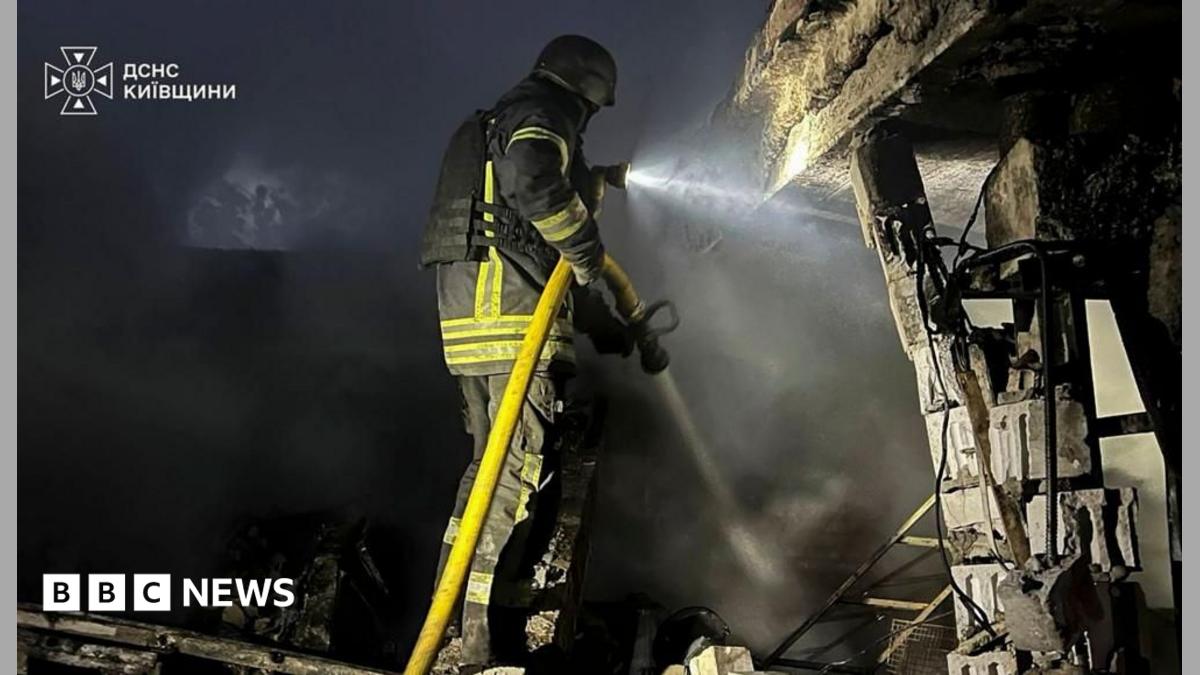
Russia has carried out its most extensive assault on Ukraine's energy infrastructure in months, launching a wave of overnight strikes that primarily focused on Kyiv and the surrounding region, according to Ukrainian Prime Minister Serhiy Koretskyi. The coordinated attack represents a significant escalation in Moscow's ongoing campaign against civilian infrastructure as winter approaches.
At least six people were killed and 33 others injured across the country during the overnight bombardment, local authorities confirmed. Among the dead was a child whose body was recovered from beneath the rubble of a destroyed house in the Kyiv region, according to regional governor Timur Tkachenko.
The strikes caused substantial damage to power supplies, with Ukraine's largest private energy company, DTEK, reporting that electricity had been restored to 8,000 homes following what it described as "a difficult night" for the capital. The scale of the disruption underscores the vulnerability of Ukraine's energy network to sustained Russian attacks.
Russia's defence ministry stated that one of its targets was the Trypilska power station, which serves as the largest electricity supplier to Kyiv. Ukrainian officials have not confirmed this claim, and the discrepancy highlights the challenges of verifying military objectives in an active conflict zone.
In a statement posted on Telegram, Prime Minister Koretskyi emphasised the relentless nature of Russia's campaign against Ukraine's energy system. "Since the summer, there has effectively not been a single day without enemy attacks on our energy infrastructure," he said. "However, a mass and combined attack of this scale has occurred for the first time since the end of the last heating season."
The timing of the assault aligns with Ukraine's expectations of another protracted Russian effort to cripple the country's power grid. Such campaigns have occurred every winter since Russia's full-scale invasion began in 2022, suggesting a calculated strategy to weaponise energy supplies during the coldest months.
The overnight attacks affected a total of 11 regions across Ukraine, according to Koretskyi, with residential buildings, social infrastructure, civilian enterprises, and railway facilities also coming under fire. The breadth of the assault demonstrates Russia's capacity to strike multiple locations simultaneously, complicating Ukrainian defence and emergency response efforts.
Ukrainian President Volodymyr Zelensky reported strikes on critical infrastructure in the Zhytomyr, Mykolaiv, Kirovohrad, and Rivne regions. The geographical spread of the attacks indicates a nationwide operation rather than a narrowly focused military objective, raising concerns about the humanitarian impact on civilians far from the front lines.
By Wednesday, households in the Kyiv, Dnipropetrovsk, Donetsk, Sumy, and Kharkiv regions continued to experience power outages, Ukraine's energy ministry reported. State-owned grid operator Ukrenegro advised residents to avoid using high-powered electrical appliances between the hours of 10:00 and 16:00 local time as electricity supplies remained lower than usual.
In Kyiv, residents awoke to find the city enveloped in thick, acrid smoke following a night punctuated by the sound of explosions. An air raid alert remained in effect, and the distant echo of air defence gunfire reverberated through the murky atmosphere, according to reports from the capital.
Authorities in several districts advised residents to keep their windows closed until the smoke dissipated, reflecting concerns about air quality and potential health hazards from the strikes. The advice highlighted the immediate dangers faced by civilians even after the immediate violence of the attacks had subsided.
Kyiv Mayor Vitaly Klischko confirmed that three people were killed in the capital, including a utility company worker who died at a warehouse building. It remains unclear whether the three fatalities he mentioned included the child killed elsewhere in the Kyiv region.
In the north-eastern Sumy region, two people were killed, according to governor Oleh Hryhorov. Another fatality was reported in the Mykolaiv region by acting regional governor Heorhiy Reshetilov, bringing the confirmed death toll to at least six across the country.
Russian President Vladimir Putin launched a full-scale invasion of Ukraine in 2022, and Moscow currently controls approximately 20% of Ukrainian territory. The ongoing conflict has resulted in tens of thousands of casualties and displaced millions of people, with no resolution in sight as both sides continue to pursue military objectives.
The latest strikes underscore the persistent threat to Ukraine's civilian infrastructure and the challenges facing its energy sector. With winter approaching, the ability to maintain power supplies will be critical for heating, healthcare, and other essential services, making the coming months a potentially perilous period for millions of Ukrainians.








Comments (0)