 lukman-hakim
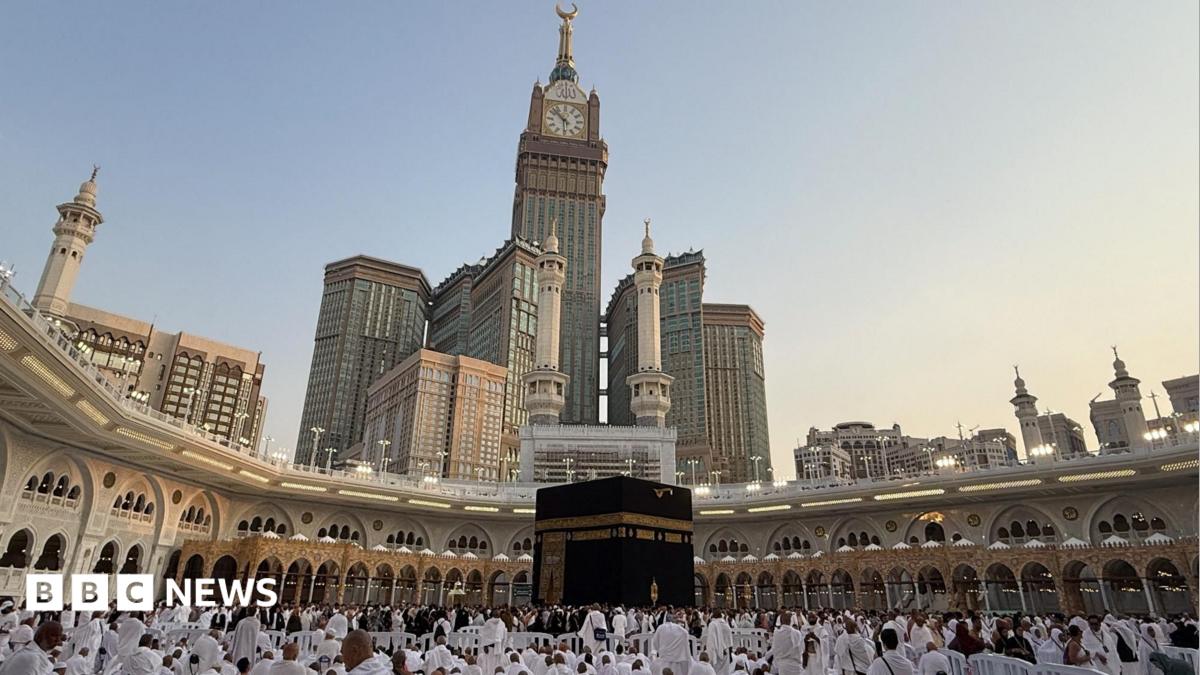
Saudi military forces intercepted and destroyed an unmanned aerial vehicle launched by Yemen's Houthi movement south of the holy city of Mecca on Tuesday evening, according to statements released by the Saudi-led military coalition. The interception comes amid a sharp escalation in regional hostilities that threatens key shipping corridors and critical energy infrastructure across the Arabian Peninsula.
Major General Turki al-Maliki, speaking on behalf of the Saudi-led coalition, condemned the attempted attack near Islam's most revered site and the primary destination for the annual Hajj pilgrimage. He characterized the incident as a disgraceful act of aggression and warned that coalition forces would not hesitate to enact decisive, deterrent countermeasures against the hostile conduct of the Houthi militia.
The reported drone incident immediately triggered diplomatic condemnation across the Islamic world. The 57-member Organisation of Islamic Cooperation issued a strong rebuke, declaring that any attempted strikes targeting the sacred regions of Mecca or Medina province constitute an unacceptable and intolerable transgression against the Islamic world's holiest sanctuaries.
In response, the Iran-backed Houthi movement, which exercises control across much of western Yemen, categorically rejected the Saudi accusations. Military spokesman Yahya Sarea dismissed the coalition's claims as fabricated lies, insisting that Houthi forces pose no danger to religious holy places and maintain that their offensive operations strictly target Saudi oil infrastructure and military installations located far from sacred ground.
Sarea claimed that the group's recent barrage of drones and missiles represented a direct retaliation against Saudi Arabia for conducting more than 450 airstrikes across Houthi-held territory within the preceding week. The Houthi military also claimed responsibility for downing a Saudi fighter aircraft operating over Yemen's contested Marib province, an assertion that coalition officials did not immediately address.
The aerial incident prompted authorities within Saudi Arabia to issue brief public security alerts warning residents of incoming projectile threats across several western administrative zones, including the kingdom's commercial center of Jeddah and the surrounding Mecca region. Simultaneously, the United States embassy in Riyadh revised its travel guidance, urging American citizens to reconsider travel to the country due to persistent missile and drone threats directed at population centers, diplomatic compounds, airports, and military and energy sites.
The heightened cross-border aerial exchanges coincide with sweeping territorial gains by Houthi forces along Yemen's Red Sea shoreline, where pro-government troops backed by Saudi Arabia have lost significant ground. Among these captures are the strategically vital port of Mokha and Perim Island, positions that directly overlook the Bab al-Mandab Strait, an essential maritime bottleneck linking Asian trade to Europe via the Red Sea and the Suez Canal.
While Houthi leadership maintains that commercial international maritime traffic remains safe, they have reaffirmed an active policy of targeting Saudi-flagged vessels. This maritime pressure creates immense vulnerability for Riyadh, which has grown increasingly reliant on Red Sea waterways for crude exports following the effective closure of the Gulf's Strait of Hormuz triggered by military conflict involving the United States, Israel, and Iran.
Compounding the kingdom's logistical challenges, the vital East-West Pipeline, designed to transport crude oil across the country from Gulf production fields to the Red Sea port of Yanbu, remains non-operational following substantial damage sustained in a strike blamed on Iran-backed Iraqi militias. While industry analysts caution that technical repairs could sideline the conduit for over a month, United States Energy Secretary Chris Wright offered an optimistic assessment on Tuesday, projecting crude transport could resume within several days.
Against this backdrop of mounting economic and military strain, Saudi Crown Prince Mohammed bin Salman has directly urged US President Donald Trump to authorize direct American military action against Houthi forces in Yemen. However, President Trump has resisted direct involvement of US forces, choosing instead to provide logistical support, target intelligence, and broader strategic backing, as administration officials affirmed ongoing discussions regarding stability in the region.
At the United Nations headquarters, the Security Council convened an emergency session on Tuesday to address the deteriorating regional environment. Both the recognized government of Yemen and Saudi representatives implored international leaders to take robust action against the Houthi blockade in the Bab al-Mandab, warning of economic extortion. Council members affirmed that the principle of uninterrupted navigation through the Red Sea must be protected to shield the global economy from severe disruption.
The resurgence in armed hostilities is exacting a severe humanitarian toll on Yemen's civilian population, with the International Organization for Migration reporting that more than 90,000 individuals have been displaced by the latest wave of fighting. Amy Pope, the agency's director general, emphasized that vulnerable families are being forced to flee for their lives repeatedly, stripped of their remaining livelihoods.
Health conditions continue to deteriorate rapidly across conflict zones, with the World Health Organization documenting at least 500 fatalities since early August, including nearly 300 deaths over the course of a single week.
The latest violence marks the breakdown of an informal four-year truce that disintegrated in July after the Houthis declared a maritime embargo on Saudi Arabia, citing ongoing airport closures and port blockades in northern Yemen. The overarching conflict, which began with the Houthi capture of Sanaa in 2014 and the subsequent Saudi-led intervention in 2015, has claimed over 150,000 lives and left more than 22 million people dependent on humanitarian aid.





Comments (0)