

Texas Executes Jamaal Howard After Courts Reject Appeals Tied to Christa Pike's Failed Lethal Injection
Texas carried out its first execution since last week's troubled lethal injection attempt on Christa Pike, putting 46-year-old Jamaal Howard to death on Wednesday evening at the st
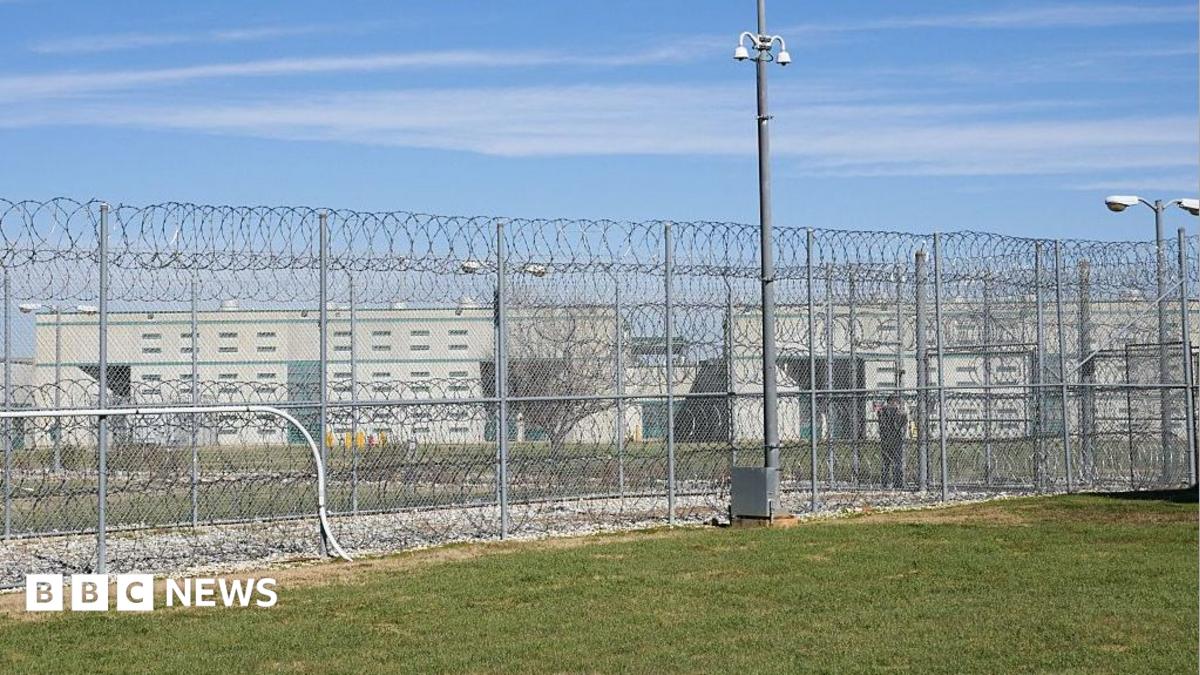
Texas carried out its first execution since last week's troubled lethal injection attempt on Christa Pike, putting 46-year-old Jamaal Howard to death on Wednesday evening at the state prison in Huntsville. Prison officials pronounced Howard dead at 8:03 p.m. local time after he received a fatal dose of pentobarbital, the same drug at the center of the controversy surrounding Pike's case in Tennessee. His execution marked the first in the United States since Pike's highly publicized failed procedure, which has intensified scrutiny of capital punishment protocols nationwide.
Howard had been convicted and sentenced to death for the 2000 murder of Vickie Swartout, a 42-year-old convenience store clerk. According to court records, Howard was 20 years old when he entered the store, shot Swartout during a robbery, and made off with a carton of cigarettes and $114 from the register. The crime occurred in Texas, where Howard was subsequently tried, convicted, and condemned to death row, where he spent more than two decades awaiting his fate.
In the days leading up to Wednesday's execution, Howard's legal team launched an eleventh-hour effort to halt the proceedings. His lawyers filed motions asking a judge to pause the execution, citing the failed attempt to execute Pike just one week earlier. They argued that because Texas planned to use pentobarbital — the same drug involved in Pike's botched procedure — Howard faced the same risk of a prolonged, painful death. The legal team also contended that Texas' supply of the drug may have degraded over time, mirroring arguments made by Pike's attorneys in Tennessee.
Courts denied those requests at two levels of the judiciary, and the U.S. Supreme Court rejected a final appeal late Wednesday. In their filings, Howard's attorneys had warned that Texas should not rush to follow Tennessee's example, suggesting that a stay would prevent a similar outcome. They also directed a direct plea to Republican Governor Greg Abbott, asking him to delay the execution by 30 days so they could gather additional information about the drug to be used. Abbott declined to grant the delay.
The execution went forward despite the unresolved questions about pentobarbital's efficacy and condition in Texas' possession. Witnesses reported that Howard was asked whether he had any final words before the lethal dose was administered. He used the opportunity to address Swartout's family members, who watched from a witness room. Howard offered an apology, saying he wished they would accept it and learn to forgive him. "I'm sorry for what happened. I wish you can learn to forgive me one of these days," he said, according to U.S. media accounts of his statement.
Howard's case has drawn fresh attention to the broader debate over lethal injection as a method of execution. The Pike case in Tennessee, in which the execution was abandoned after difficulties establishing an intravenous line and administering the drugs, has raised new doubts about the reliability of the procedure even in states with long experience carrying it out. Anti-death-penalty advocates argue that such incidents demonstrate the inherent cruelty of capital punishment, while supporters of the practice maintain that botched executions are rare and that justice for victims' families must be served.
Texas has long been the most active state in carrying out executions in the United States, and Wednesday's procedure underscored its continued commitment to the practice even amid national controversy. Howard's execution was the first since Pike's failed procedure, making it a closely watched test case for how other states would respond to the heightened scrutiny. Legal experts note that challenges based on drug quality and sourcing are becoming more common as pharmaceutical companies have increasingly restricted the sale of their products for use in executions.
The U.S. Supreme Court's refusal to intervene followed its pattern in recent years of declining to halt executions when appeals focus on method-of-execution claims rather than claims of actual innocence or clear constitutional violations. Howard's attorneys had hoped that the timing — coming just one week after Pike's ordeal — might prompt greater judicial caution, but appellate courts found no legal basis to stop the execution.
Swartout's family members attended the execution as witnesses, a right afforded to victims' relatives under Texas law. They did not speak publicly immediately after Howard was pronounced dead. Howard, who was 20 at the time of the murder, had spent roughly 26 years on death row. His age at the time of the crime and the relatively small amount of money taken during the robbery have been cited by death penalty opponents as reasons to question the proportionality of the sentence, though courts repeatedly affirmed the conviction and punishment.
The execution also renewed attention to the broader national landscape of capital punishment. Several states have paused executions in recent years due to difficulties obtaining lethal injection drugs, while others have explored alternative methods such as nitrogen hypoxia or firing squads. The controversy surrounding Pike's case may accelerate those debates, as lawmakers and corrections officials weigh the practical and ethical challenges of carrying out death sentences.
For now, Howard's execution stands as the first U.S. execution since the Pike incident, and it is likely to feature prominently in ongoing legal and legislative discussions about the future of the death penalty. Advocates on both sides of the issue will continue to cite the events in Tennessee and Texas as evidence for their positions, with the Howard case illustrating that courts remain reluctant to halt executions based on concerns about drug quality or method. The families affected — both Swartout's and Howard's — must now contend with the aftermath of a case that has become part of a larger national conversation about how, and whether, the state should put people to death.
What's Your Reaction?
 Like
0
 Dislike
0
 Love
0
 Funny
0
 Wow
0
 Sad
0
 Angry
0

Editor Ekonomi. Mantan analis pasar modal. Spesialisasi: makroekonomi, kebijakan moneter, dan perdagangan internasional.






Comments (0)