 lukman-hakim
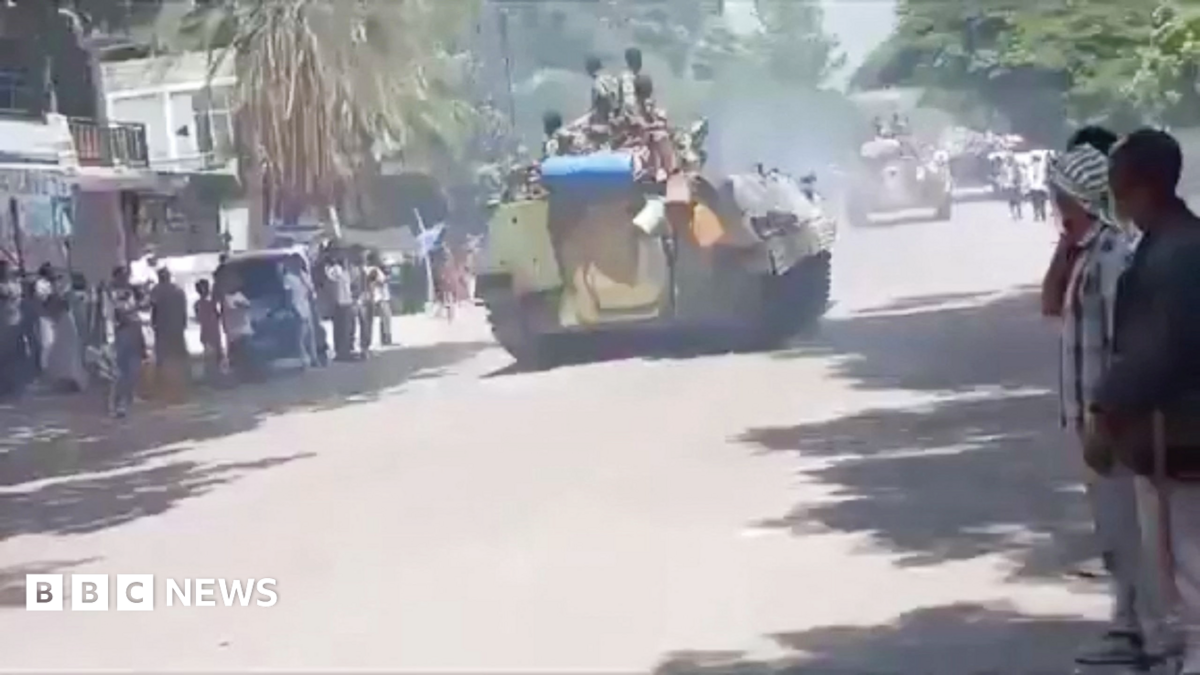
At least 52 civilians have lost their lives in three days of intense clashes around Alamata, a town in Ethiopia's northern Tigray region, according to hospital sources who spoke directly to the BBC. The reported death toll provides a stark indication of the human cost of a conflict that has reignited fears of a full-scale return to war in a region still scarred by a devastating two-year civil conflict.
Medical staff at Alamata General Hospital, who requested anonymity for their own safety, described a scene of widespread destruction caused by heavy explosives and artillery fire, some of which struck residential neighbourhoods. Among those killed during the crossfire were children — including an infant just three days old — as well as mothers and cattle herders. A single strike on the town's market area alone claimed twelve lives, the medic said.
The latest violence appears to have shifted the balance of territorial control in the area. Government troops have seemingly taken Alamata from regional fighters and are now positioning themselves for a northward push toward Mekelle, Tigray's principal city. Video clips circulating on social media, which the BBC has been unable to independently verify, show army tanks and armoured vehicles moving through Alamata's streets following several days of clashes.
Fighting erupted last week after months of mounting friction between Ethiopia's federal government and the Tigray People's Liberation Front (TPLF), the party that administers Tigray. Each side has accused the other of breaching the terms of a 2022 peace agreement that brought an end to a brutal two-year civil war, a deal that many had hoped would permanently silence the guns in the region.
The two parties remain at odds over who fired first in the current round of hostilities. The TPLF contends that its forces were responding to a federal offensive that included drone strikes, while the government in Addis Ababa insists that Tigrayan fighters launched the initial attack after seizing control of airports across the region. With communications to Tigray largely severed, independent verification of either account remains extremely difficult.
The humanitarian consequences are deepening by the day. Since the outbreak of fighting, the federal government has suspended banking services across Tigray, and internet access has been cut — although it remains unclear which authority ordered the shutdown. A separate source in Alamata told the BBC that the situation on the ground is deteriorating rapidly, with the town swelling with civilians who have fled surrounding areas on foot, some walking for as long as an hour in search of safety.
"All the residents of the surrounding areas entered the town of Alamata by walking on foot for as long as an hour, hoping the town would be safe," the source said. "Unfortunately, everything is blocked — no banking service, no money transfer, no power, no internet, no phone. Hence people are in crisis, simply suffering, everyone is desperate and frustrated."
The scale of the casualties is underscored by figures from Médecins Sans Frontières (MSF), the medical charity, which reported that more than 700 wounded individuals have been admitted to hospitals it supports across Tigray in recent days. The figure suggests that the true toll — both dead and injured — is likely to rise as fighting continues and access to medical care remains constrained.
The conflict has not been confined to Tigray alone. In the neighbouring Amhara region, 33 tourists have been stranded for the past week in Lalibela, a town renowned for its 13th-century rock-hewn churches and a UNESCO World Heritage site. A British tourist, who asked not to be identified, told the BBC's Newsday programme that the sounds of gunfire and artillery shells had echoed through the area throughout the week.
The tourist described a substantial military presence in Lalibela, a site of profound spiritual significance for millions of Orthodox Christians. Most visitors have been unable to leave since the airport closed to commercial flights last Wednesday. While 14 Israeli tourists were evacuated by military helicopter on Monday, and five others departed a day earlier via an NGO convoy despite warnings against road travel, those remaining include a large group of Americans alongside Israelis, Britons, South Koreans, South Africans, an Ethiopian-New Zealander and a Mexican.
According to the British tourist, the situation around Lalibela had calmed over the previous two days, and there were signs that the airport — still being used by the military — might reopen on Thursday. "The local people, they are still scared of what might happen," he said, adding that a larger military force had been observed leaving the town and heading north.
The fighting near Lalibela has involved the federal army and an Amhara militia that has aligned itself with Tigrayan fighters. In September, these forces joined with other Ethiopian armed movements to establish a seven-member alliance, openly stating their intention to remove the government in Addis Ababa. The formation of this coalition has significantly broadened the scope of the conflict and raised the prospect of simultaneous fronts across multiple regions.
TPLF fighters are also engaged in the Afar region, a strategically vital corridor that links landlocked Ethiopia to the ports of Djibouti. Control over this route carries enormous economic implications, as it serves as the primary conduit for Ethiopia's imports and exports. Any prolonged disruption there could reverberate far beyond the battlefield.
There are also growing concerns that Eritrea could be drawn into the conflict. The Ethiopian government has accused Asmara of providing support to the armed groups — an allegation Eritrea firmly denies. The involvement of external actors would add another volatile dimension to an already complex and fast-moving crisis.
Reporting from Tigray and its surrounding areas remains extremely challenging for journalists. Communications to the region have been cut, making it nearly impossible to establish a clear picture of events on the ground. The BBC has acknowledged that it cannot report directly from the affected zones, leaving hospital sources, social media footage and eyewitness accounts as the primary means of understanding what is unfolding.
For families cut off by the telecommunications shutdown, the Tigray Broadcasting Service (TBS), based in Addis Ababa, has launched an initiative aimed at reconnecting loved ones. The broadcaster plans to collect video messages through its Telegram channel from people outside the region and air them via satellite television, offering a modest but meaningful lifeline to those desperate for news of relatives caught in the conflict zone.
The renewed hostilities represent a grave setback for a region that endured enormous suffering during the 2020-2022 civil war, which left hundreds of thousands dead and displaced millions. The 2022 peace deal was hailed internationally as a crucial step toward stabilisation, but the current escalation suggests that the underlying grievances and rivalries that fuelled the original conflict were never fully resolved. With government forces pressing toward Mekelle and alliances shifting across the north, the coming days may prove decisive in determining whether Ethiopia descends once more into widespread war.









Comments (0)