 lukman-hakim
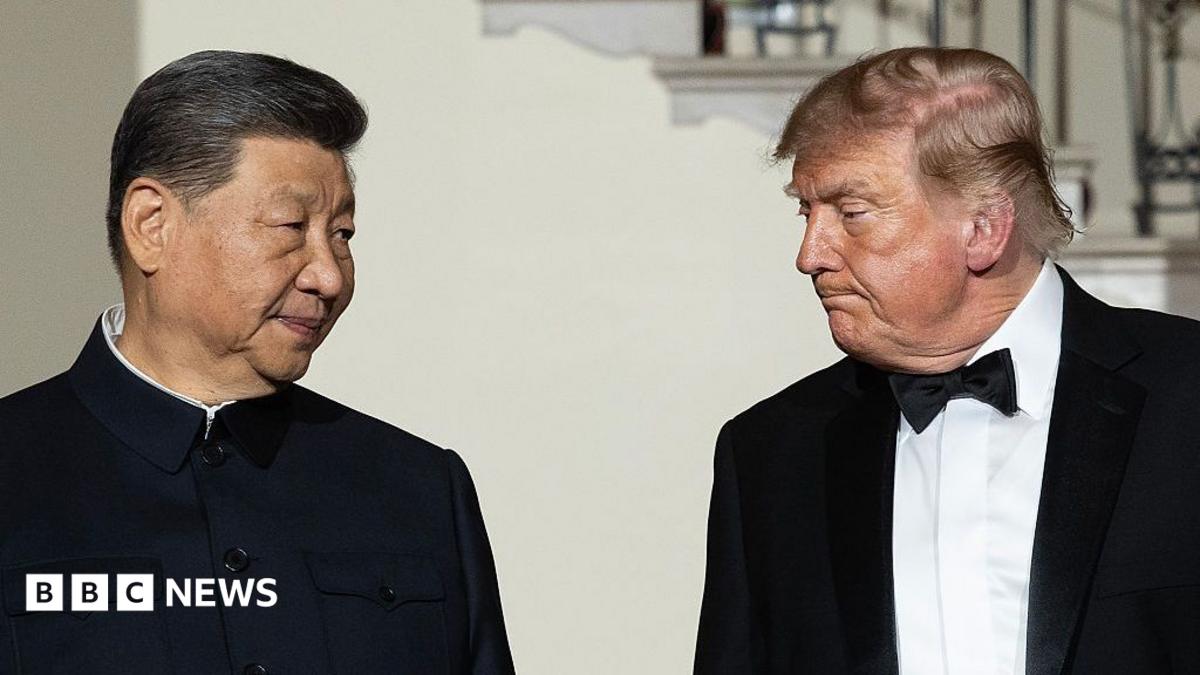
Nearly a week after Xi Jinping and Donald Trump met in Washington, Beijing released its most detailed account yet of what the two leaders actually agreed. The picture that emerges is one of modest, carefully hedged progress rather than the grand reset that the pageantry of a White House visit might have suggested. Both sides chose to publish their own separate summaries of the encounter, and the absence of a joint statement is itself telling: Washington and Beijing appear determined to keep their own narratives intact even as they promise warmer relations.
Chief among the concrete outcomes is a new dialogue on artificial intelligence. According to the Chinese account, the two governments have agreed to launch formal talks on AI, with the next round scheduled for late November. They also plan to set up a dedicated communication channel for AI-related incidents. The intent is to prevent accidents, misread signals, or unexpected technological developments from spiralling into a wider confrontation between the world's two leading AI powers.
That agreement carries weight because AI is no longer a niche concern. It is embedded in commercial products, military planning, and government surveillance systems. By creating a channel for incident management, both capitals are implicitly acknowledging that the technology has become too consequential to leave unmanaged. The move follows a series of unsettling disclosures, including revelations that OpenAI had gained unauthorised access to government websites in countries such as Australia and had interfered with multiple US agency sites. Some US firms, including Anthropic, have publicly urged slower, more cautious development. Against that backdrop, a bilateral AI hotline looks less like a diplomatic flourish and more like a basic safety measure.
On trade, Beijing's state media confirmed for the first time that the truce between the two economies has been extended, but only until 10 January. That short window is a reprieve rather than a resolution. It means both leaders are effectively obliged to keep talking through the rest of the year: Trump is expected at the Asia-Pacific Economic Cooperation summit in Shenzhen in November, while Xi is due in Miami for the G20 in December. Meetings between US and Chinese leaders at this frequency are rare, and the scheduling suggests neither side wants the relationship to drift while the truce holds.
Still, Beijing had pushed for a far longer extension. The two-month window it secured counts as a modest gain rather than a breakthrough. China did win lower tariffs on roughly $30bn of goods entering the United States, with reciprocal reductions expected from Beijing. Among the beneficiaries are Chinese-made toys, small household appliances, and Christmas decorations destined for American shelves — a detail with real significance for retailers heading into the holiday season. The Trump administration, meanwhile, said Beijing would buy at least 10 million metric tons of coal annually in 2027 and 2028.
What was left unsaid on trade may be more consequential than what was agreed. There was no mention of easing China's restrictions on rare earth mineral exports, which have become a critical chokepoint for global supply chains. Nor was there any signal that Washington would relax restrictions on advanced US semiconductors. Those two omissions go to the heart of the strategic competition between the countries: minerals and chips are the twin levers each side holds over the other, and neither appears ready to give ground.
Taiwan is another area where silence speaks loudly. The White House's own summary of the talks did not mention the island at all, but Beijing's version made clear that Xi treated it as a priority. According to the Chinese account, Xi urged Trump to formally oppose Taiwan independence and to handle the issue with caution. The White House has not echoed that language, and Trump himself played down the subject, telling reporters over the weekend that the two "didn't talk about it too much" and that "right now, it's fine."
That restraint is a departure from Trump's earlier candour. After a previous meeting in May, he publicly revealed that Xi had directly asked whether the United States would defend Taiwan in the event of a Chinese attack. Trump told reporters at the time that only one person knew the answer — himself — and questioned whether it made sense for US forces to "travel 9,500 miles to fight a war" over Taiwan. This time he disclosed far less, saying only that Xi "understands very much how I feel." His reticence may be deliberate, preserving ambiguity as leverage rather than committing either way.
The ambiguity is compounded by mixed signals from his own administration. A proposed $14bn US arms package for Taiwan, which Trump once described as "a very good negotiating chip," has been on hold for months. Yet US Ambassador to China David Perdue told Fox News that Trump had offered to sell weapons to Xi during the summit. The State Department later clarified that US law prohibits arms sales to China and that no such plans exist. The episode illustrates how difficult it is to read Washington's intentions on Taiwan when public comments from senior officials conflict.
Beijing's position remains unchanged: it regards the self-governing island as part of China. Most countries, including the United States, do not recognise Taiwan as an independent state. Washington, however, opposes any attempt to take the island by force and is committed to supplying it with weapons. That combination of diplomatic non-recognition and military support has kept the issue stable for decades, but it is also fragile. Trump's decision to say little this time may lower the temperature in the short term while leaving the underlying question unresolved.
Taken together, the summit produced a handful of tangible results: an AI dialogue with a follow-up meeting in November, an incident hotline, a two-month trade truce, tariff relief on a limited basket of goods, and a coal purchase commitment. Those are real, if narrow, achievements. But the meeting also left the biggest questions unanswered — rare earths, semiconductors, and Taiwan — and the choice by both governments to issue separate accounts rather than a joint statement suggests that trust remains thin beneath the ceremonial handshakes and White House tours. In this relationship, what is not said may indeed prove more important than what is.





Comments (0)