 lukman-hakim
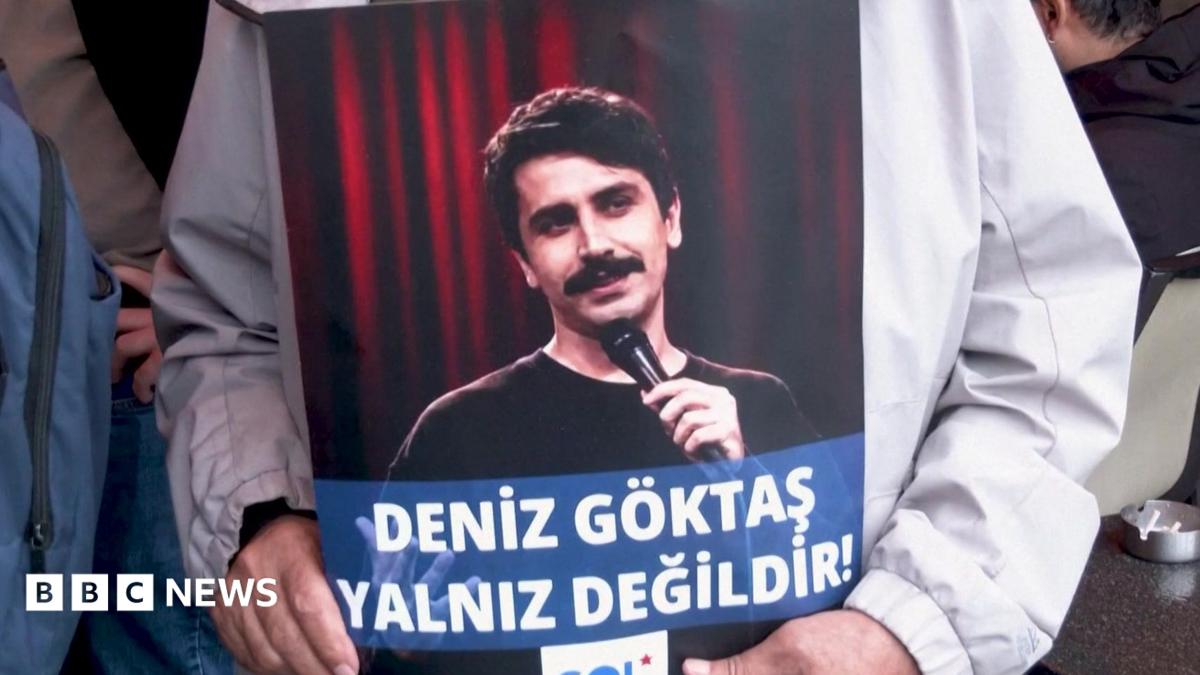
An Istanbul court on Monday convicted prominent Turkish stand-up comedian Deniz Göktaş of insulting President Recep Tayyip Erdoğan, handing down a sentence of nearly 19 months. However, the judge ordered his immediate release from custody, crediting the roughly 90 days he had already spent behind bars since his arrest in July. The court also imposed a travel ban, preventing Göktaş from leaving Turkey while the case remains under appeal. A final ruling will come from a higher court, meaning the conviction is not yet legally settled.
The verdict came after prosecutors had sought a far harsher punishment of up to 12 years in prison, arguing that Göktaş's comedy routine crossed the line from satire into criminal insult. The case centered on a line from his stand-up act in which he referred to Erdoğan as a "shy dictator." The routine, posted on YouTube, went viral and attracted more than 15 million views before his arrest. Göktaş steadfastly denied any wrongdoing, insisting that his words were protected political speech rather than defamation.
"Dictator is not an insult," Göktaş argued during the proceedings. "It is a political characterisation." His defense rested on the principle that comedians and critics must be free to describe public figures in blunt, even provocative, terms without facing criminal penalties. The court ultimately disagreed, convicting him, but the sentence of 19 months—minus time already served—was far lighter than the prosecution had demanded, suggesting the panel may have weighed the public outcry and the nature of the remarks differently than the state's lawyers.
Göktaş was initially detained in July at Istanbul airport, handcuffed as he returned from a holiday. The arrest shocked many in Turkey's entertainment and media circles, where he is a well-known and popular figure. He spent 88 days in solitary confinement before Monday's hearing. Yet even behind bars, the comedian displayed the sharp wit that made him famous. "Three months have been taken away from my life," he told the court from the stand. "But I quit smoking, so I'll add another three months to my life." The remark drew laughter and loud applause from those in the courtroom, a rare moment of levity in a legal system that has increasingly become a tool for silencing dissent.
Outside the courthouse, supporters gathered with signs reading "Deniz Göktaş is not alone," expressing solidarity with the comic and demanding his freedom. Among them was fellow comedian Firat Aksal, who described the mood as one of shocked relief. "We hardly know what to do with our happiness," Aksal said. "We are thrilled. To be honest, we weren't hopeful of getting a fair trial." He added that Göktaş planned to rest for a few days, reunite with his family, and then return to the stage—a promise that many of his fans will eagerly await.
The case has become a flashpoint in Turkey's broader crackdown on dissent, which human rights organizations say has intensified in recent years. While Göktaş is expected to walk free within hours, many others remain incarcerated for exercising what international observers consider basic freedoms of expression and assembly. Journalists, human rights campaigners, student protesters, LGBTQ activists, and even the elected Mayor of Istanbul, Ekrem Imamoglu, are among those currently behind bars or facing prosecution. Turkey's prisons, critics note, are filled with individuals whose only crime was to challenge the government's narrative or criticize those in power.
Legal experts point out that Turkey's penal code includes provisions against insulting the president that are unusually broad and frequently used to prosecute satirists, journalists, and ordinary citizens. Those convicted can face prison terms, fines, or both, and the law offers little room for defenses based on artistic expression or political commentary. The European Court of Human Rights has repeatedly ruled that such prosecutions violate freedom of speech guarantees, but domestic courts continue to apply the statute with regularity. Göktaş's relatively light sentence and release may reflect growing awareness of international scrutiny, but activists warn it does not signal a broader retreat from the government's hardline stance.
The comedians' supporters argue that the verdict itself—a criminal conviction for a joke—sets a dangerous precedent, even if the punishment was mitigated by time served. A travel ban also remains in effect, restricting Göktaş's movement and serving as a lingering reminder that he is not fully exonerated in the eyes of the law. The appeals process could take months or even years, leaving him in legal limbo and potentially subject to further penalties if the higher court decides to reinstate a longer sentence.
For Turkey's stand-up comedy scene, Göktaş's case has had a chilling effect. Many performers now self-censor, avoiding political material that could be construed as insulting to the president or his government. The viral nature of Göktaş's routine—15 million views—demonstrates that his humor resonated with a wide audience, but it also made him a visible target. His arrest and prosecution sent a clear message: even jokes can have serious consequences in a country where the line between satire and sedition is drawn by prosecutors and judges rather than by the public or the performers themselves.
International reaction to the verdict has been mixed. While some welcomed Göktaş's release as a positive step, others condemned the conviction as further evidence of Turkey's deteriorating record on free expression. Human rights groups renewed their calls for Turkey to repeal laws that criminalize insulting the head of state, arguing that such statutes are incompatible with democratic norms and international obligations. The case is likely to be raised in diplomatic forums, where Turkey's treatment of journalists, activists, and artists remains a point of contention with its Western allies.
As Göktaş prepares to leave prison and return to his family, the larger questions linger. His supporters celebrated his release, but the conviction stands, and the travel ban reminds everyone that freedom remains fragile. The comedian's ability to joke in the face of solitary confinement and a potential 12-year sentence was a testament to his resilience, but the case itself underscores the precarious position of those who dare to speak truth to power in Turkey today. For now, Göktaş will rest, see his loved ones, and perhaps return to the stage. Whether he can perform without fear of re-arrest—and whether his audience can laugh without worrying about the consequences—remains profoundly uncertain.





Comments (0)