 lukman-hakim
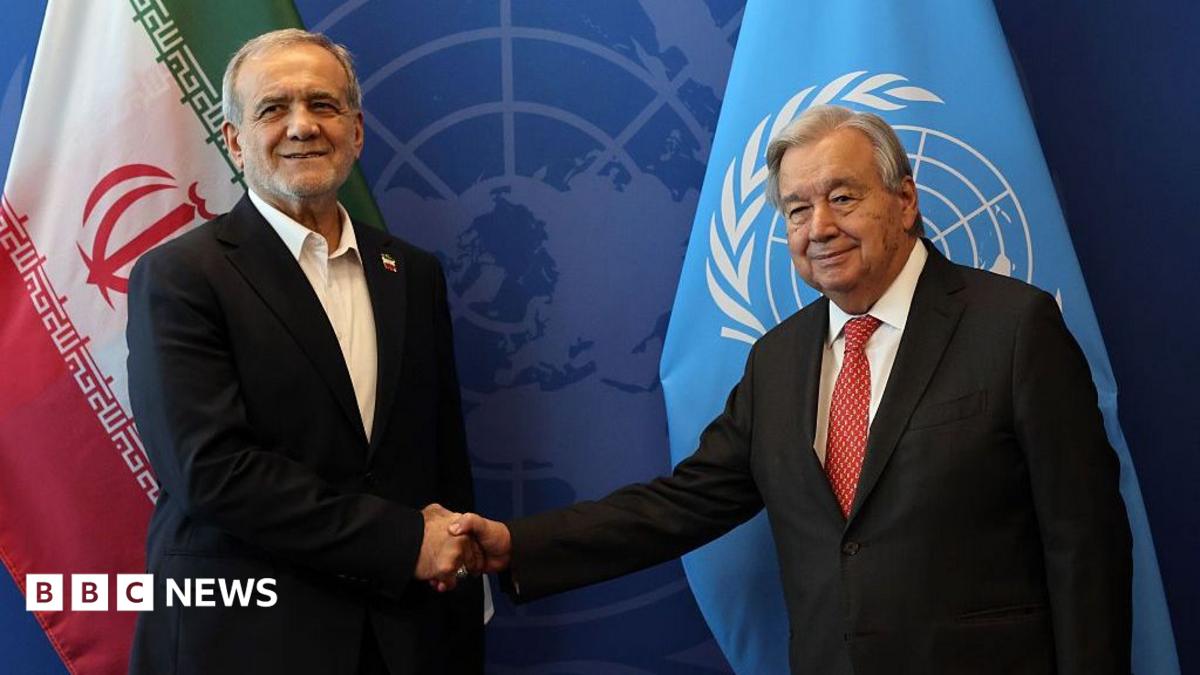
The United States government has officially approved entry visas for high-ranking Iranian officials to travel to New York for the upcoming United Nations General Assembly, despite the direct military conflict between Washington and Tehran now grinding into its seventh month. The decision allows top representatives of the Islamic Republic to enter American territory during an active and escalating wartime standoff.
According to confirmed diplomatic reports, the core contingent cleared to attend the annual global summit includes Iranian President Masoud Pezeshkian alongside Foreign Minister Abbas Araghchi. Their scheduled arrival comes as the geopolitical landscape remains profoundly altered by open warfare across the Middle East.
A spokesperson for the US State Department formally announced the visa approvals on Thursday, explaining that the decision aligns with Washington's legal obligations as the official host country for the United Nations headquarters. The State Department emphasized, however, that the granted permission does not represent an easing of wartime hostilities, pointing out that this year's delegation will be noticeably smaller than those sent to past assemblies.
Under the terms of their admission, members of the Iranian delegation will be subjected to intense operational scrutiny and strict movement limitations throughout their stay in New York City. American authorities have mandated geographic travel restrictions while placing sweeping bans on the visitors' ability to acquire a broad range of domestic commodities.
These commercial prohibitions mirror and reinforce stringent measures applied during previous summits. In the past, visiting Iranian diplomats were barred from shopping at major wholesale bulk retailers such as Costco and were required to obtain explicit authorization from the US government before attempting to purchase high-value luxury items, including expensive vehicles, fine jewelry, and alcohol.
The high-stakes diplomatic gathering coincides with the convening of the 81st session of the UN General Assembly. World leaders and international delegations are descending upon Manhattan for the high-level General Debate, the central centerpiece of the global diplomatic calendar, which is scheduled to formally commence on Tuesday.
The opening day of the General Debate will feature prominent addresses by leading Western heads of state and government. US President Donald Trump is scheduled to address the assembly hall on Tuesday, alongside newly installed UK Prime Minister Andy Burnham and French President Emmanuel Macron, setting an urgent tone for discussions on global security.
The podium schedule indicates that the Iranian leadership is expected to deliver its national address on Wednesday. Speeches on that day will also feature appearances by the leaders of Ukraine and Syria, guaranteeing a day of intense rhetoric centered on protracted armed conflicts and international sovereignty disputes.
The presence of the Iranian delegation occurs against the backdrop of an active shooting war that was initiated on 28 February, when the United States and Israel launched coordinated joint military strikes against targets inside Iran. What began as a targeted campaign has since dragged on past the half-year mark with no immediate signs of a ceasefire or diplomatic breakthrough.
Over the course of the seven-month war, the conflict has widened substantially, destabilizing the wider region. In retaliation for the initial strikes, Iranian forces have repeatedly targeted US military installations, struck sites across Israel, and expanded operations against allied partner states across the Persian Gulf, triggering severe disruptions and driving up energy prices globally.
The prolonged warfare has generated mounting political and public pressure within the United States, placing heavy scrutiny on the White House to articulate a clear strategy to halt the hostilities. Both domestic lawmakers and international observers have increasingly urged the administration to explore diplomatic off-ramps rather than continuing a protracted engagement.
The decision to grant entry to Iranian officials stands in sharp contrast to the US administration's posture toward other regional actors. It was recently confirmed that Washington rejected the visa application submitted by Palestinian President Mahmoud Abbas and his official delegation, barring them from attending the assembly in person.
This visa denial marks the second consecutive year that the Palestinian leadership has been shut out of the New York meetings by the White House, which continues to refuse recognition of the legitimacy of the Palestinian delegation. The refusal has drawn renewed attention to the selective enforcement of host-country commitments during high-profile diplomatic summits.
The gathering in New York unfolds amid heightened international scrutiny regarding the conduct of the ongoing war. United Nations experts have raised serious concerns over potential violations of international law and war crimes tied to military strikes, while documented reports and imagery continue to illustrate substantial physical damage sustained by US installations from Iranian counter-strikes.
With delegations preparing for next week's sessions, the 81st General Assembly is poised to serve as an unprecedented diplomatic collision ground. While the issuance of visas satisfies legal requirements, the arrival of President Pezeshkian and Foreign Minister Araghchi in New York will test the resilience of global diplomacy as war between the host nation and the visiting delegation rages on.





Comments (0)