 lukman-hakim
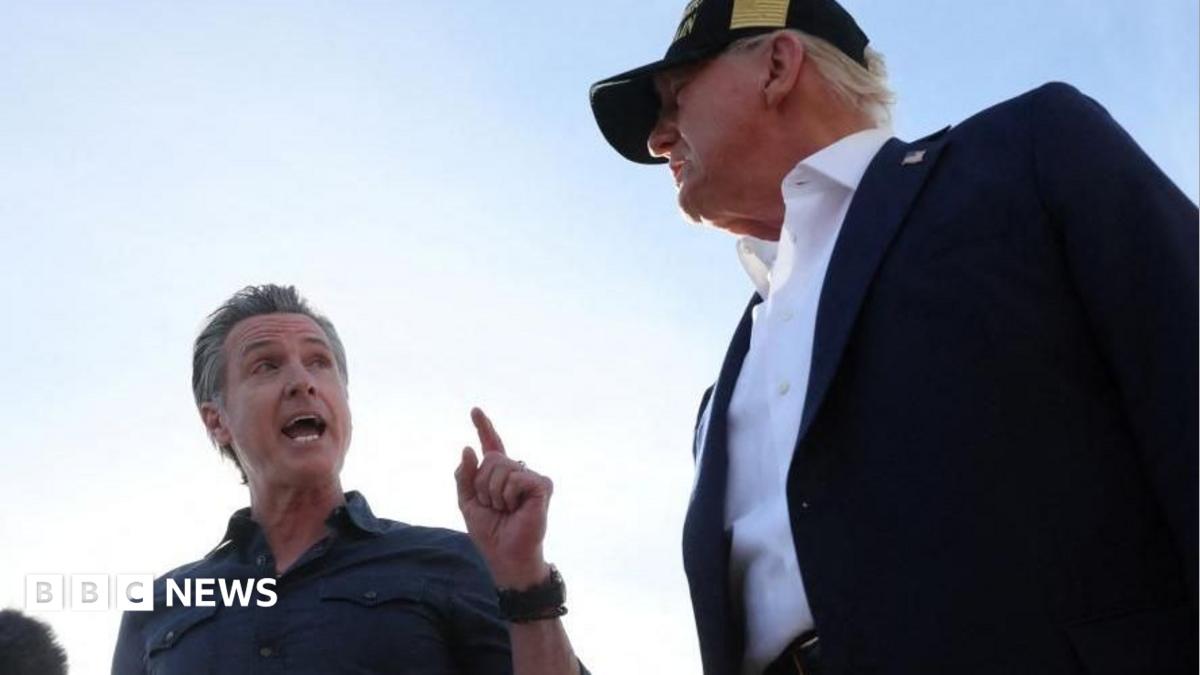
A campaign trail remark by President Donald Trump suggesting that Iran could be permitted to strike Los Angeles and San Diego has set off a sharp political confrontation, with California officials accusing him of recklessly inviting attacks on American cities and the White House insisting his words have been deliberately misconstrued.
Speaking at an election rally in Nebraska, Trump was discussing the conflict with Iran when he framed the military action as a worthwhile sacrifice for global and domestic security. He told the crowd that the danger was tolerable and then named the two California cities directly, saying they could be "taken out." Sections of the audience responded with cheers as he made the remarks, according to accounts of the event.
The comments, published on 6 October 2026, quickly drew condemnation from the state's most prominent Democrats. California Governor Gavin Newsom called the statement deranged and dangerous, using his official social media account to share coverage of the remarks and label them disgusting and disqualifying. Los Angeles Mayor Karen Bass went further, characterising the words as threats and an effort to encourage attacks on American lives.
San Diego Mayor Todd Gloria also weighed in, writing on X that his city should not be treated as collateral damage and demanding that Trump keep it out of what he described as reckless war talk. The president had not publicly responded to the California leaders' statements at the time of the report.
The White House mounted a forceful defence, arguing that the president was describing a threat that would have materialised had he not ordered military action against Iran earlier in the year. Communications Director Stephen Cheung dismissed what he called a media freakout, saying the reaction was not rooted in reality. He argued that Trump was clearly stating US cities would have been threatened if a nuclear-armed Iran had not been stopped.
Cheung went on to claim that America is safer because of the president, asserting that Iran now possesses no nuclear capability, no navy, no air force and no money. A separate post from the official White House rapid response account was more combative, describing Los Angeles Times journalists who reported on the remarks as buffoons and repeating that the president was saying the US is fighting to prevent Iran from acquiring the ability to strike LA and San Diego with a nuclear weapon, something the account said Iran would do if given the chance.
The episode is the latest chapter in a long-running feud between Trump and Newsom, who is widely seen as a possible Democratic presidential contender in 2028. Trump previously described the governor as incompetent, criticising his handling of the response after anti-immigration enforcement protests in Los Angeles turned violent last year. Newsom, in turn, accused the president of a brazen abuse of power after military personnel were deployed to protect federal buildings during those protests. Earlier this year, Trump mocked Newsom's dyslexia, prompting criticism from charities that support people with learning disabilities.
Both cities at the centre of the dispute play outsized roles in US defence infrastructure, which is central to why the president's remark proved so inflammatory. San Diego sits just 17 miles from the Mexican border and ranks as the eighth largest city in the country. It is home to Naval Base San Diego, the principal home port of the US Navy's Pacific Fleet, and to Naval Amphibious Base Coronado, the main West Coast training centre for Navy Seals. Marine Corps Base Camp Pendleton is also located there, employing roughly 70,000 service members and civilians.
Los Angeles, roughly 120 miles north of San Diego, is the second most populous city in the United States. It hosts the headquarters of the US Space Force's space systems command as well as Los Angeles Air Force Base. The concentration of military assets along the Southern California coast underscores the strategic weight of the region, and critics argued that naming those cities in a rally context risked trivialising the prospect of an attack on them.
The administration has consistently maintained that disrupting Iran's nuclear programme was essential to American national security and that any fallout from the conflict was a necessary cost. Officials have repeatedly pointed to the degradation of Iranian military capabilities as evidence that the strategy succeeded. The dispute therefore hinges less on the facts of the war than on how the president's rhetoric should be interpreted, with the White House reading it as a hypothetical warning and his opponents reading it as a genuine endorsement of violence against Americans.
The political implications extend beyond California. The exchange feeds a broader argument over presidential temperament and national security messaging that is likely to feature in the run-up to the midterm elections. For Democrats in the state, the remark offers a fresh opportunity to cast Trump as indifferent to the safety of communities that host critical military facilities, while the White House hopes its rapid response will keep the story framed around deterrence rather than provocation.
For now, the two sides remain locked in duelling interpretations, with no indication that either is prepared to soften its position.






Comments (0)