 lukman-hakim
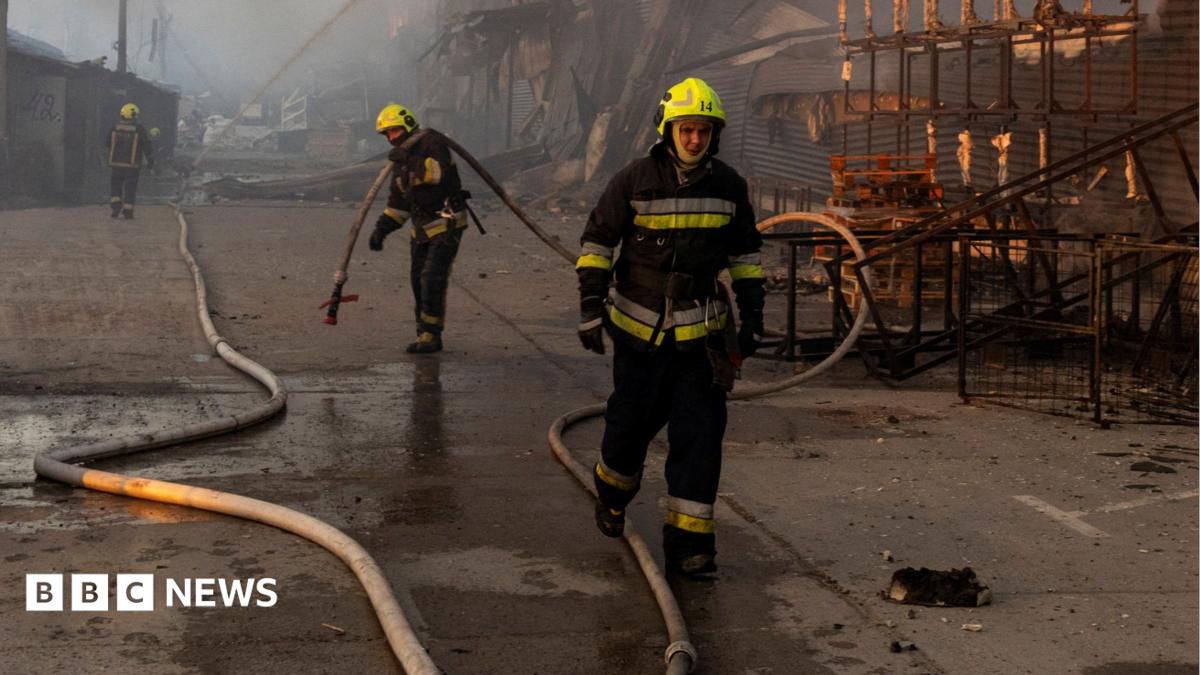
At least 15 people have been killed in a wave of overnight missile and drone attacks targeting central and eastern Ukraine, prompting President Volodymyr Zelensky to label the assault one of Russia's "most vile" actions since the full-scale invasion began. The strikes, which unfolded over several hours, hit civilian areas and critical infrastructure in multiple regions, leaving rescue workers scrambling through rubble in a desperate search for survivors.
The deadliest single incident occurred in the town of Pryluky, located in the Chernihiv region north of Kyiv. According to Zelensky, a residential apartment building was destroyed in what he described as a "birthday 'gift' to Putin," a pointed reference to Russian President Vladimir Putin, who turned 74 on Wednesday. The strike on the five-storey building initially left five people dead and 26 injured, including five children. By later Wednesday morning, Chernihiv Oblast police confirmed the death toll had climbed to nine after the bodies of three children were recovered from the debris. Emergency crews continued searching the site amid fears that more residents remained trapped beneath the collapsed structure.
The attacks extended well beyond Pryluky, with explosions reported in Kyiv, Dnipro, Kremenchuk, Zaporizhzhia, and Oleksandriya. In Dnipro, two people were killed and eight injured after missile strikes damaged five apartment buildings, while four high-rise buildings were hit in Kremenchuk. Two additional deaths were recorded in the capital, Kyiv, and two more in Oleksandriya. The geographic spread of the strikes underscored the challenges facing Ukraine's air defence systems, which Zelensky acknowledged managed to intercept only "some" of the incoming projectiles.
Zelensky stated that Russia launched approximately 70 missiles in total during the overnight assault. He renewed his urgent appeal to Western allies for expanded air defence support packages, arguing that Ukraine's military remains outgunned in its efforts to protect civilian populations and critical infrastructure. The president's plea reflects a longstanding request from Kyiv for more advanced systems capable of intercepting ballistic and cruise missiles before they reach their targets.
One of the primary objectives of the attack, according to Zelensky, was Ukraine's energy infrastructure. Moscow had previously signalled its intention to intensify strikes on power facilities in retaliation for Ukrainian attacks on Russian energy assets. This targeting strategy mirrors patterns observed throughout the war, where Russia has sought to degrade Ukraine's ability to supply electricity and heat, particularly as winter approaches. Such tactics have drawn widespread international condemnation, with critics arguing they constitute deliberate attacks on civilian infrastructure.
In a separate social media post on Wednesday, Zelensky revealed that Ukrainian forces had conducted retaliatory strikes against four targets inside Russia over the preceding 24 hours. These included two oil facilities and a training ground located in the Perm, Samara, and Astrakhan regions. The Ukrainian president also hinted at further operations, writing that "there is also a response in the Black Sea," though he declined to provide specific details about the nature of those actions.
The Black Sea has emerged as a focal point of escalating tensions in recent days. On Tuesday evening, footage circulated showing a massive plume of smoke rising from an oil tanker off the coast of Sochi in southern Russia. The Russian transport ministry later confirmed that unmanned boats had attacked the Liberian-flagged Aframax Rio oil tanker, claiming that the crew had been rescued. The incident marked another escalation in maritime hostilities that have increasingly threatened commercial shipping in the region.
Separately, Bulgaria has suspended its search for the missing crew of a ship that sank after being struck by a drone on Tuesday. Vice-Admiral Rumen Nikolov of the Maritime Administration Executive Agency announced the decision to halt operations, as reported by Bulgarian television network Nora TV. Tracking data indicated the vessel had been anchored at the southern end of the Bosphorus strait until Monday, when it entered the Black Sea heading north. Its final reported position was logged at 23:43 GMT on Monday within Bulgaria's exclusive economic zone.
Bulgarian specialist news outlet Maritime.bg reported that the vessel, identified as the Alfa Watan, was attacked by a drone and sank approximately 70 nautical miles (130 kilometres) east of Byala. In addition to the civilian cargo ship, a second vessel carrying grain was also struck within Bulgaria's exclusive economic zone, according to Prime Minister Rumen Radev. The 18 crew members aboard the second vessel were successfully rescued. Bulgarian authorities have not publicly attributed responsibility for the attacks, though Zelensky claimed in his Tuesday evening address that Russia was responsible. Moscow has not commented on the incident.
The strikes on civilian vessels represent a worrying expansion of the conflict's reach into neutral waters and the economic zones of NATO member states. Bulgaria, as a Black Sea littoral state and NATO member, has found itself increasingly drawn into the security fallout from the war. The attacks on commercial shipping threaten global food security, particularly given Ukraine's role as a major grain exporter, and raise questions about the adequacy of maritime security arrangements in the region.
The timing of the large-scale Russian attack, coinciding with Putin's birthday, added a symbolic dimension to the violence. Zelensky's framing of the Pryluky strike as a "birthday gift" highlighted the personal animosity that has come to define the relationship between the two leaders. Analysts suggest that such symbolic timing may be intended to project strength domestically within Russia, even as the war Grinds on with no clear end in sight.
International reactions to the strikes are expected to intensify calls for increased military assistance to Ukraine. Western allies have already provided significant air defence systems, but Kyiv has consistently argued that the volume and sophistication of Russian attacks require more robust and sustained support. The coming winter months are likely to test both Ukraine's resilience and the durability of Western commitment to its defence.
As rescue operations continued in Pryluky and other affected areas, the full human cost of the overnight attacks remained uncertain. Emergency workers faced the grim task of searching through debris for survivors, while families awaited news of missing loved ones. The United Nations and humanitarian organisations have repeatedly documented civilian casualties in the conflict, emphasising the toll on ordinary Ukrainians who bear the brunt of a war that shows no sign of abating.
The Russian government has yet to issue any official comment on the latest strikes or the Ukrainian claims of retaliatory attacks. Moscow has consistently denied targeting civilians, despite mounting evidence from international observers and verified footage documenting damage to residential areas. The absence of Russian acknowledgment further complicates efforts to establish accountability for the violence.
For Ukraine, the strikes underscore the urgent need for enhanced air defence capabilities and continued international solidarity. Zelensky's appeals for support reflect a broader strategic reality: without sufficient means to protect its skies, Ukraine remains vulnerable to precisely the kind of large-scale attacks that unfolded overnight. The coming days will likely bring further diplomatic efforts to secure additional assistance, even as the humanitarian situation in affected communities remains dire.







Comments (0)