 nadia-rahmawati
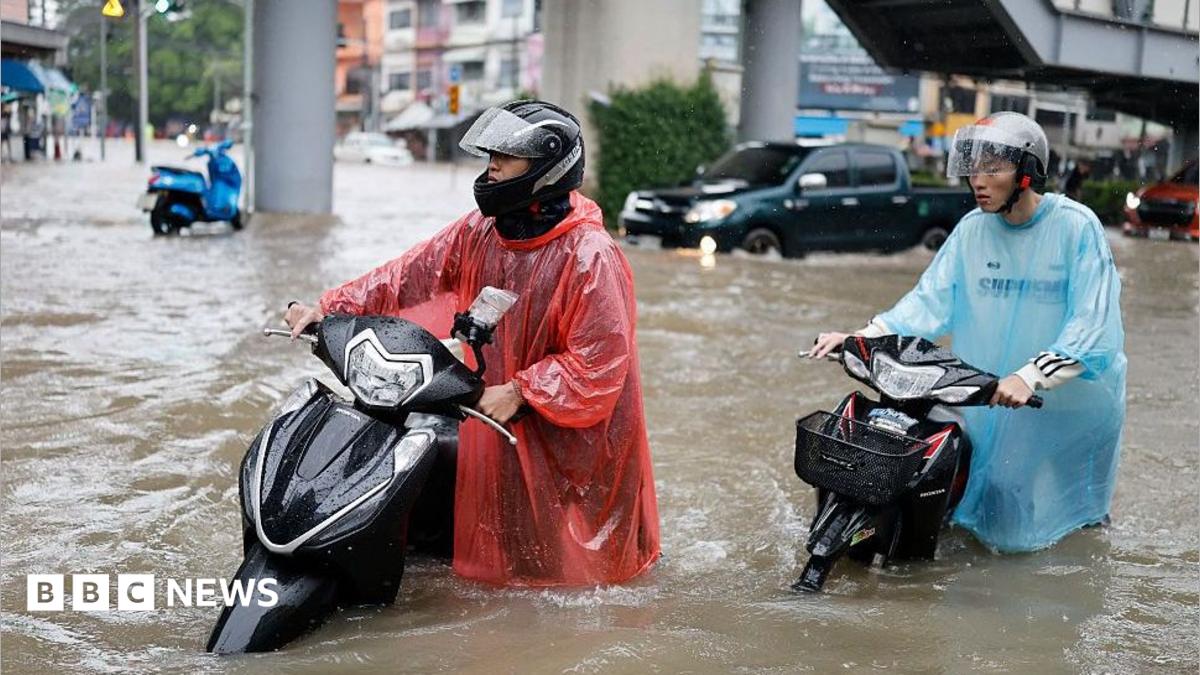
Bangkok's authorities have declared a flood emergency across the Thai capital after two days of relentless downpour left stretches of road submerged and the city's canal network overflowing. Emergency status has been applied to all 50 districts in the capital, a city of more than eight million people whose low-lying streets and canal-lined neighbourhoods leave it acutely vulnerable when the monsoon delivers at full force.
The declaration came after 48 hours of heavy rain overwhelmed drainage systems that were already straining under the accumulated water. Residents have been urged to stay at home, and those living beside the network of canals running through the city have been advised to move furniture, documents and valuables to upper floors in case the water continues to rise.
Thunderstorms are a familiar feature of the Thai calendar at this point in the year, and forecasters had expected seasonal downpours. What has made the past two days exceptional is their intensity and duration. The result has been a city in which normally congested roads have become impassable, drainage infrastructure has been overwhelmed, and the margin between a wet street and a flooded one has proved extremely thin.
Forecasters have warned that the rain is expected to continue into Sunday, reviving concerns that further canals could burst their banks. Authorities are particularly worried about districts where canal water is already at full capacity, because the city's channels act as the escape route for floodwater: as the governor of Bangkok pointed out, every canal in the capital is now filled, and there is simply nowhere for the water to go.
The human cost has so far been limited, with no casualties reported in Bangkok from this episode, even as residents describe scenes of water rising higher than at any point in recent memory. Somkid Pheuk-ngam, 67, who lives near a canal just north of central Bangkok, told the AFP news agency that the water had reached around waist level and showed no sign of easing. She said she was unable to go out and had kept her shop closed for two days as the streets around her filled.
Her account reflects a wider sense among residents that this flooding is more severe than what they experienced in 2011, when Bangkok was at the centre of nationwide flooding that lasted three months and killed hundreds of people across the country. The memory of that disaster still shapes how the city responds to heavy rain, and comparisons with 2011 have surfaced quickly on social media and in residents' comments as water levels climbed this week.
Official forecasts offer only limited relief. The Thai Meteorological Service has said it expects further heavy rain through the week, although the area of low pressure that has been generating the downpours of recent days is expected to move towards central Thailand. That shift could eventually ease the immediate pressure on the capital, but the timing remains uncertain, and more than a day of additional rain could push already saturated catchments past their limits.
City officials say they are working to pump water out of flooded areas, but the governor conceded that progress is constrained by the state of the canals themselves. Chadchart Sittipunt said the east of the city had been the worst affected area, and insisted crews were doing everything they could to clear standing water. He said pumping efforts were complicated by the fact that the canals into which floodwater is normally discharged were themselves full, and identified those living near canals as the group most at risk.
The immediate practical effects on the city are already significant. Commuters face disrupted journeys through streets that were, in the words of one report, already famously congested before the water arrived. Shopkeepers near flooded neighbourhoods have been unable to open, and residents of the canal-side communities that line some of the city's narrower streets are sheltering on upper levels while they wait for the water level to fall. Emergency declarations across every district mean local administrations can draw on national relief and coordination mechanisms as the situation develops.
The decision to declare a citywide flood emergency so early in the storm is itself notable. It signals that officials consider the risk to be structural rather than localised, with the entire canal network rather than isolated pockets of the city at risk. It also gives authorities the legal and administrative basis for restrictions on movement, for emergency pumping and drainage operations, and for further public warnings if conditions deteriorate.
For now, the picture remains unsettled rather than catastrophic. No deaths have been reported in the capital, the worst-affected areas are concentrated in the east of the city, and the immediate driver of the flooding — the low pressure system — is expected to weaken as it moves. But with more heavy rain forecast, every canal already full, and water levels in places higher than those recorded in 2011, Bangkok's residents have been told to expect difficult conditions for at least the remainder of the weekend, with those closest to the water's edge bearing the greatest burden of the disaster.





Comments (0)