 yudi-kurniawan
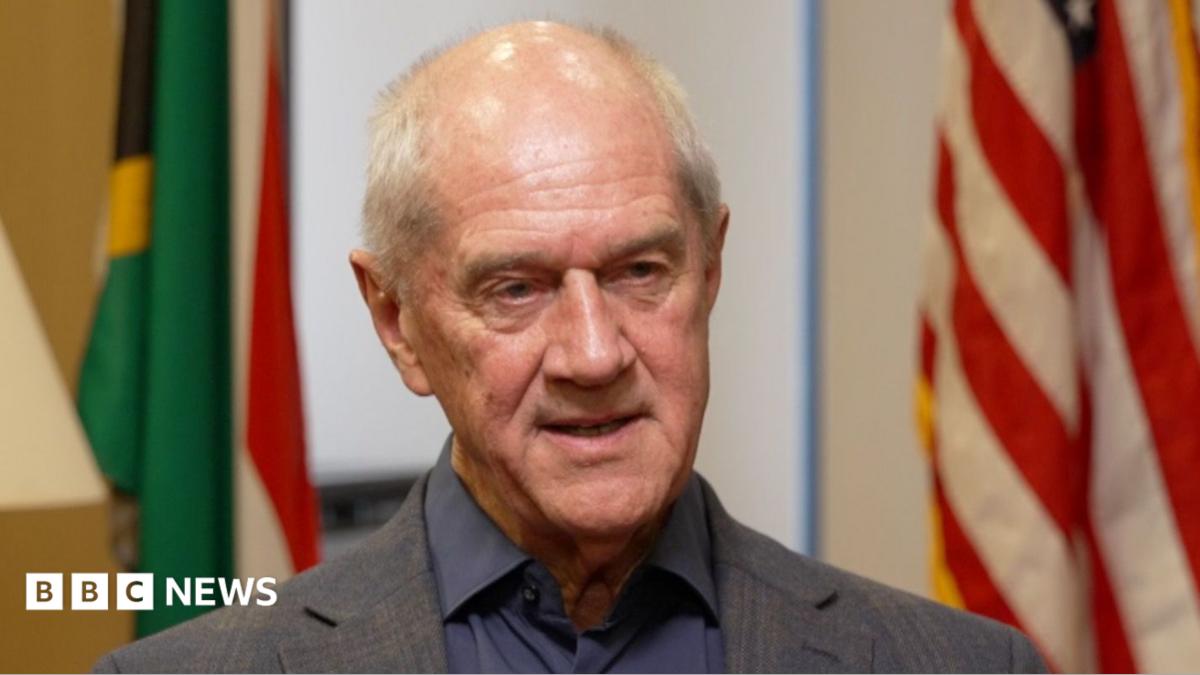
When Roelf Meyer first heard Donald Trump assert that white Afrikaners were being targeted in South Africa, his reaction was personal rather than political. "Is he talking about us?" the new South African ambassador to Washington recalls asking himself. Two years on from the US president's remarks, Meyer has used his first extended BBC interview to answer that question with a flat denial — and he says his own identity is the reason his words carry weight.
"The notion of a mass attack on the white Afrikaner minority in South Africa does not exist," Meyer said. "I'm an Afrikaner from South Africa myself, and I can say that I've never experienced something of that kind." He added that, as a "born Afrikaner", he believes he has the "legitimacy" to speak on the subject, and said he would welcome a direct conversation with Trump about the reality of the situation in his country.
Meyer's authority is unusual. He was one of the chief mediators who ended white-minority rule, negotiating on behalf of the National Party — the party that built and defended apartheid — in the transition of the early 1990s. On the other side of the table, as a key negotiator for the African National Congress, was the man who is now president, Cyril Ramaphosa. Meyer said the "trust" built between the two men during those talks was one reason Ramaphosa appointed him as ambassador in April, a posting made after diplomatic relations between Washington and Pretoria soured. The president, he said, also "saw the value of me being an Afrikaner".
But Meyer was careful to qualify that mandate. "I'm not here to represent the Afrikaner only," he said, a line that appears designed to signal to Washington that Pretoria's envoy will speak for a country rather than for one community. It also underlines his argument that claims of a genocide have been rejected not only by South Africa's government but by the political parties that represent Afrikaners themselves.
The clash began at the White House, where Trump confronted Ramaphosa over what the BBC describes as widely discredited claims that genocide was being committed against white South Africans, and where the US opened a refugee pathway for Afrikaners. That pathway has moved people at a scale that has made it far more than a rhetorical dispute. Since it began, nearly 13,000 refugees have been admitted to the United States, and all but three of them were South African.
The administration is not planning to stop there. According to a notice sent to Congress on Tuesday, the Trump administration intends to admit up to 17,500 additional white Afrikaners as refugees over the next 12 months. A White House spokeswoman defended the policy to the BBC in unusually blunt terms, saying Trump "has provided a lifeline for Afrikaners, who are being raped, maimed, killed and driven off their property across South Africa." She added that while the South African government and much of the media "have brushed off the horrific lived experiences of this community", the administration would keep processing applications "because the president has a humanitarian heart".
The most affecting evidence offered for the administration's case comes from those who have already left. One woman, who uses the name Lielie publicly, moved with her family from South Africa to Texas, where they had lived on her stepfather's farm growing macadamia nuts and bananas. She described a household ringed by walls, an electric fence and eight bull terriers, and said she spent the whole period feeling "fear the whole time", seeing people enter the property on three separate occasions.
"Nothing was stolen, we weren't harmed," she said. "But there are friends of my husband, people that lived around us — they were brutally attacked." Since resettling in the US under the administration's refugee scheme, she said, her life had changed: she feels safer walking outside and "my kids can actually play outside". Her account illustrates why the refugee numbers have become politically explosive — she describes crime and a climate of fear, not necessarily a coordinated campaign against her community.
That distinction is at the heart of the dispute. Meyer said the facts about violence in South Africa "had been misrepresented", and that he had never received a clear answer about where the "misdirection of information" originates — a pointed reference to an account he says no one in Washington has been able to substantiate for him. The BBC has previously reported that police data indicates the majority of crime victims in South Africa are Black, a pattern difficult to reconcile with claims that the country's violence is principally directed at white farmers.
Not everyone agrees with the ambassador. SJ Du Venage, who lives on South Africa's west coast and is a council member of the right-wing Afrikaner party Freedom Front Plus, argues that there is a "political drive towards killing white people, and killing the farmers on the farms". "There's absolutely an agenda to wipe us out here," he said, while attempting to relocate to the US under the government's scheme.
The disagreement has also moved into Washington's civic space. An Afrikaner lobby group is holding a vigil on Saturday on the National Mall, where thousands of white crosses will be placed to commemorate what the organisers say are victims of "farm attacks" — a form of commemoration designed to press a single narrative on the US political system, at precisely the moment the administration is seeking congressional approval for a much larger intake.
Meyer is no less combative on the domestic stage. He said claims of a genocide have been discredited by every political party in South Africa, including those representing Afrikaners — a statement that leaves him, as a National Party veteran, in the unusual position of publicly contradicting figures such as Du Venage who share his ancestry and politics.
The stakes have widened in recent weeks. Last week the Trump administration announced visa restrictions on South Africans it said were responsible for "race-based discrimination" against white people, and warned of further punitive measures if South African leaders failed to address what it called the issue. With refugee admissions accelerating, visa penalties in force and a demonstration planned on the National Mall, the argument Meyer wants to have with Trump is becoming a test not only of his credibility but of whether Pretoria can restore a diplomatic relationship that once defined the political arc of the anti-apartheid era.





Comments (0)