 lukman-hakim
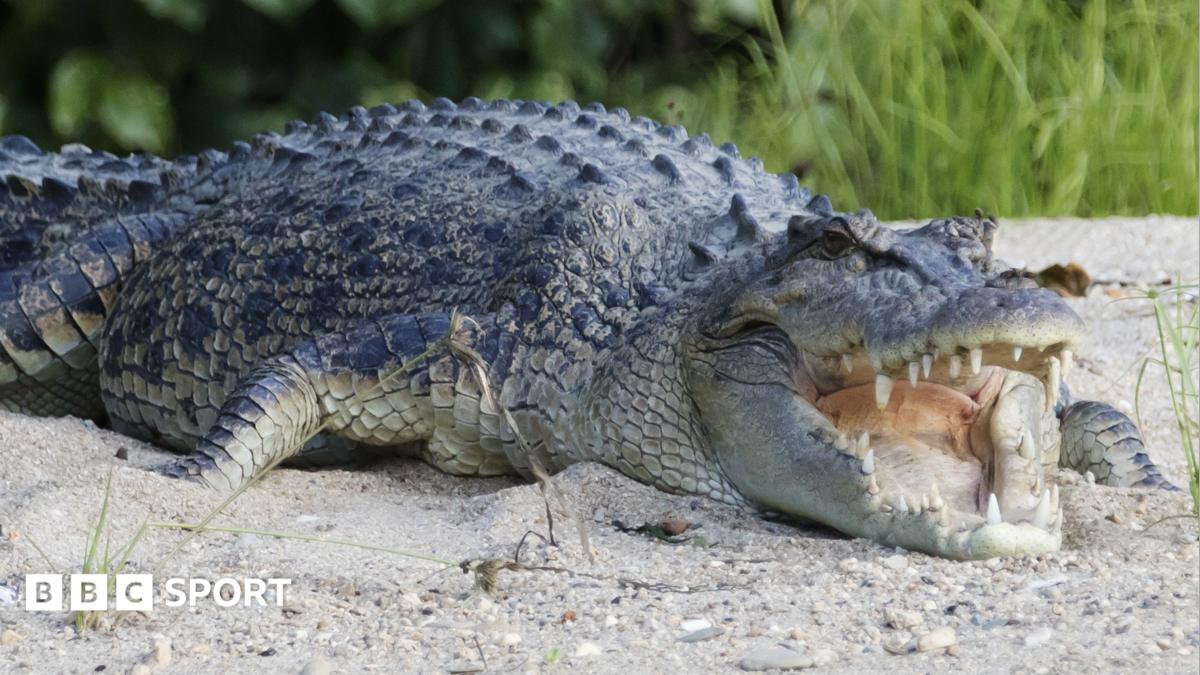
An Australian river that serves as the natural habitat for an estimated 500 saltwater crocodiles has officially received authorization to stage rowing and canoeing competitions during the 2032 Brisbane Olympic and Paralympic Games.
The decision follows the completion of an independent technical evaluation assessing the suitability of the course situated along the Fitzroy River in Rockhampton, Queensland. The venue will host the world's best flatwater athletes during both the Olympic and Paralympic programs in eight years' time.
Rather than examining the presence of the indigenous reptile population, the technical review focused strictly on the venue's operational and hydrological reliability. Assessors evaluated how the body of water would hold up under diverse seasonal conditions, fluctuating weather patterns, variable water levels, and potential flood hazards, both during the Games themselves and throughout the multi-year preparation phase.
The analysis was formally commissioned by the Games Independent Infrastructure and Coordination Authority (GIICA). In its findings, the authority underscored that the Fitzroy River Flatwater Facility is far from an untested waterway, noting that it currently functions as a regular hub for flatwater sports. The site regularly accommodates Queensland school state championships, local community regattas, and high-performance training camps for national squads.
Because the river already operates as an established competitive rowing facility, local managers already maintain specific contingency procedures that are triggered whenever crocodiles are spotted in the area. Prior to the technical endorsement, Olympic organizers and international delegates had received explicit assurances concerning the safety of participating athletes.
The venue has secured formal backing from key governing bodies, including World Rowing and Paddle Worldwide, the organisation previously known as the International Canoe Federation. Both federations affirmed that the technical findings satisfied their competitive and logistical benchmarks.
Jean-Christophe Rolland, the president of World Rowing, confirmed that the extensive investigative work showed the Fitzroy River is fully equipped to provide fair and equitable racing conditions during the Games. He noted that the course aligns with all standard competitive mandates required for high-stakes Olympic and Paralympic rowing.
Thomas Konietzko, president of Paddle Worldwide, expressed similar confidence following the release of the findings. He stated that the detailed technical analysis significantly enhanced the federation's understanding of the course, providing reassurance to both officials and canoe sprint competitors that the venue can stage fair and balanced races.
Brisbane 2032 President Andrew Liveris welcomed the technical clearance, remarking on Thursday that the formal endorsement establishes much-needed certainty as organizers transition into the subsequent stages of venue design and operational delivery. Liveris emphasized that planning can now move forward with all future design and execution strategies concentrating exclusively on Rockhampton.
Liveris had previously minimized concerns surrounding the crocodile population when discussing the site last year. At the time, he urged critics to adopt a constructive perspective, drawing a parallel to marine recreation by pointing out that people continue to surf in the ocean despite the presence of sharks and urging stakeholders to embrace a "can-do" mindset.
The wildlife at the center of the discussion consists of Australian saltwater crocodiles, known colloquially as "salties." These formidable creatures, recognized as the largest living reptiles on Earth, possess the ability to thrive in both freshwater and marine environments and can grow to lengths exceeding six metres.
Despite institutional endorsements, the choice of venue has generated vocal skepticism from prominent figures within the sport. Drew Ginn, a three-time Olympic gold medallist who represented Australia in rowing, voiced multiple reservations during an interview with BBC Radio regarding the site's environmental reliability, competitive integrity, and remote location.
Ginn commented that although wildlife concerns were raised early in the venue selection process, the prospect of racing alongside apex predators remains an unusual challenge. He remarked that having crocodiles nearby might cause athletes to row faster, while questioning whether international competitors should be placed in situations where dangerous wildlife might need to be relocated from the racing course.
Beyond the wildlife, Ginn highlighted potential technical disparities across the river's lanes, cautioning that flood risks and uneven water flow could compromise competitive fairness. He pointed out that in elite regattas where medals are decided by fractions of a second, any course conditions that produce variations of several seconds between separate lanes would undermine the integrity of the racing.
Ginn also criticized the geographical isolation of the venue, which sits between six and seven hours away from the primary host city of Brisbane. While praising Rockhampton as a community, he argued that dispersing key sports so far from the Olympic epicenter risks fracturing the broader Games experience for traveling athletes and spectators alike.







Comments (0)