 nadia-rahmawati
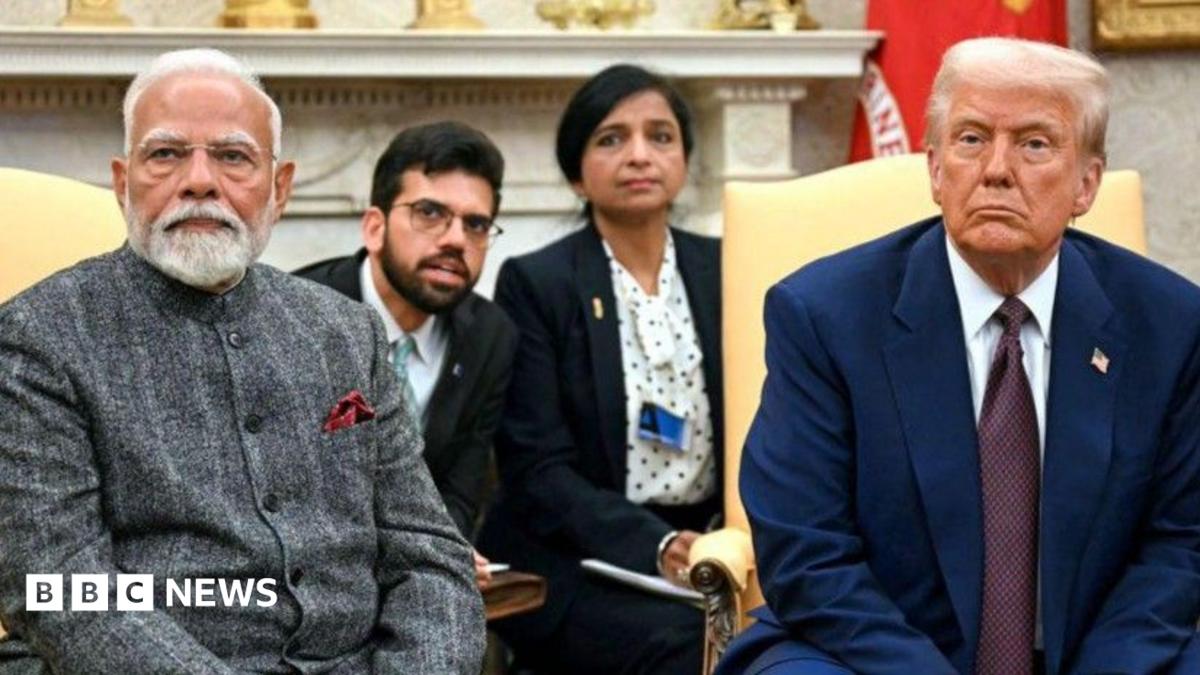
The United States House of Representatives has approved sweeping legislation designed to penalize buyers of Russian energy, handing President Donald Trump expansive authority to levy tariffs of up to 100% on countries that continue purchasing oil and gas from Moscow. The bill, which now moves to the president’s desk to be signed into law, introduces new geopolitical complications for major international buyers that have leaned on Russian fuel in recent years.
India and China stand as the nations most exposed to the incoming measures, having emerged as the primary destinations for Russian crude after Western nations imposed restrictions in response to the war in Ukraine. According to data compiled by the Centre for Research on Energy and Clean Air, China received half of all Russian crude exports between December 2022 and August 2026, while India secured 37%. Other buyers trailed significantly during this span, with Turkey and the European Union each accounting for 5%.
For the past four years, India has utilized the restructuring of international energy flows to support its domestic refining sector. Following the onset of the conflict, Indian refiners capitalized on deeply discounted Russian barrels, substantially lowering the financial burden of one of the country's most expensive commodity imports. However, the newly passed American legislation threatens to turn this economic advantage into a significant diplomatic and commercial liability.
Data from the New Delhi-based Global Trade Research Initiative underscores the scale of India's dependence on Russian petroleum. In fiscal year 2026, Russia supplied 30.3% of India's total crude imports, amounting to $40.8 billion of a nationwide crude import bill that reached $134.7 billion. During July, Russian oil shipments surged even further, constituting more than half of all crude entering the country.
The volume of crude arriving from Russia has dwarfed that of India's traditional energy partners. In July, the United Arab Emirates provided 10.8% of Indian imports, followed by Saudi Arabia at 9.6%, Venezuela at 6.3%, Brazil at 5.5%, Oman at 5.3%, and the United States at 2.9%. The volume supplied by Russia alone exceeded the combined total of all six of these energy exporters.
Indian trade experts have criticized the US legislative move as an attempt to exert leverage over New Delhi's economic policy. Ajay Srivastava, a former Indian trade official who leads the Global Trade Research Initiative, described the bill as an aggressive tactic aimed at pressuring India into a bilateral trade agreement on uneven terms. He emphasized that India’s energy purchases are intended to guarantee affordable power and fuel for 1.4 billion citizens while also serving to stabilize global supply balances and market pricing.
The legislative threat arrives at a moment when the financial benefits of processing Russian crude are already diminishing. The heavy discounts that initially attracted Indian refiners during the early stages of the conflict have largely narrowed. At the same time, Indian buyers face heightened competition for available barrels, along with escalating logistical, shipping, insurance, and regulatory compliance risks associated with international sanctions.
American lawmakers have nevertheless maintained a stern tone regarding continued energy commerce with Moscow. Following the passage of the legislation in the House, Democratic Senator Richard Blumenthal issued a direct warning to Asian buyers, stating that countries such as India and China must redirect their energy procurement away from Russian suppliers.
Under the framework of the legislation, affected nations would typically be granted a 180-day grace period to wind down their purchases of Russian energy or negotiate terms with Washington. However, the measure grants the US president discretionary authority to accelerate that timeline, potentially leaving importers with limited time to adjust their procurement strategies.
In response to the developments in Washington, the Indian government released a statement confirming that it is closely monitoring the situation. Officials reaffirmed India’s commitment to safeguarding national energy security, noting that the broader ramifications of the issue for bilateral relations and the international energy market have been repeatedly conveyed during high-level discussions with American interlocutors.
Energy analysts caution that orchestrating a rapid transition away from Russian oil would place heavy financial and logistical demands on India. Assessments by S&P Global indicate that replacing Russian volumes with alternative sources would likely increase freight, insurance, and procurement costs, with extended maritime routes further elevating the total expense for Indian refiners.
The logistical feasibility of such a shift also raises broader market concerns. Sumit Ritolia, an analyst with the maritime intelligence firm Kpler, observed that the fundamental challenge is not merely whether Russian supplies can be diverted to other destinations, but whether the international market possesses sufficient spare capacity to replace those barrels without inducing severe global supply shortages.
Beyond the energy sector itself, the punitive mechanisms of the bill present wider economic hazards for India. The legislation does not propose a direct levy on crude entering Indian ports, but rather threatens punitive tariffs on Indian goods exported to the United States. Such action could harm domestic manufacturers, put downward pressure on the rupee, compress refining margins, and widen the country's trade deficit.
Geopolitical analysts note that the friction comes at a delicate stage in US-India relations. Michael Kugelman, a senior fellow at the Atlantic Council, pointed out that the bill introduces substantial risks at a critical juncture marked by final-stage trade discussions. While India has sought to insulate its economy through trade agreements with partners such as the European Union and stronger economic ties with China, Kugelman warned that potential tariffs of up to 100% from a premier export market remain a severe economic threat regardless of hedging efforts.








Comments (0)