 nadia-rahmawati
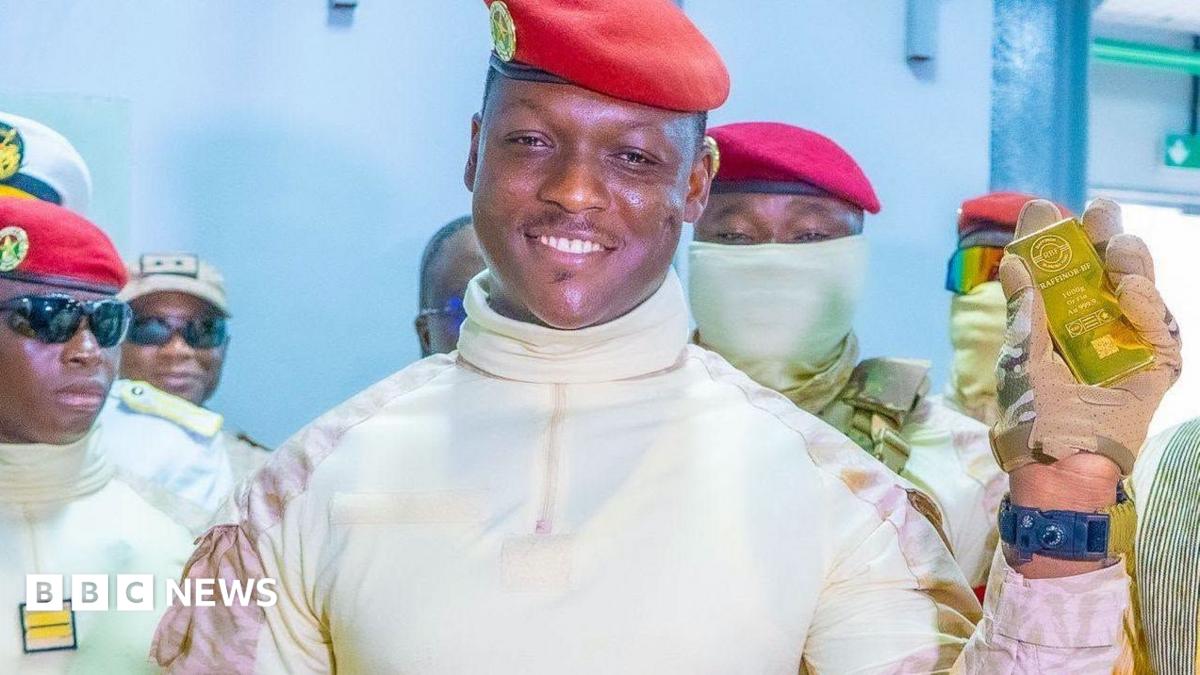
Burkina Faso has inaugurated its first-ever gold refinery, a flagship project designed to ensure that the West African nation captures more value from its vast mineral resources rather than shipping raw ore abroad for processing. The facility, named Raffinor-BF, was officially opened on Monday in the capital, Ouagadougou, by the country's military leader, Captain Ibrahim Traoré.
Speaking at the inauguration ceremony, Traoré framed the refinery as a decisive step toward economic sovereignty. He said his government wants all metals to be refined domestically and aims to establish the complete value chain within Burkina Faso's borders. His remarks reflect a broader ambition to transform the country from a raw materials exporter into a producer of finished precious metals.
The project carries a price tag of more than 11 billion CFA francs, equivalent to roughly $19 million or £14 million, according to the presidency. Financing came from the state, including through the National Precious Metals Company, known as Sonasp, working in partnership with private-sector actors in Burkina Faso. The government has positioned the refinery as a symbol of national self-reliance.
At full initial capacity, Raffinor-BF will be able to process 164 tonnes of gold annually — a figure that significantly exceeds Burkina Faso's current yearly production. Officials say eventual capacity could climb to 515 tonnes, a target that strongly suggests the government intends to refine gold originating from neighbouring countries as well, turning Burkina Faso into a regional refining hub.
Mines Minister Yacouba Zabré Gouba struck a triumphant tone at the opening, declaring that the country was reclaiming control over its own natural wealth. He said Burkina Faso's gold would no longer generate added value for others while its own citizens remain in need, a message that resonates with long-standing frustrations over foreign dominance of the mining sector.
Burkina Faso ranks among Africa's largest gold producers, yet successive governments have found it difficult to regulate the sprawling artisanal and small-scale mining industry. Smuggling and informal trading have made it nearly impossible for authorities to account for all the gold extracted from the country's soil. The new refinery is intended, in part, to bring more of that shadow production into the formal economy.
The government has repeatedly alleged that illegally traded gold helps finance the Islamist insurgency that has destabilised large swathes of the country. Burkina Faso has been battling armed groups linked to al-Qaeda and Islamic State for years, and significant portions of its territory lie outside full government control. Disrupting the illicit gold trade is therefore both an economic and a security objective.
Since seizing power in a coup in September 2022, the 38-year-old Traoré has pursued a nationalist economic agenda centred on domestic production and tighter state control over strategic industries. His administration established a state-owned mining company two years ago and now requires foreign mining firms to hand the state a 15% stake in their operations as well as train local workers.
In 2024, the authorities suspended exports of gold produced by artisanal and semi-mechanised mines, arguing that the measure was necessary to bring order to the sector. Traoré has accused smugglers of spiriting large quantities of gold out of the country and has linked some of the proceeds to the financing of militant groups. The refinery is designed to complement those regulatory efforts.
The timing of the project aligns with historically high international gold prices and rising global output. Worldwide mine production reached an estimated record of 3,672 tonnes in 2025, according to the World Gold Council, which also reported that Burkina Faso's output rose by 17% year-on-year in the second quarter of 2026, buoyed by increased production at several mines.
Burkina Faso is not alone in seeking to capture more value from its gold. Several West African neighbours are pursuing similar strategies. Guinea and Ghana have both restricted exports of unrefined gold, while Mali is constructing its first refinery with assistance from a Russian firm. Ivory Coast has announced plans to open its own refinery next year.
Analysts note that refining capacity alone does not guarantee success. Countries seeking to move up the value chain must also contend with governance challenges, smuggling networks and the need for reliable energy supplies and technical expertise. Nonetheless, the political symbolism of a domestically owned refinery is considerable in a region where resource nationalism is gaining momentum.
The refinery also forms part of a wider industrialisation campaign in Burkina Faso. Traoré has championed investments in cotton, textiles and food processing as evidence that the country is becoming more economically self-reliant and less dependent on former Western partners. The government says the plant should eventually be capable of refining all gold produced by industrial mines and artisanal miners alike.
For Traoré, the opening represents a tangible deliverable in a tenure marked by security crises and geopolitical realignment. By keeping more of the refining process on home soil, his government hopes to convert mineral wealth into jobs, state revenue and infrastructure. Whether the refinery can operate near capacity, however, will depend on sustained investment and the stabilisation of mining regions.
The inauguration nonetheless marks a milestone for a landlocked nation long defined by its exports of unprocessed commodities. With gold prices elevated and regional competition intensifying, Burkina Faso's bet on domestic refining reflects a broader shift across West Africa, where governments increasingly insist that the benefits of their natural resources must remain closer to home.









Comments (0)