 lukman-hakim
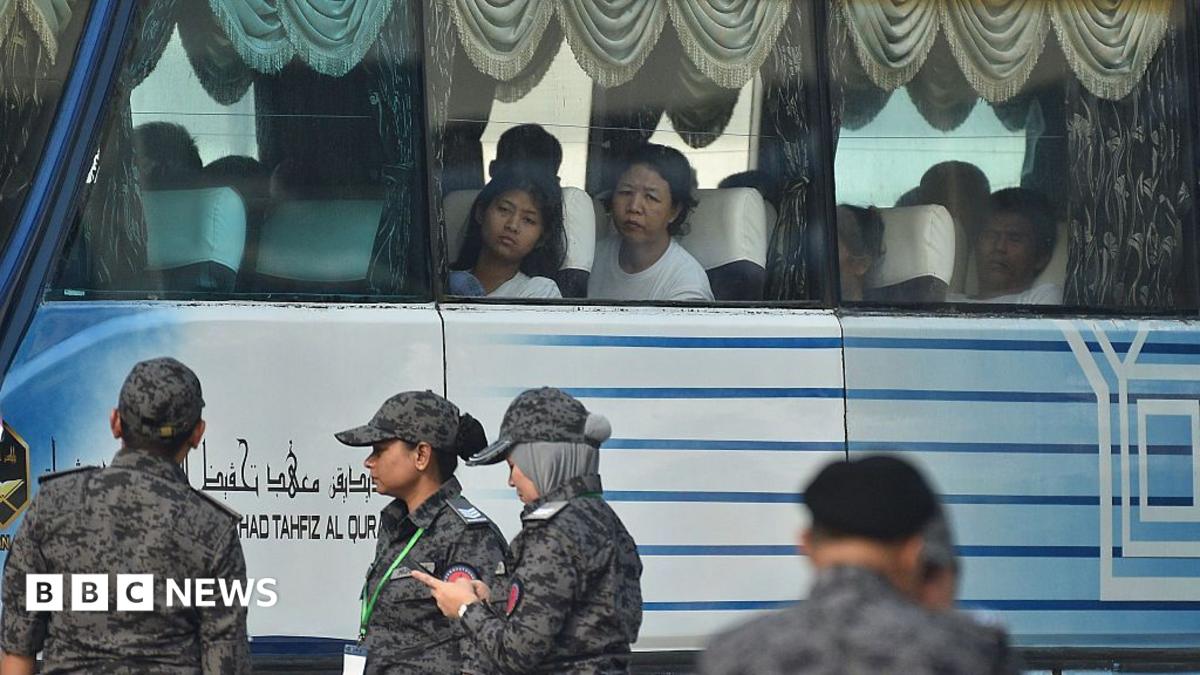
Malaysia has started what it describes as the voluntary repatriation of roughly 5,000 asylum seekers from Myanmar, under a contentious arrangement agreed with the country's military ruler, Min Aung Hlaing. Three vessels of the Myanmar navy were due to leave Malaysia later the same day carrying the first contingent of 1,476 returnees.
The departures mark a significant reversal for a South East Asian government that has spent years positioning itself as a defender of refugees and of a negotiated settlement to Myanmar's long-running civil war. The returnees are being held in detention centres ahead of their transport, and Kuala Lumpur has declined to allow the UN refugee agency access to interview or screen them.
Aid groups say those being sent back face real danger. Human rights organisations have condemned the operation, warning that returnees risk violence, persecution and being forcibly conscripted into the Myanmar military. Malaysia, by contrast, has insisted that the movement is voluntary, a claim that critics say is difficult to verify when prospective returnees are detained and the UN's refugee agency is kept out.
Among those due to go home arePUBEngineering members of the Rohingya, a persecuted Muslim minority who fled mass expulsion from Myanmar and are not recognised as citizens there. More than 200,000 are believed to be living in Malaysia, the large majority surviving on low-paid manual work.
The scale of the Rohingya exodus explains how a country with a tradition of sympathy for fellow Muslims came to host such a large population. In August 2017, a brutal military campaign drove three quarters of a million Rohingya out of Rakhine State and across the border into Bangladesh. Conditions in the Bangladeshi camps since then pushed those with enough money to attempt the dangerous sea crossing to Malaysia in search of refuge and employment.
Malaysia's navy and coastguard had long attempted to intercept Rohingya boats, but many migrants continued to arrive by other routes and were, for a period, tolerated. That tolerance did not survive the Covid-19 pandemic, which hit the Malaysian economy hard and intensified anxieties about jobs and living standards.
Sentiment hardened further during that period, when accusations against Rohingya migrants spread on social media and calls for their deportation gained traction. The government of the day responded by declaring Malaysia could accept no more refugees and ordering raids on communities suspected of sheltering people deemed to be illegal immigrants.
Tricia Yeoh, director of the Asian Institute for Policy and Engagement at the University of Nottingham Malaysia, said the current move reflects a political system that has become far more volatile. Malaysian politics has been in a febrile state since 2018, when a historic election ended more than six decades of uninterrupted rule by the United Malays National Organisation, the ethnic Malay party that had monopolised power, ushering in a revolving door of unstable coalition governments.
Prime Minister Anwar Ibrahim, who came to office in 2022 at the head of an uneasy alliance with UMNO — his former adversaries — insists that he has no alternative but to negotiate with Yangon's junta. He argues that his government is responding to public hostility that has grown steadily, and that his own political standing leaves him no room to manoeuvre.
The decision is all the more striking because Anwar, a former political prisoner, built much of his public profile on liberal values and has repeatedly urged that Rohingya be treated humanely. In a recent podcast interview he said: "We can arrest them, but do not beat, intimidate or humiliate them." Rights groups have accused Malaysian officials of precisely that conduct in immigration detention centres.
Nonetheless, Anwar has made clear that he believes the Rohingya population must go. "They have clearly become a burden," he said in the same interview, describing them as "a security burden, an economic burden and a source of hostility among the people."
That framing has drawn fierce criticism from allies once supportive of him. Latheefa Koya, the former head of the Malaysian Anti Corruption Commission, called the decision "disgraceful, amoral, and shames the nation in the eyes of the international community."
Analysts say the prime minister's calculation is driven as much by domestic politics as by humanitarian considerations. Anwar's popularity has fallen sharply this year, his party has lost seats in local elections, and several corruption scandals have divided his own ranks. With a general election due by early 2028, he faces pressure to satisfy coalition partners and a restive electorate.
Yeoh said: "He is in a corner, at his weakest point." She added that he has been forced to make concessions to his UMNO partners, amid corruption scandals and internal party division, after spending much of his premiership telling voters what was required to maintain their confidence.
The wider diplomatic cost is also unclear. Under Anwar, Malaysia refused to recognise Min Aung Hlaing's regime and was among the loudest voices in the region pressing for a negotiated end to Myanmar's civil war. Agreeing to take back thousands of people to a country ruled by the military commander complicates that position.
Questions remain about what happens on arrival in Myanmar, whether the exclusion of UN monitors will be allowed to stand, and whether Kuala Lumpur will proceed with the remaining returnees in the 5,000-strong group. For now, the first ships are due to sail, and critics warn that the speed of the operation has outrun any meaningful assessment of whether those returning are going home by genuine choice.










Comments (0)