 lukman-hakim
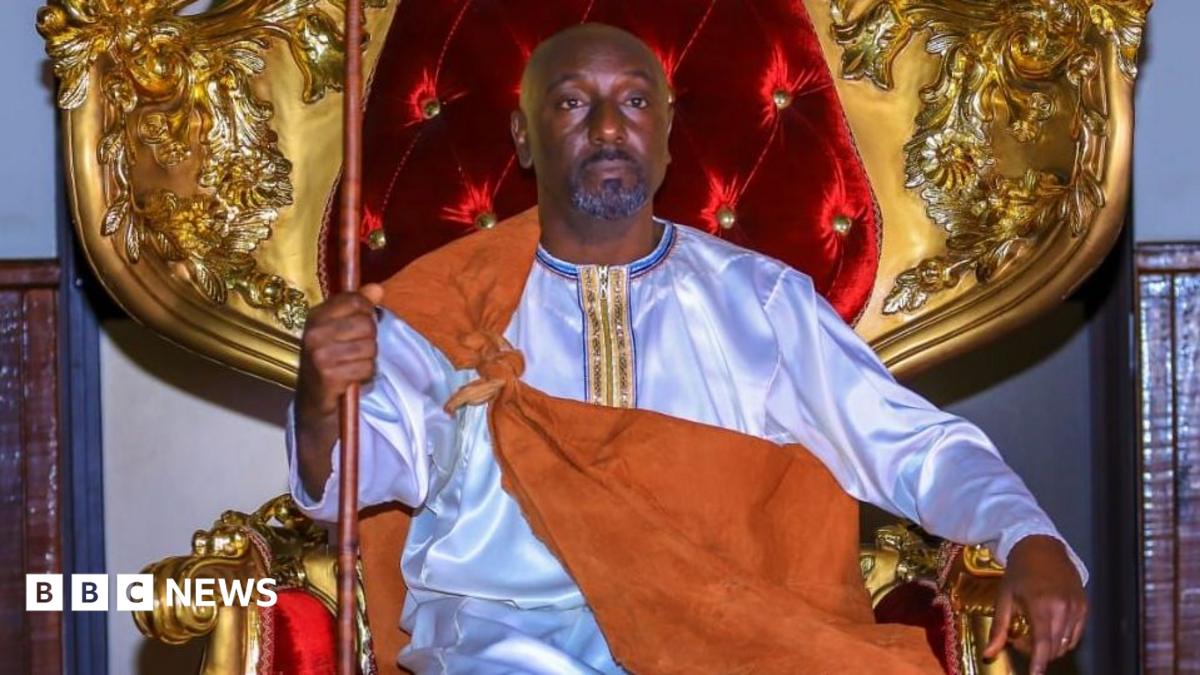
Prince Edward Rukidi Kijanangoma Nyabongo I is set to be crowned as the new king of Uganda's Tooro kingdom, a ceremony that will formally elevate a man long familiar to Ugandans not as royalty but as a storyteller and veteran journalist at the state broadcaster. At 56, Kijanangoma has spent years as an anchor and editor, and his sudden emergence as the subject of national and international media attention marks a striking reversal of roles for a man accustomed to delivering the news rather than making it.
His rise to the throne, however, has been anything but smooth. The selection process has ignited a bitter succession dispute that has drawn reactions far beyond Uganda's borders, pitting the royal succession committee against close members of the late king's family, including his mother. The controversy has cast a shadow over what is traditionally a day of celebration, involving elaborate rituals that begin at midnight and culminate in the placing of a crown on the new monarch's head.
Tooro is one of Uganda's four main officially recognised historical kingdoms, and it has been led for the past 31 years by King Oyo Nyimba Kabamba Iguru Rukidi IV. Oyo ascended the throne in 1995 at the age of just three, following the death of his father, and was widely known as a "boy king" and then the world's youngest monarch. He died last month from cancer at the age of 34, triggering the succession process that has now divided the royal family and the Babiito clan.
According to the kingdom's Information Minister, Charles Mwanguhya, the coronation day will feature a series of traditional practices. The new king will walk approximately 4km (2.5 miles) to the official Karuziika royal palace, where he will be crowned. A mock fight will follow, symbolising that kingship does not come easily, after which he will be blessed by members of the royal Babiito clan. He will then perform further ceremonies signifying his assumption of the throne before sitting on it and having an actual crown placed on his head to signify his new authority.
The path to that throne was far from straightforward. By tradition, a recognised son of the late king should succeed him, and close members of the royal family said Oyo had left behind a young son and a will instructing that the child should be the next king. But that son has never been publicly revealed, nor was he recognised by the committee of 21 Babiito clan members who choose the king and who ultimately selected Kijanangoma. The late King Oyo was never publicly married, and little is known about his wife or their son.
The late king's mother, Queen Best Kemigisa, has argued forcefully that her son's will ought to have been respected. She described Kijanangoma's selection as the "announcement of a second king" made after the will of King Oyo had been read to members of the royal family. Speaking of her pain, she said that as a mother the experience was extraordinarily difficult, and she noted that celebrations for the next king took place only metres from where her son's body lay.
Kemigisa later said that Oyo's son, who was in the US state of Texas, had been due to return home, but that this could not happen amid what she called a tense and polarised succession dispute. In a post on X, she asserted that no child should be placed in circumstances where returning to his father's homeland could mean being drawn into hostility and conflict. Her remarks underscored the deep emotional rift within the royal family over the outcome.
The royal succession committee, however, ignored her wishes and insisted that its selection process was conducted in accordance with Tooro customs and traditions. According to the kingdom's information minister, the son being discussed has not been presented anywhere, which means there is a growing acceptance that, sad as it may be, King Oyo did not leave a son behind. Mwanguhya also noted that while King Oyo inherited the crown from his father, the crown has now moved to a different line within the ruling clan.
A king must come from the Babiito clan, specifically from the lineage of King George David Matthew Kamurasi Rukidi III, according to royal palace sources. Kijanangoma and the late King Oyo were cousins, both grandsons of Rukidi III, the 11th king, or Omukama, who ruled the Tooro kingdom from 1928 to 1965. Kijanangoma was among several candidates considered for the role, including Prince George Desmond Kamurasi, who plays football for one of the UK's best-known amateur clubs as captain and goalkeeper of the South East Dons.
According to the succession committee, the footballing prince declined the offer of the throne, citing other responsibilities. That refusal cleared a path for Kijanangoma, who was formally announced as the new king and subsequently promised that the palace would be open to the people. He also vowed to focus on unity and development, telling his subjects that although he had been given the title of king, he could not work alone and needed to work with them.
Uganda's traditional kings hold no formal political authority, but they retain considerable cultural influence and command significant loyalty in the communities they lead. The country is home to four main kingdoms, and the institution of traditional monarchy was restored in the 1990s by President Yoweri Museveni, who was once pictured with the young King Oyo in ceremonial headgear. That restoration gave the kingdoms a renewed cultural role, even as they remained outside the formal structures of political power.
The coronation of Kijanangoma therefore carries significance beyond the walls of the Karuziika palace. It represents both the continuity of a centuries-old institution and a rupture within the royal family that selected him. As the new king takes on his duties, he will have to navigate the expectations of a kingdom that looks to him for cultural leadership, while also managing the unresolved grievances of those who believe the late king's will was disregarded.
For many Ugandans, the story is a remarkable turn for a man who spent decades in newsrooms rather than royal courts. Kijanangoma's journey from state broadcaster to monarch has made him the subject of intense public interest, and his coronation will be watched closely as a test of whether the succession dispute can be healed. The ceremonies themselves, with their midnight rituals, symbolic mock fight and clan blessings, are designed to affirm the legitimacy of the new king in the eyes of tradition, even as questions linger over the process that brought him to power.
As the crown is placed on his head, Kijanangoma will assume a role that carries no formal political authority but enormous cultural weight. His promise of an open palace and a focus on unity and development will now be measured against the deep divisions that emerged during the succession. For the Tooro kingdom, the coming months will reveal whether the new king can bring together a royal family and a community still grappling with the loss of a young monarch and the contested circumstances of his successor's rise.








Comments (0)