 lukman-hakim
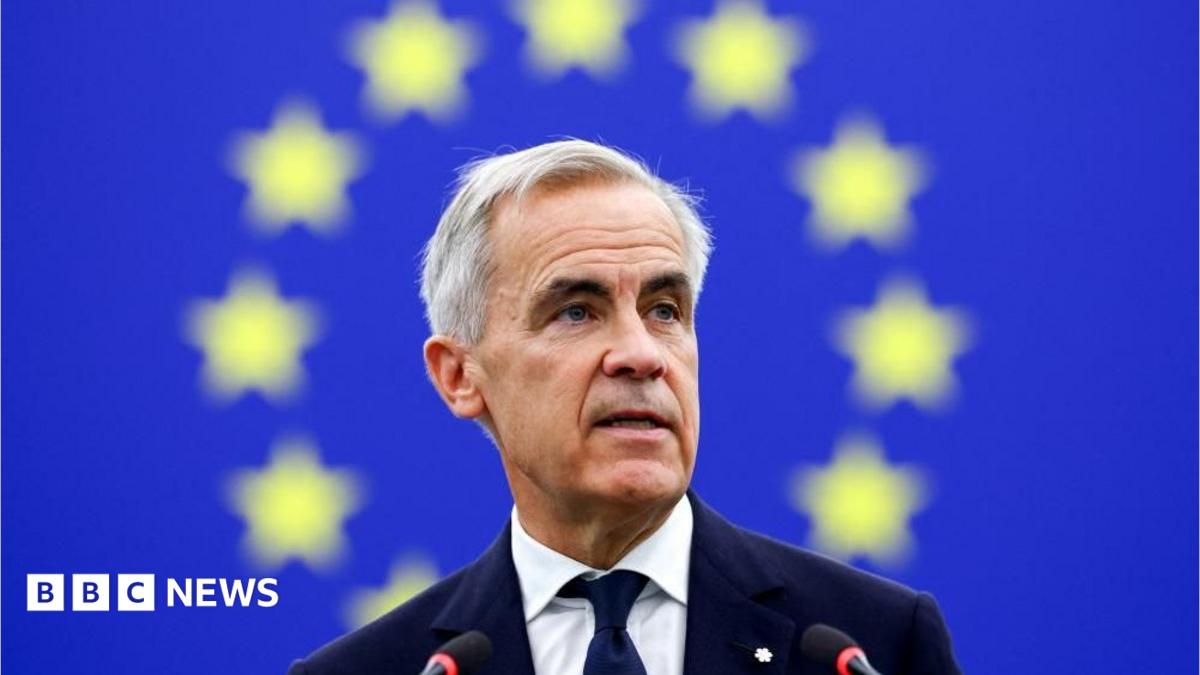
Canadian Prime Minister Mark Carney has formally welcomed an ambitious initiative from the European Union that could see Canada become the bloc's inaugural "associate member." Delivering an address to the European Parliament in Strasbourg on Thursday, Carney argued that heightened geopolitical turbulence makes deeper transatlantic unity vital, declaring that Canada and Europe stand significantly stronger when working in close alignment.
The prime minister's address followed an announcement by European Commission President Ursula von der Leyen, who proposed opening the doors to a historic associate relationship with Ottawa. The initiative seeks to build an unprecedented partnership bridging North America and Europe, focusing heavily on mutual defence, technological innovation, economic security, and shared industrial supply chains.
The proposal comes against the backdrop of sharply deteriorating relations between Canada and the United States. Following the breakdown of bilateral negotiations last month, Ottawa and Washington became embroiled in an intensifying trade conflict marked by retaliatory tariffs, leaving traditional North American alliances under severe strain.
The prospect of an associate relationship between Brussels and Ottawa drew an immediate and hostile reaction from US President Donald Trump. Speaking on Wednesday, Trump dismissed the initiative as laughable and warned that Washington could impose severe tariffs or halt trade across multiple sectors with Europe if he determines the alliance to be a hostile manoeuvre against American interests.
Addressing the American president's warnings during a subsequent press conference in Strasbourg, Carney defended the emerging partnership as an inherently constructive initiative. He underscored national resolve, stating that Canadians remain united in their determination that no outside power will dictate their domestic culture, language, or sovereign right to pursue international treaties.
Throughout his speech to European lawmakers, Carney highlighted the mounting external pressures confronting modern open societies. He identified the erosion of democratic principles, accelerating climate change, and the systematic weaponisation of commerce as compounding crises threatening global stability and the international order.
Carney warned MEPs that traditional trade integration is increasingly being converted into a geopolitical weapon, with tariffs and financial mechanisms routinely deployed as instruments of economic coercion. He noted that contemporary supply networks have evolved into vulnerabilities that rival powers actively attempt to exploit.
To counter these structural vulnerabilities, the Canadian prime minister urged the creation of a durable Canada-EU partnership designed to function as a guiding beacon for democratic nations worldwide. However, he carefully clarified that the two parties are not seeking to construct a combative third global power bloc, but rather to preserve their democratic autonomy and self-determination.
Carney was also explicit regarding the structural boundaries of the arrangement, confirming that Canada is neither positioned nor attempting to seek full membership within the European Union. Instead, both sides are looking to establish a distinct, custom-tailored framework that accommodates Ottawa's unique transatlantic status.
The collaborative blueprint unveiled by European and Canadian leadership focuses extensively on strategic autonomy. Under the proposed associate status, the two economies would coordinate deeply on critical minerals extraction and processing, domestic manufacturing resilience, cutting-edge technology development, and collective defence capabilities.
Energy transition and security form another core pillar of the envisioned framework. Carney noted that Canada possesses the capacity to provide Europe with essential energy exports, including liquefied natural gas and hydrogen, while simultaneously drawing upon European advancements and expertise in the green energy sector.
Beyond industrial and resource coordination, the initiative envisions substantially expanding social and educational mobility across the Atlantic. Carney proposed integrating Canada into the EU's flagship Erasmus+ exchange programme, which would allow younger generations from both regions to study, work, and reside freely across partner nations.
The initiative builds upon existing foundations, as Canada and the European Union already operate under a comprehensive bilateral free-trade pact alongside established channels for defence and scientific research cooperation. Nevertheless, elevating this relationship to an associate membership represents an unprecedented expansion of ties.
Realising the new status will require navigating substantial diplomatic and legislative hurdles on both sides of the Atlantic. Because an associate membership framework does not currently exist within EU law, establishing the status will demand the unanimous approval of all 27 member states, several of which have previously harboured reservations about creating new tiers of membership.
Domestically, Carney confirmed that the proposed framework will be subjected to full debate and a formal vote within the Canadian Parliament before any final agreement is ratified. Both sides acknowledge that negotiations remain at an early stage, with formal talks set to advance when European and Canadian leaders convene for a bilateral summit in Montreal at the end of October to establish the concrete details of the pact.










Comments (0)