 yudi-kurniawan
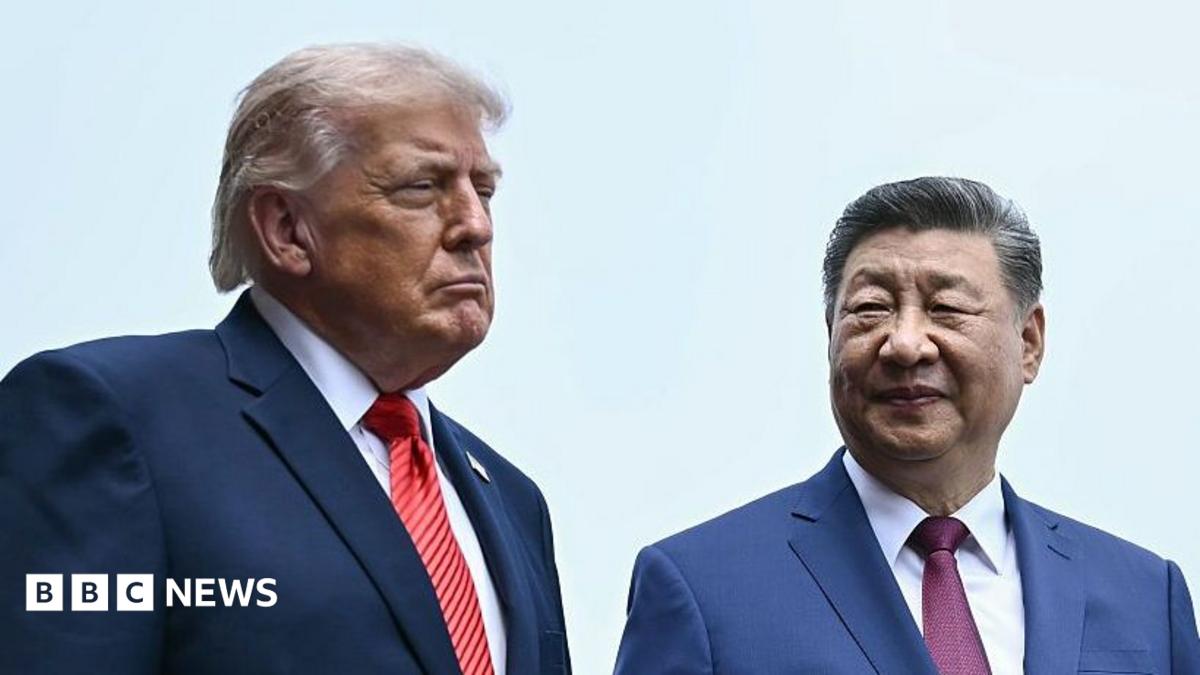
The spouse of an American academic currently imprisoned in China on accusations of espionage and endangering national security has formally petitioned President Donald Trump to intervene directly during his forthcoming bilateral meeting with Chinese President Xi Jinping at the White House.
U Min Zin, an established specialist who serves as the director of a research institution centered on Myanmar, was taken into custody by Chinese authorities on June 3. The arrest took place after he arrived in the southwestern city of Kunming to participate in an academic conference.
Addressing lawmakers on Capitol Hill on Wednesday, his wife, Sylvia Zin, expressed sincere optimism that the American president would make her husband’s plight a priority topic of discussion when he sits down with the Chinese leader for their scheduled discussions next week.
The high-profile diplomatic summit is scheduled to begin Wednesday when Xi arrives in Washington, D.C., for an official state visit. The diplomatic encounter follows an earlier meeting in Beijing this past May, when the Chinese president hosted Trump.
With the bilateral talks rapidly approaching, multiple families of United States nationals detained by the Chinese government have converged on the nation's capital, hoping to leverage the diplomatic momentum to push for the freedom of their loved ones.
Sylvia Zin delivered her testimony before the House Foreign Affairs Committee’s Subcommittee on East Asia and the Pacific. The congressional hearing, titled "Lives, Not Leverage: The Long Arm of China and North Korea's Repression," focused on state-sponsored detentions and cross-border pressure tactics.
During her statement, Zin also highlighted the ongoing imprisonment of Chen Youlin, a fellow American seismologist who monitors nuclear testing activities and has been held behind bars in China for the past two years.
Expressing confidence in the White House's diplomatic capabilities, Zin told lawmakers that the administration's past record of repatriating citizens held abroad gave her reassurance that Trump could successfully negotiate the swift return of her husband alongside other individuals facing similar circumstances.
The chairwoman of the subcommittee, Representative Young Kim, opened the proceedings with a direct warning regarding the hazards of visiting China. The lawmaker stated that travelers face the potential danger of being detained by Beijing to be used as bargaining chips in broader geopolitical negotiations.
Representative Kim asserted that the decision to arrest Min Zin appeared deliberate, arguing that Chinese authorities sought to send an intimidating signal to researchers whose analytical findings conflicted with state interests, timing the apprehension in the lead-up to the Trump-Xi summit.
Before his detention, Min Zin led the Myanmar Institute for Strategic and Policy Studies, commonly known as ISP-Myanmar. The think tank conducts detailed analyses of Beijing's regional influence, strategic investments, and political relations with Myanmar, continuing a career of public advocacy that began when he participated as a student activist in Myanmar's 1988 pro-democracy movement.
The congressional hearing also featured testimony from the son of Jimmy Lai, the imprisoned Hong Kong media entrepreneur. Trump previously broached Lai’s situation in direct discussions with Xi, later recounting to the media that the Chinese president had characterized that specific case as a particularly difficult matter to resolve.
Responding to inquiries on Thursday, a senior administration official at the White House, speaking on the condition of anonymity, affirmed to the BBC that resolving the wrongful detentions of American citizens remains a matter of the highest priority for the president.
The political significance of Min Zin's and Chen Youlin's incarcerations was formally recognized last month when the US State Department officially classified both men as being wrongfully detained.
Under US government procedures, such a formal classification allows these files to be reassigned to the Office of the Special Envoy for Hostage Affairs. This administrative transfer significantly elevates the diplomatic profile of the cases and unlocks dedicated federal resources aimed at negotiating releases.
Sylvia Zin, who currently resides in Thailand with the couple’s daughter, explained to the congressional panel that she remains completely cut off from direct communication with her husband. Consequently, the family depends entirely on monthly consular check-ins conducted by American diplomats to confirm that he remains alive.
The committee was also informed that US diplomatic officials conveyed to the family that Min Zin was subjected to intensive interrogation sessions lasting as long as six hours every day during the initial phase of his confinement.
Describing the heavy emotional toll on her household, Sylvia Zin shared that she is working hard to maintain strength for her daughter while grappling with persistent distress regarding her husband’s physical well-being and the ongoing efforts to secure his safe return.
Advocates for the families have pointed to previous diplomatic successes as a basis for hope, noting that during a previous formal meeting between Trump and Xi, the US leader pushed for the freedom of Jin Mingri, a prominent leader of an unofficial underground church in China, who was ultimately released from custody two months later.









Comments (0)