 lukman-hakim
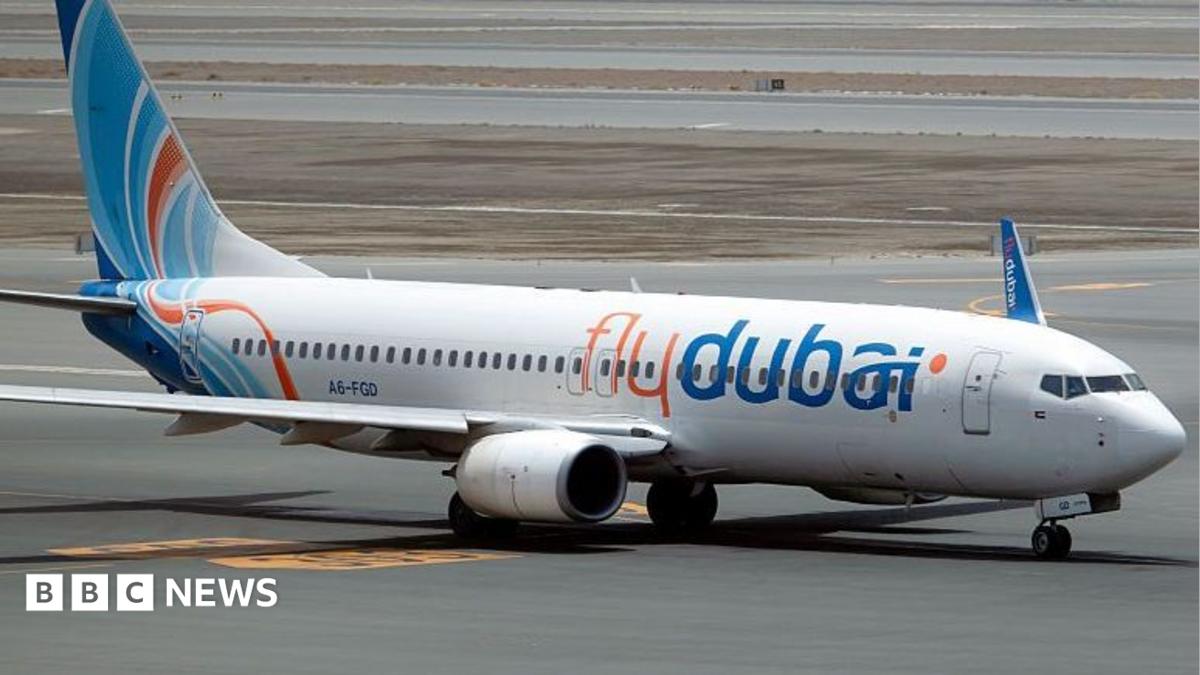
A Flydubai passenger service travelling from Dubai to Tel Aviv was forced to make an unscheduled landing in Saudi Arabia on Wednesday morning after an altercation broke out between the aircraft's pilots while the plane was in flight, according to Israeli officials who spoke with local media outlets. The incident, which unfolded roughly two hours into the journey, prompted the crew to transmit a series of emergency signals that briefly raised fears of a hijacking before authorities determined no such threat existed.
The aircraft, which departed Dubai International Airport in the United Arab Emirates in the early hours of Wednesday, was carrying approximately 150 passengers, the majority of whom were Israeli citizens. It had been scheduled to touch down at Ben-Gurion Airport, Israel's primary international gateway, located near Tel Aviv. Instead, the flight was redirected to Tabuk Airport in northeastern Saudi Arabia, a regional facility that has increasingly served as a diversion point for commercial aircraft operating in the area.
Flight tracking data from Flightradar24, a widely used aviation monitoring platform, indicated that the plane first squawked an emergency code approximately two hours after takeoff. Within minutes, the transponder signal changed to a code reserved for reporting a hijacking, a development that would ordinarily trigger an immediate and aggressive response from air traffic control and military authorities. According to the tracking website, the signal was subsequently switched back to a general emergency code, suggesting that the crew had reassessed the situation on board.
The Israeli prime minister's office moved quickly to tamp down speculation about a possible takeover of the aircraft, stating that the incident was not believed to have been a hijacking. Instead, local media reports, citing Israeli defence officials, indicated that the emergency signal was likely issued in connection with an altercation between the pilot and the co-pilot. The exact nature of the dispute, including what precipitated it and how it was resolved, has not been publicly detailed, and it remains unclear whether the two crew members involved are still in custody or facing any disciplinary action.
The episode triggered a significant security response. The Israeli air force dispatched fighter jets in response to the unfolding situation, a standard precaution when an aircraft transmitting a hijack code is identified in or near Israeli airspace. Prime Minister Benjamin Netanyahu also held urgent consultations regarding the incident, underscoring the seriousness with which Israeli authorities treated the initial, ambiguous signals coming from the cockpit. The rapid escalation of the response reflects the heightened sensitivity surrounding aviation security in the region, where any deviation from normal flight protocol can be interpreted as a potential threat.
The diversion to Tabuk Airport is notable given the geopolitical context. Saudi Arabia and Israel have no formal diplomatic relations, though ties have quietly expanded in recent years through security cooperation and economic engagement. The decision to land in Saudi territory rather than press on to Israel or divert to another country suggests that the crew and relevant authorities judged the nearest suitable airfield to be the safest immediate option. Tabuk, located in the northwestern corner of Saudi Arabia, is situated relatively close to the Jordanian border and the northern Red Sea, making it a practical diversion point for aircraft flying between the Gulf and the Levant.
For the passengers on board, the experience would have been deeply unsettling. A flight that began as a routine early-morning service between two major Middle Eastern hubs was transformed into an emergency situation involving military escorts and an unexpected landing in a country that most Israeli travellers would not typically expect to visit. The psychological impact of such incidents can linger, and airlines often provide post-incident support to passengers, including counselling and assistance with onward travel arrangements. Flydubai has not yet issued a detailed public statement on the matter, and it remains unclear how the airline plans to accommodate the displaced passengers or return the aircraft to service.
The incident also raises broader questions about cockpit resource management and crew dynamics in commercial aviation. Modern airline operations emphasise strict protocols for communication and conflict resolution between pilots, precisely because disagreements at altitude can compromise safety. While altercations severe enough to trigger emergency signals are rare, they are not unprecedented. Aviation safety experts have long argued that fatigue, scheduling pressures, and personal conflicts can create dangerous conditions in the confined environment of a cockpit. The fact that this dispute escalated to the point of a physical fight, as reported, will likely prompt scrutiny of Flydubai's crew scheduling and workplace culture.
Regulatory authorities in both the UAE and Israel are expected to investigate the incident thoroughly. The investigation will likely examine cockpit voice recordings, flight data, crew statements, and the airline's operational procedures. The Israeli civil aviation authority may also review how the emergency signals were managed and whether the response by air traffic control and military assets was proportionate and timely. The findings could lead to recommendations affecting crew training, conflict resolution protocols, and perhaps even the handling of transponder codes during ambiguous in-flight emergencies.
Flydubai, a state-owned carrier based in Dubai, operates an extensive network across the Middle East, Africa, Europe, and Asia. It has built a reputation as a low-cost operator connecting secondary markets, and its flights to Tel Aviv have formed part of the gradual expansion of commercial ties between the UAE and Israel following the normalisation of relations in 2020. The incident on Wednesday is unlikely to sever those ties, but it does highlight the operational complexities of running services between countries with sensitive security relationships and limited diplomatic channels.
The use of the hijacking code, even if later corrected, is a serious matter in aviation. Transponder codes are internationally standardised, and false or mistaken transmissions can trigger substantial and costly responses. In this case, the quick reversion to a general emergency signal, combined with the Israeli government's public statement ruling out a hijacking, helped prevent a larger escalation. Nevertheless, the episode serves as a reminder of how quickly a routine flight can become a high-stakes security event, and how dependent modern aviation remains on the judgment and professionalism of the crew in the cockpit.
As of Wednesday, the aircraft remained at Tabuk Airport, and it was not immediately clear when passengers would be able to continue their journey to Israel. The Israeli government has not announced any plans to send a delegation to Saudi Arabia, and it remains to be seen whether the incident will prompt any diplomatic communication between the two countries. For now, the focus is on the investigation and on ensuring the safe onward travel of the roughly 150 people whose early-morning flight took an unexpected and alarming turn.









Comments (0)