 lukman-hakim
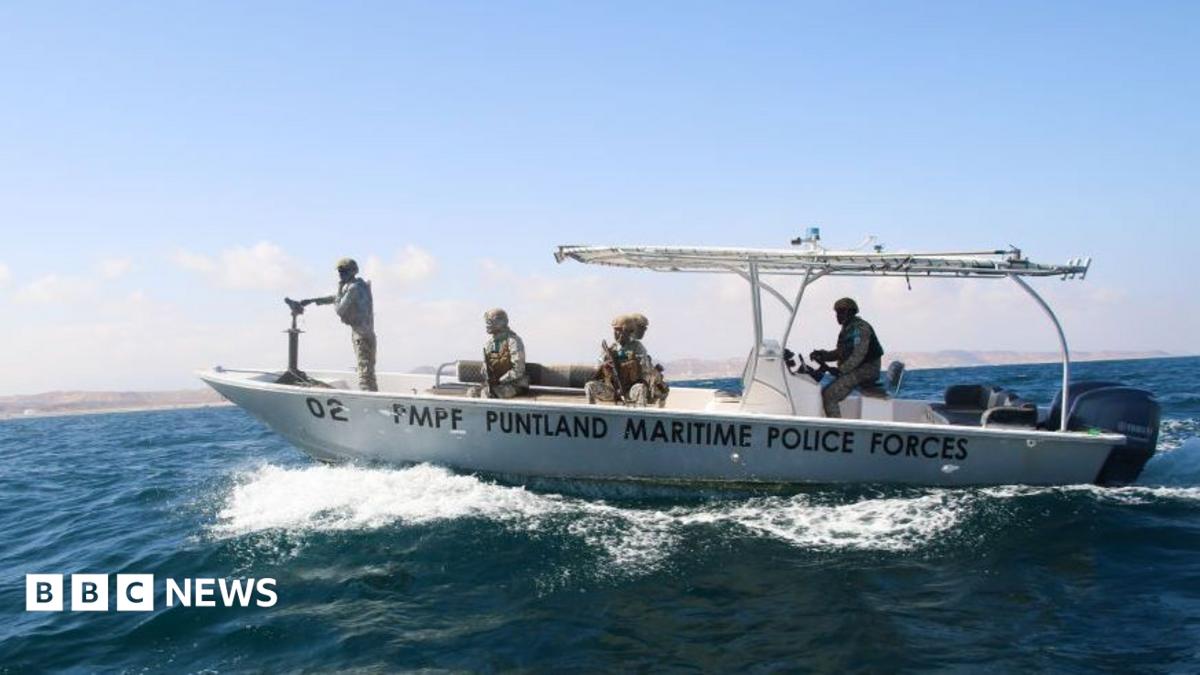
Five crew members aboard an oil tanker hijacked off the coast of Somalia were killed by pirates before regional security forces managed to retake the vessel, a senior official in Somalia's semi-autonomous Puntland region has told the BBC.
Puntland's Deputy Information Minister, Bile Qabowsade, said the five hostages were killed by their captors before Puntland maritime forces boarded the MT Hoarner 25. According to the minister, the dead comprised three Pakistani nationals, one Indian and one citizen of Myanmar.
Four other crew members sustained injuries during the ordeal, Qabowsade added. Those wounded included three Pakistanis and one Indian national, suggesting that the South Asian crew members bore the brunt of the violence.
The tanker was transporting roughly 18,500 barrels of oil at the time of the hijacking, with the cargo destined for Mogadishu, Somalia's capital. The vessel was seized in April by a group of six armed men while it was sailing off the Somali coast, according to officials.
The hijacked ship was subsequently anchored near the Somali coastline, in waters between the fishing towns of Xaafun and Bander Beyla — an area that has become increasingly associated with pirate activity in recent years.
The operation to reclaim the vessel ended with the arrest of 16 suspected pirates, while other members of the group managed to escape and were being pursued by authorities, officials said. The fact that some suspects fled the scene has raised questions about the effectiveness of the security response.
Qabowsade specifically rejected suggestions that Puntland forces had facilitated the escape of some of the pirates, pushing back against allegations that local security personnel may have been complicit in the attackers' getaway. The authorities have so far declined to provide further detail on how the five crew members were killed or how exactly the pirates managed to seize control of the tanker.
Initial accounts given in April, when news of the hijacking first emerged, indicated that 17 crew members were on board at the time the vessel was taken. That multinational crew included 10 Pakistanis, four Indonesians, one Indian, one Sri Lankan and one Myanmar national, underscoring the diverse composition of the seafaring labour force that operates in some of the world's most dangerous shipping lanes.
The discrepancy between the original crew count and the latest information from officials reflects the confusion that often surrounds maritime hijackings in the region, where communications can be disrupted and verification of facts is slow. The identities and nationalities of the dead have not been independently confirmed by the governments whose citizens were involved.
The MT Hoarner 25 incident is the latest in a series of attacks that have revived concerns about Somali piracy, which had been largely suppressed for more than a decade. Piracy off the Somali coast declined sharply after 2011, following an extensive international naval campaign involving warships from the European Union, NATO and other coalitions, alongside improved onshore governance and security measures in Puntland.
However, attacks and hijackings have been on the rise again in recent years, driven by a combination of factors including reduced international naval patrols, economic hardship in coastal communities and shifting geopolitical tensions that have drawn naval resources elsewhere. Security forces from Puntland have responded by stepping up patrols in the waters off Somalia's coast, though the vast expanse of ocean makes comprehensive coverage difficult.
Earlier BBC reporting has highlighted that Somali piracy has surged as the fallout from the US-Iran conflict ripples outward, disrupting maritime security arrangements in the wider region. A separate incident in July saw a second tanker hijacked off the coast of Yemen within three months by suspected Somali pirates, indicating that the threat is spreading beyond Somali territorial waters.
The killings aboard the MT Hoarner 25 underscore the human cost of the renewed piracy threat. Crew members aboard commercial vessels are often nationals of developing countries — Pakistan, India, Indonesia, Sri Lanka and Myanmar among them — who take on dangerous voyages to support their families. Their vulnerability is compounded by the remote locations where hijackings occur and the limited capacity of regional authorities to respond swiftly and effectively.
The MT Hoarner 25 case also raises difficult questions about maritime security in the western Indian Ocean. While international navies have historically played a central role in deterring piracy, regional forces such as Puntland's maritime police are increasingly on the front line. Their resources, training and accountability are now under scrutiny, particularly given the controversy over whether some suspects escaped with assistance.
For Somalia, which has struggled for decades with instability, the resurgence of piracy threatens to undermine efforts to present the country as a viable investment and trade destination. The oil cargo bound for Mogadishu reflects the country's growing energy needs, but its interception illustrates how criminal networks can exploit weak maritime governance.
The arrest of 16 suspects offers some measure of accountability, but the deaths of five crew members are a reminder that piracy is not merely an economic crime. It is a violent enterprise that can end in tragedy for those simply doing their jobs at sea. The injured survivors will carry lasting physical and psychological scars, while the families of the dead face grief compounded by the difficulty of retrieving their loved ones' remains from a distant and dangerous coastline.
Officials have not indicated when more details about the operation will be released, nor have they specified what charges the detained suspects might face. The pursuit of those who escaped continues, leaving open the possibility of further arrests and additional information coming to light.
The international community has yet to issue a coordinated response to the MT Hoarner 25 killings, but the incident is likely to feature in discussions among navies and shipping organisations about how to protect crews and cargo in the region. The resurgence of Somali piracy represents a test of whether the gains made after 2011 can be sustained — or whether the world is witnessing the return of a threat that was once thought contained.








Comments (0)