 nadia-rahmawati
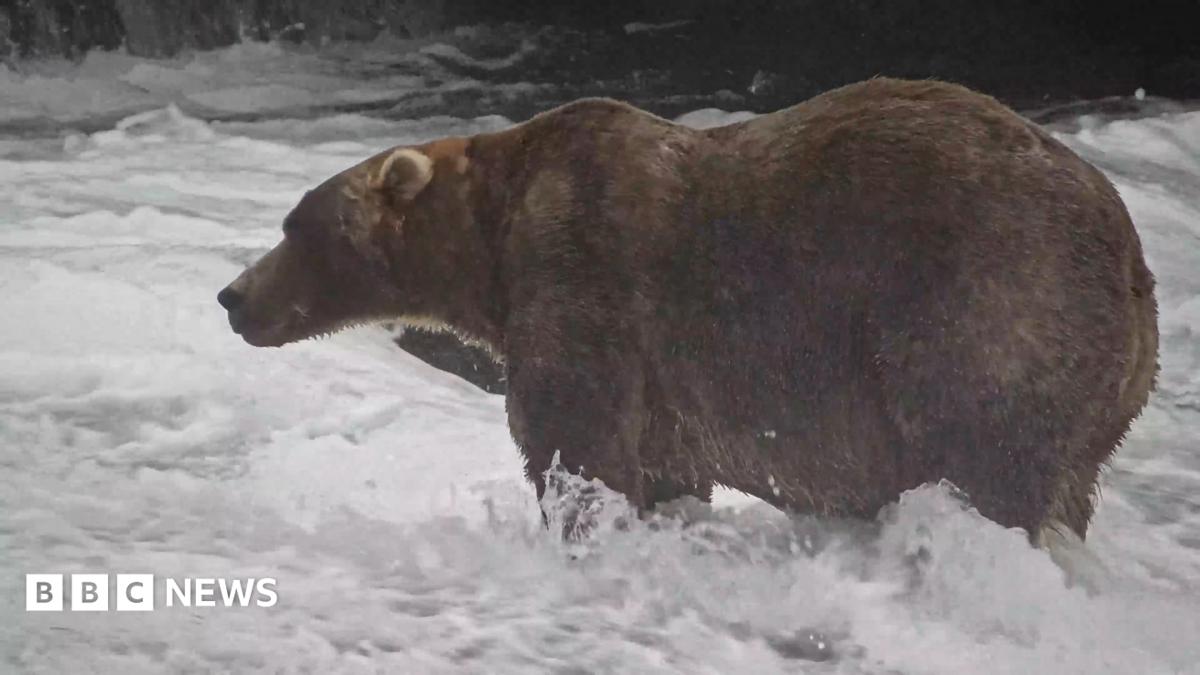
A hefty brown bear officially known as 89 Backpack has been crowned the champion of Alaska's annual Fat Bear Week, edging out a rival identified only as 910 in a closely contested final vote. The competition, staged each year by Katmai National Park, invites the public to decide which of the park's brown bears has packed on the most impressive pre-hibernation weight. Backpack secured 103,344 votes, while 910 finished with 98,253, a margin of roughly five thousand ballots in a contest that drew attention from around the globe.
The US National Parks Service framed the competition as a "battle of size, skill, snack acquisition, and strategic loafing" — a playful description that captures both the lighthearted spirit of the event and the genuine biological stakes involved. For the bears of Katmai, surviving the coming winter is not a game. Every pound gained during the summer and early autumn translates directly into the energy reserves that will carry them through months without food or water.
This year marked the thirteenth edition of Fat Bear Week, a tradition that has grown from a modest park initiative into an international online phenomenon. Organisers acknowledged the sixteen bears that took part, noting with gentle humour that they had "involuntarily participated" in the proceedings. The animals, of course, are unaware of their celebrity status, but their images and biographies have attracted a devoted following far beyond the boundaries of southern Alaska.
Backpack arrives at his title with an impressive pedigree. His mother, a bear named Holly, claimed the Fat Bear Week crown in 2019, making him part of a family with a proven track record of pre-winter preparation. His unusual name does not, as some might assume, refer to the rounded "light bulb" silhouette that one admirer attributed to his frame. Instead, it commemorates a habit he developed as a cub, when he would clamber onto Holly's back as she waded through the salmon-rich waters of the Brooks River.
Public affection for Backpack was evident in the colourful language used by his supporters. One fan praised him for possessing both "the chonk and the badonk", while another simply described him as a "big fuzzy boy". Such phrases have become a hallmark of Fat Bear Week, which encourages voters to celebrate the bears with affectionate and often humorous commentary rather than scientific detachment.
Yet Backpack's path to victory was not without controversy. Supporters of 910, a female who raised both her own biological cub and an adopted niece, argued that she was the more deserving candidate. One critic conceded that Backpack "just has a bigger booty" but insisted that 910 was "a larger bear all around". Another wrote on the park's Facebook page that the female bear had "really put in the work this year", while a further voter declared, "She round, she thick my girl 910 got my vote."
The final weights of the two contenders had not been released at the time of the result. However, the broader statistics of brown bear biology offer a sense of what is at stake. Adult males in the region can average up to 408 kilograms by mid-summer, and frequently add the equivalent of a quarter of their body weight by the time autumn arrives. The very largest males may exceed 540 kilograms. Females are generally smaller but can still surpass 300 kilograms, while newborn cubs enter the world weighing only about half a kilogram.
The transformation that the bears undergo between early summer and mid-October is remarkable. From June onwards, they devote themselves almost entirely to feeding, consuming vast quantities of salmon that they seize with their jaws or scoop from the water with their paws. The Brooks River, where Backpack learned to ride on his mother's back, becomes a crowded and competitive dining hall during this period, with bears jostling for the most productive fishing spots.
Hibernation itself is an extraordinary feat of endurance. According to competition organisers, bears neither eat nor drink throughout the winter and lose roughly one-third of their body weight before emerging in spring. Their survival depends entirely on the fat reserves they are able to accumulate beforehand. This is why the seemingly frivolous pursuit of crowning the fattest bear carries a serious undercurrent: the winner is, in a real sense, the bear best equipped to endure the months ahead.
Backpack's official biography notes that his "quiet toughness has allowed him to find his niche alongside the biggest bears at Brooks River". That description suggests a competitor who may not always dominate the river visually but who has nonetheless secured a reliable position among the park's most formidable residents. His victory, coming after a campaign in which personality and physique were both scrutinised, places him alongside his mother in the competition's record of champions.
The scale of public engagement with Fat Bear Week has grown steadily over the years. In the previous edition, more than 1.7 million votes were cast by participants from over 100 countries, transforming a local wildlife observation exercise into a global internet event. That level of interest reflects a broader public appetite for stories about the natural world, particularly those that combine scientific substance with an accessible and often comic human element.
Katmai National Park, located in southern Alaska, provides a protected haven for brown bears and the salmon runs on which they depend. The park's annual competition has become an effective tool for public education, drawing attention to the ecological pressures that bears face and the importance of conserving their habitats. By inviting people to vote, organisers encourage a sense of connection with individual animals whose lives would otherwise remain remote from most people's experience.
Backpack will now prepare for hibernation, a period that can last up to six months. During that time he will neither eat nor drink, subsisting on the fat he accumulated through months of intensive feeding. When he emerges in the spring, he will be considerably lighter and will begin the cycle again. For now, though, he holds the title of Fat Bear Week champion, a distinction that rests not only on his size but on the enthusiasm of a global audience willing to celebrate the ursine pursuit of a well-stocked larder before winter closes in.






Comments (0)