 lukman-hakim
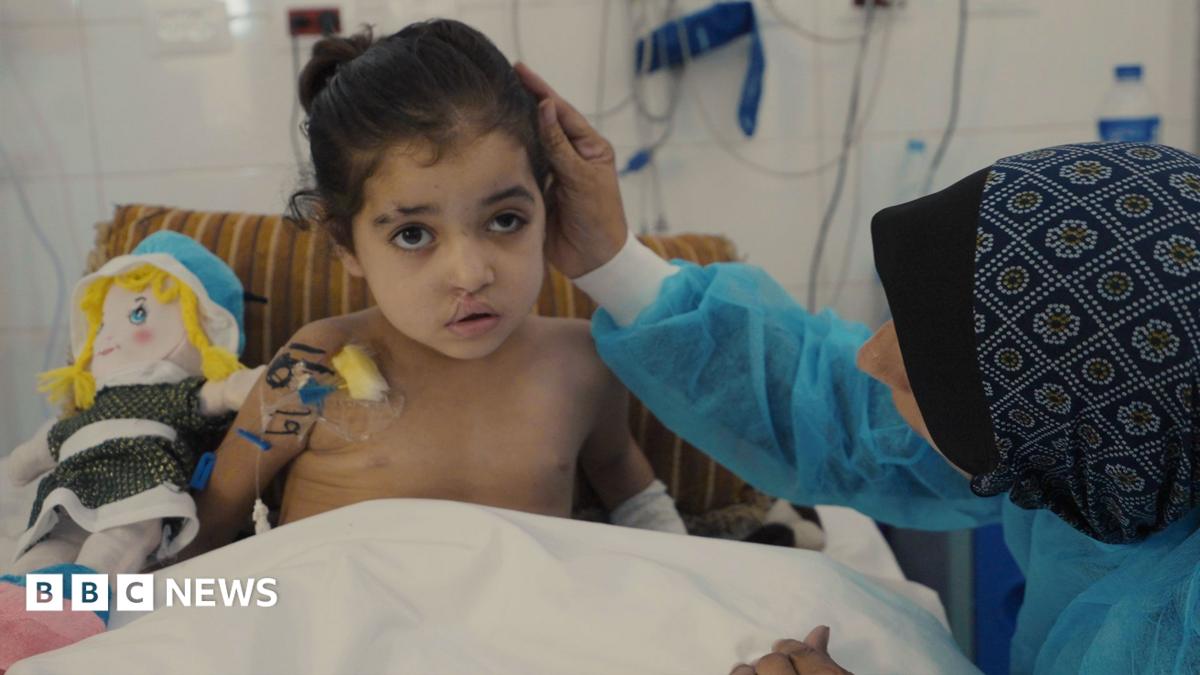
A six-year-old girl in Gaza is enduring a gruelling medical ordeal that has already seen her undergo more than 20 surgical procedures, according to a BBC Eye Investigations report. Raseel al-Balawi was injured in late July when, witnesses say, an Israeli helicopter strike hit the tent where she was sheltering in the al-Mawasi camp. The encampment, located along Gaza's southern coast, had been designated as a humanitarian safe zone, making the reported attack particularly contentious.
The young girl's injuries have left her requiring frequent operations aimed at controlling persistent infections in her wounds. According to the BBC report, doctors in Gaza are struggling to manage her condition as the territory's healthcare infrastructure lies in near-total ruin. The repeated surgeries underscore the severity of her injuries and the difficulty of achieving stable recovery in a war zone where medical supplies, clean water, and sanitation are all in critically short supply.
Raseel's case is emblematic of the wider humanitarian catastrophe unfolding in Gaza, where children make up a significant proportion of casualties. The BBC World Service spent time filming across the summer in Gaza to document how children are coping amid the collapse of the basic infrastructure they depend on to survive. Her story forms part of a broader film examining the daily realities facing young people in the enclave.
Witnesses to the incident in al-Mawasi say the strike came from an Israeli helicopter, directly hitting the tent in which Raseel was staying. The Israeli military, when asked about the attack, stated that it has no record of the incident and added that it "regrets any harm to civilians." This response follows a pattern seen in numerous similar cases during the conflict, where the military has either denied knowledge of specific strikes or acknowledged them only after independent verification.
The al-Mawasi camp has repeatedly been designated by Israel as a safe zone for displaced Palestinians, yet it has not been immune from violence. Multiple deadly strikes have been reported in the area throughout the conflict, raising questions about the reliability of evacuation orders and the safety of designated humanitarian areas. For families like Raseel's, the decision to flee to al-Mawasi was likely made in the belief that it offered protection from bombardment.
Medical professionals in Gaza have described conditions that make effective treatment extraordinarily challenging. Hospitals have been damaged or destroyed, generators lack fuel, and essential medicines and surgical supplies are scarce. Doctors report having to perform procedures under inadequate conditions, with limited anaesthesia and sterilisation capabilities, which in turn increases the risk of post-operative infections. For a patient like Raseel, who requires repeated interventions, these constraints compound an already dire prognosis.
The persistence of infections in her wounds speaks to a broader problem facing injured civilians in Gaza. With sewage systems destroyed and clean water scarce, wound contamination is difficult to prevent. Antibiotics, when available, are often insufficient for the types of drug-resistant infections that proliferate in such environments. Medical experts have warned that the combination of trauma injuries and unsanitary conditions creates a perfect storm for chronic infection and sepsis.
The BBC's reporting comes as a ceasefire in Gaza falters and bombardment continues. The fragile truce, which had offered brief respite to civilians, has not held firm, and airstrikes have resumed in various parts of the territory. This renewed violence threatens to further strain an already overwhelmed medical system and to produce more casualties like Raseel. Each new escalation places additional pressure on doctors who are already operating far beyond their capacity.
The broader context of the conflict includes widespread destruction of civilian infrastructure. Schools, hospitals, water treatment plants, and residential buildings have been damaged or destroyed across Gaza. The United Nations and humanitarian organisations have repeatedly warned that the territory is becoming uninhabitable, with reconstruction likely to take decades even if the fighting stops. Children, in particular, are bearing the brunt of these conditions, facing not only immediate physical dangers but also long-term psychological trauma.
International humanitarian law requires parties to a conflict to distinguish between combatants and civilians and to take precautions to protect non-combatants. The reported strike on a tent in a designated safe zone raises serious questions about compliance with these obligations. While the Israeli military says it has no record of the attack, the burden of proof in such cases often falls on independent investigators, who have had limited access to Gaza throughout the conflict.
For Raseel and her family, the immediate priority remains her medical care. Each surgery represents both a hope for recovery and a fresh ordeal for a young child who has already suffered more than most adults endure in a lifetime. The frequent operations are necessary to keep infections at bay, but they also take a toll on her body and her spirit. The BBC report captures not only the medical facts but also the human reality of a childhood interrupted by violence.
The challenges facing doctors in Gaza extend beyond individual patients to the entire healthcare system. With medical staff killed, injured, or forced to flee, and with facilities destroyed, the capacity to treat complex cases has been severely degraded. Surgeons report working around the clock with dwindling resources, forced to make impossible decisions about which patients to prioritise. In this environment, a case like Raseel's requires extraordinary effort simply to maintain basic standards of care.
The BBC's full film on iPlayer provides a more comprehensive view of how children in Gaza are surviving amid the destruction. By following families over the summer, the documentary offers insight into the resilience and desperation of a population that has endured repeated cycles of violence. Raseel's story, while deeply personal, reflects the experience of thousands of children whose lives have been upended by the conflict.
As the ceasefire remains precarious and bombardment continues, the prospects for children like Raseel remain uncertain. Each new strike risks creating more patients for a health system that is already at breaking point. Humanitarian organisations continue to call for sustained access to provide medical aid and for the protection of civilians, but these appeals have so far yielded limited results on the ground.
The international community's response to the crisis in Gaza has been heavily debated, with disagreements over how to characterise the violence and how to hold parties accountable. For families on the ground, however, the priority is survival and access to care. Raseel's more than 20 surgeries represent not just a medical statistic but a measure of the immense suffering inflicted on Gaza's youngest generation.
Ultimately, Raseel al-Balawi's story is one of endurance in the face of overwhelming circumstances. Her repeated surgeries, the persistent infections, and the uncertain future she faces all illustrate the human cost of a conflict that shows no sign of resolution. The BBC's reporting ensures that her experience, and those of other children in Gaza, remains visible to the world beyond the territory's borders.








Comments (0)