 nadia-rahmawati
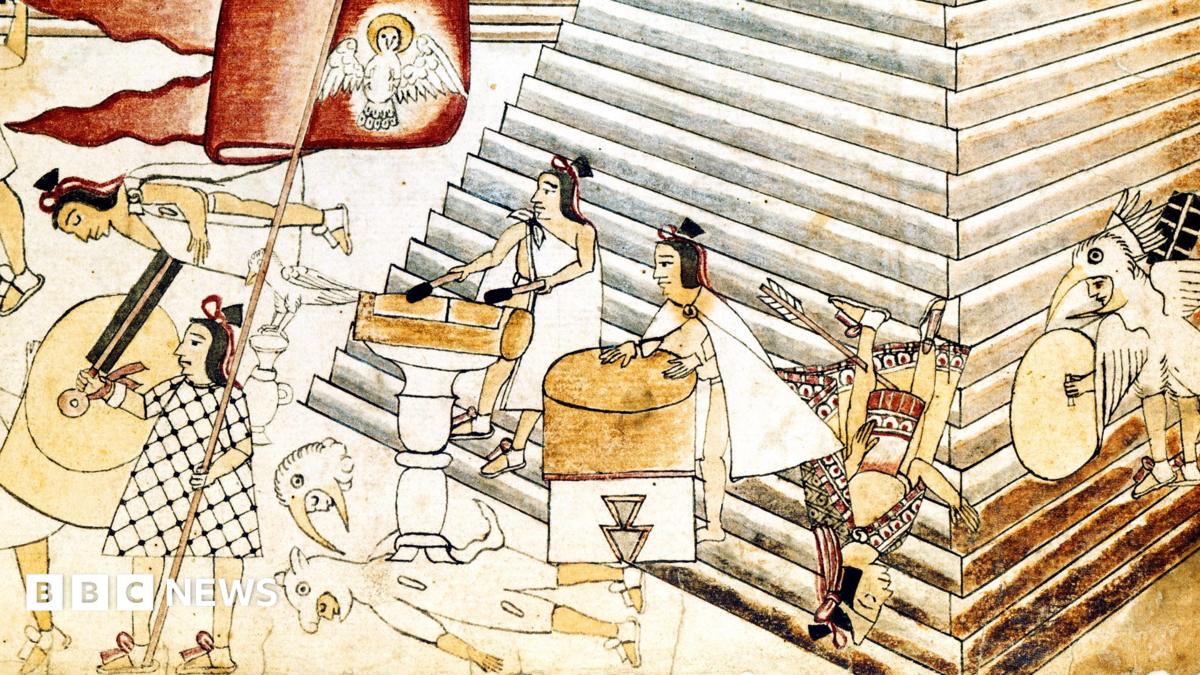
A momentous cultural milestone has arrived in Mexico City as a centuries-old Aztec pictorial manuscript makes its public debut on domestic soil after remaining abroad for nearly two centuries. The historic document, which illustrates the complex history of the Aztec civilisation and its dramatic downfall following the arrival of European forces, is going on display in Mexico for the first time in 186 years.
Known formally as the Codex Azcatitlán, the rare manuscript has long been regarded by scholars and historians as one of the most extraordinary and insightful surviving chronicles of the Aztec world. Its intricate pictographic sequences offer a direct and vivid record of pre-Hispanic society, imperial life, and the cataclysmic conflict that unfolded when Spanish conquistadors first made contact with the indigenous populations of the Americas.
Starting this Thursday, visitors will have the unprecedented opportunity to view the venerable artefact in person at Mexico City's renowned National Museum of Anthropology. The exhibition represents a landmark occasion for the institution and the nation, providing modern viewers with a direct, tangible window into their ancestral past through one of the period's most treasured visual histories.
For well over a century, the manuscript has resided in Paris, having been officially preserved in the collections of France's Bibliothèque Nationale since 1898. However, its separation from Mexican territory extends even further back into the nineteenth century, as the codex had already spent multiple decades circulating outside its country of origin prior to entering the French national archives.
Historians believe that the manuscript was produced during the sixteenth century, created just a few short years after Spanish conquistadors arrived in what constitutes modern-day Mexico. Crafted in the transitional period that followed initial contact, the codex holds an invaluable position in global historiography because it captures native perspectives alongside the monumental transformations reshaping the region.
The folios of the Codex Azcatitlán are celebrated for their meticulous and expressive visual narratives. Among the most iconic scenes rendered in the manuscript is the arrival of the Spanish expedition led by conquistador Hernán Cortés. The vibrant pictograms document Cortés advancing alongside heavily armed European soldiers clad in protective metal armour, carrying standard-issue weapons and shields.
Accompanying the European contingent in these illustrations are indigenous porters bearing heavy provisions on their backs, illustrating the logistical realities of the expedition. The depictions also capture the religious and imperial symbolism of the conquest, with the Spanish forces shown carrying ceremonial banners bearing the likeness of an angel into newly encountered territories.
In addition to chronicling European arrival, the codex captures the fierce resistance mounted by indigenous defenders during the siege of the Aztec capital. One vivid folio portrays Aztec warriors engaged in desperate combat to defend the great pyramid of Tenochtitlán against the Spanish forces. In this dramatic scene, one warrior is depicted fighting in the disguise of a bird with shield in hand, while another is captured falling down the pyramid's steep steps after being struck in the leg by an arrow, set against the rhythm of men playing ceremonial drums.
The return of the Codex Azcatitlán was made possible through a high-profile international loan arranged between the governments of France and Mexico. The cultural initiative was formally organised to commemorate a major diplomatic milestone, marking the bicentenary of 200 years of established bilateral relations between the two sovereign nations.
As part of this reciprocal cultural cooperation, Mexico has agreed to temporarily transfer another of its most revered historical treasures, the Codex Boturini, across the Atlantic to be showcased in France. This mutual sharing of priceless cultural heritage highlights the cooperative spirit underpinning the bilateral anniversary.
The Codex Boturini holds exceptional significance in its own right, narrating through ancient pictograms the foundational migration epic of the Aztecs, who are also referred to as the Mexica. The document illustrates their legendary journey from their ancestral homeland toward the fertile shores of Lake Texcoco, where they would ultimately establish the magnificent imperial island capital of Tenochtitlán.
The diplomatic framework for this high-level exchange of codices was officially negotiated and finalized during a bilateral meeting between Mexican President Claudia Sheinbaum and French President Emmanuel Macron. The agreement was reached during Macron's official state visit to Mexico last year, cementing cultural preservation and heritage exchange as core pillars of Franco-Mexican diplomacy.
The temporary exhibition of the codex arrives amidst a broader, sustained push by the Mexican government to lobby international museums and foreign private collections for the return of cultural artefacts removed from the country in earlier centuries. Mexican cultural and diplomatic authorities have maintained a resolute campaign to reclaim significant portions of the nation's scattered historical legacy.
These concerted diplomatic endeavours have recently yielded tangible results on a global scale. According to official figures released by Mexico's Ministry of Foreign Relations, more than 2,000 historical and cultural objects were successfully repatriated to the country over the course of last year alone, underscoring an active era of heritage restitution that complements temporary exchanges like the exhibition at the National Museum of Anthropology.







Comments (0)