 lukman-hakim
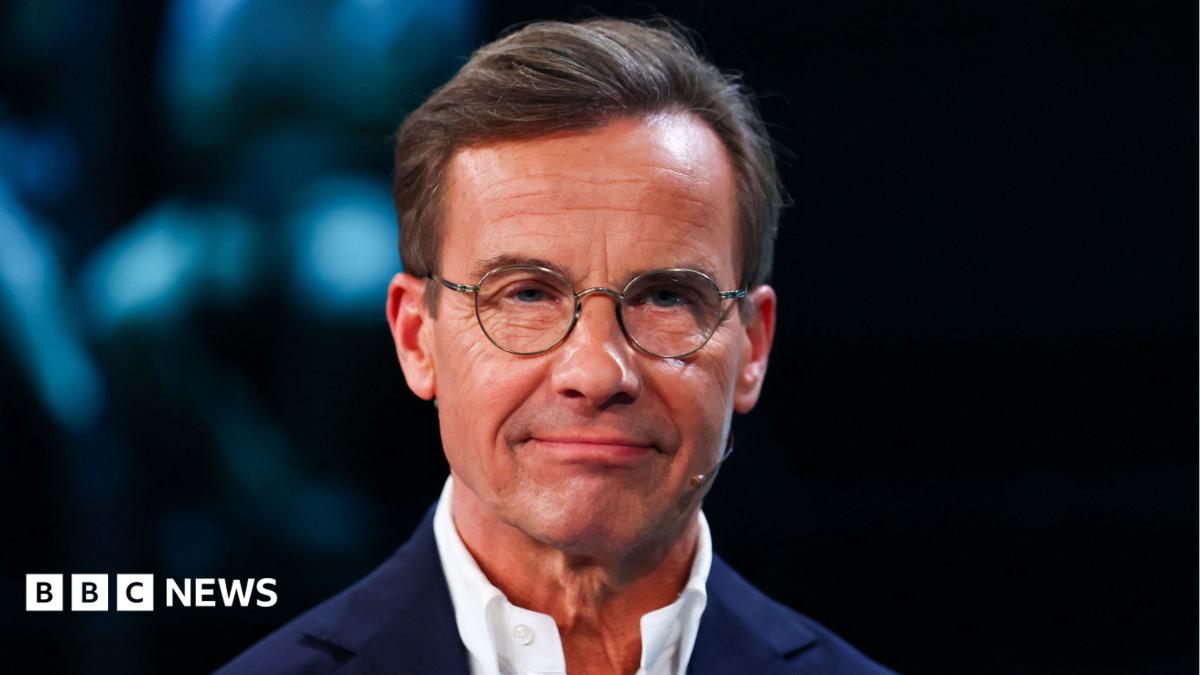
Sweden's Prime Minister Ulf Kristersson has formally stepped down from his post after his governing right-wing coalition suffered a razor-thin defeat to the centre-left opposition in the country’s general election.
The conservative leader confirmed his departure in a statement shared on the social media platform X on Thursday afternoon. The concession followed the release of preliminary voting figures from Sunday's national ballot, which revealed that a margin of only about 50,000 votes separated the two competing political blocs in the Nordic nation of approximately 10 million residents.
According to provisional data published by the Swedish Election Authority, the centre-left opposition, headed by former prime minister Magdalena Andersson of the Social Democrats, is positioned to secure 176 seats. This gives her allied bloc the slimmest possible working majority in the 349-seat Riksdag, Sweden's national parliament.
In contrast, Kristersson’s outgoing right-wing alliance is projected to capture 173 seats in the legislature. The tally reflects an extraordinarily close contest that saw control of the parliament teeter on a handful of seats as counting extended across several days.
While the preliminary numbers have established the baseline for the transition of power, the election results remain subject to an official certification process. Swedish electoral authorities are continuing their final procedural reviews, with the definitive outcome expected to be formally ratified by the end of the weekend.
The result marks the end of Kristersson’s tenure leading a government anchored by his conservative Moderate Party alongside the Christian Democrats and the Liberals. Throughout his governing term, Kristersson’s administration had relied on the external parliamentary support of the anti-immigration, hard-right Sweden Democrats to pass key legislation and maintain power.
Ahead of the election, Kristersson had sought to solidify this partnership by promising to invite the Sweden Democrats directly into a formal governing coalition, offering them ministerial portfolios in his cabinet if his bloc secured another mandate.
However, the election delivered an unexpected setback for the Sweden Democrats. For the first time since the populist, hard-right party first crossed the threshold to enter the Riksdag in 2010, it experienced a decline in voter backing, dropping three percentage points compared to its performance in the 2022 election.
The dip in support came despite the significant influence the party had exerted over national policy in recent years. Under the previous arrangement, the Sweden Democrats had leveraged their kingmaker position to push through a dramatic tightening of Sweden's immigration and asylum rules.
With Kristersson stepping aside, attention has shifted to Magdalena Andersson, who is now tasked with cobbling together a viable governing majority from an ideologically diverse coalition of left-leaning and centrist parties.
Andersson has opened formal preliminary negotiations with leaders from the three other parties that make up the centre-left bloc: the Left Party, the Centre Party, and the Green Party.
Despite their collective victory at the polls, the road to forming a durable administration is anticipated to be complex. The prospective coalition partners hold deeply contrasting views on several critical domestic policy files, with economic governance and taxation representing significant points of contention between the market-friendly Centre Party and the more radical Left Party.
Sweden’s political landscape is traditionally divided into two distinct four-party blocs representing the right and the left. Because no single party regularly commands an outright majority on its own, Swedish voters and politicians are well accustomed to minority administrations and intricate multi-party power-sharing agreements.
Nevertheless, the process of negotiating a formal governing pact can prove exceptionally protracted. Following the general election in 2022, Swedish party leaders spent 37 days in intensive cross-party talks before a viable administration could be installed.
An even more extreme precedent occurred following the 2018 general election, when deep parliamentary fragmentation and rigid red lines led to a historic political deadlock that took 134 days of inter-party negotiations to resolve.
The current post-election timetable has been shaped by the rigorous tabulation schedule overseen by regional election committees. Following the close of polls on Sunday evening, officials began a comprehensive preliminary count that stretched into the middle of the week, with election workers beginning the processing of late-submitted early ballots and postal votes cast by Swedish citizens living abroad on Wednesday.
With Kristersson’s resignation now submitted and the vote counts nearing formal certification, Andersson will attempt to bridge the policy divides among her allies to secure the parliamentary backing needed to return the Social Democrats to executive power.







Comments (0)