 lukman-hakim
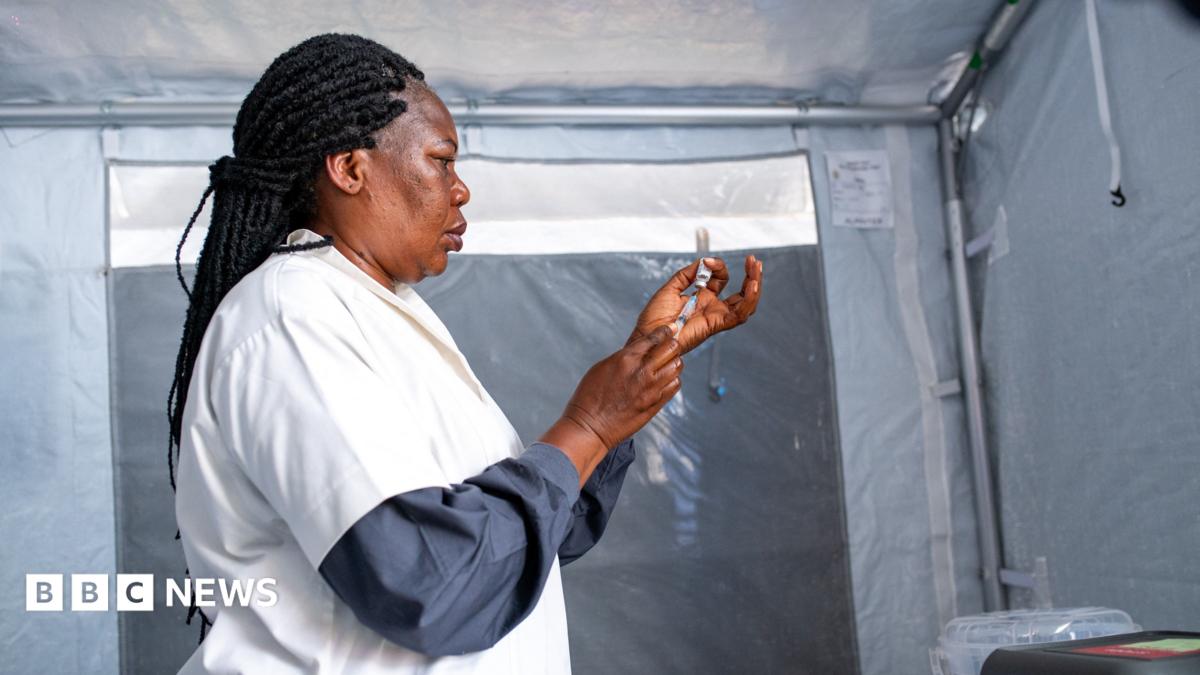
Kenya has confirmed its first Ebola-related death, after a Kenyan national who had been residing in the Democratic Republic of Congo for seven years succumbed to the Bundibugyo strain of the virus. The announcement was made by Kenya's Health Minister, Aden Duale, marking a significant development in an outbreak that has already become the second deadliest Ebola epidemic on record.
The patient, who first became ill approximately one month ago, received treatment at multiple hospitals in DR Congo before traveling to Nairobi. According to Duale, the individual boarded a flight on Saturday and passed through routine public health screening at Nairobi's main airport without being flagged. A relative then transported the patient to a hospital in the city, where his condition was assessed.
The man's journey involved traveling by road from DR Congo to Uganda's capital, Kampala, where he then boarded a flight to Nairobi. This overland and air route highlights the challenges health authorities face in containing infectious diseases across porous borders in the region. Despite standard screening procedures at the airport, the patient's symptoms were not detected at that stage, underscoring the difficulty of identifying Ebola cases during the early, often non-specific phase of illness.
Upon arrival at Nairobi Hospital, the patient was transferred to an isolation facility originally constructed during the Covid-19 pandemic. It was there that he developed a constellation of severe symptoms, including fever, chills, intense fatigue and weakness, painful swallowing, muscle pain, and bleeding under the skin. These clinical signs prompted doctors to suspect a viral haemorrhagic fever, particularly given the patient's travel history, and samples were collected for laboratory testing. The tests confirmed a positive result for the Ebola Bundibugyo virus.
The patient died at 23:30 local time on Monday, which corresponds to 20:30 GMT. His burial is scheduled for later on Tuesday, with authorities stating that it will be conducted in accordance with public health safety protocols designed to prevent further transmission. These protocols typically involve specialised teams handling the remains, restricted attendance, and safe burial practices to avoid contact with bodily fluids that can carry the virus.
At least 28 contacts have been identified so far, including family members and healthcare workers who may have been exposed to the patient. Health authorities are also tracing an additional 23 passengers and four crew members who traveled on the same flight as the deceased. Contact tracing is a critical component of Ebola outbreak response, as the virus spreads through direct contact with blood, secretions, organs, or other bodily fluids of infected individuals, as well as through surfaces and materials contaminated with these fluids.
The current outbreak, declared by DR Congo in May, has resulted in more than 4,000 deaths this year alone. According to the World Health Organization, 4,082 deaths have been recorded out of 8,463 cases since the Bundibugyo species emerged. This makes it the second most lethal known outbreak of Ebola, trailing only the devastating 2014-2016 West African epidemic, which was caused by the Zaire species and claimed more than 11,000 lives.
The Bundibugyo species of Ebola is relatively rare compared to other strains, and crucially, there are currently no approved vaccines or treatments specifically for it. This absence of targeted medical countermeasures complicates response efforts, as healthcare workers must rely on supportive care, such as fluid replacement and symptom management, rather than preventive vaccination or direct antiviral therapy. Some vaccine candidates and treatments have been trialled against the Bundibugyo strain, but none have yet received regulatory approval for widespread use.
Shortly after DR Congo declared the outbreak in May, the disease was also reported in neighbouring Uganda, where two people died. However, the World Health Organization declared Uganda free of the disease in August, a milestone that demonstrated the effectiveness of rapid containment measures when implemented promptly. Since that declaration, all confirmed cases have been confined to DR Congo, until now.
The emergence of a case in Kenya raises concerns about the potential for further regional spread. Kenya is a major transportation hub in East Africa, with Nairobi serving as a gateway for travellers from across the continent and beyond. The fact that the patient was able to travel from DR Congo through Uganda and into Kenya before being diagnosed underscores the interconnectedness of the region and the speed with which infectious diseases can cross borders.
Health authorities in Kenya are now working to identify and monitor all potential contacts, a process that involves interviewing the patient's family, reviewing hospital records, and coordinating with airline officials to trace passengers and crew. These individuals will be monitored for 21 days, the maximum incubation period for Ebola, to ensure that any new cases are detected swiftly and isolated to prevent further transmission.
The case also highlights the importance of robust surveillance systems at points of entry. While airport screening can detect some symptomatic travellers, it is not infallible, particularly when symptoms are mild or when individuals are in the early stages of illness. Public health experts emphasise that screening must be complemented by strong community-based surveillance, rapid laboratory testing, and effective isolation protocols to interrupt transmission chains.
The Bundibugyo strain was first identified in Uganda in 2007, when an outbreak in the Bundibugyo district infected 149 people and killed 37. Since then, it has appeared sporadically, but the current outbreak in DR Congo represents by far the largest and most deadly incidence of this particular species. The high fatality rate and lack of approved medical countermeasures make it a formidable challenge for public health officials.
International health organisations, including the WHO, are likely to intensify their support for affected countries, providing technical expertise, laboratory capacity, and resources for contact tracing and case management. The response will also require close coordination among neighbouring countries to share information, align protocols, and prevent cross-border transmission. For Kenya, the confirmation of its first Ebola death is a sobering reminder of the need for sustained vigilance and preparedness, even as the world continues to grapple with multiple public health threats.
As the situation evolves, Kenyan health authorities have pledged to provide regular updates and to work transparently with international partners. The coming days and weeks will be critical in determining whether the virus has spread further within the country. The identification of contacts and the monitoring of their health status will be closely watched, both nationally and globally, as the world confronts yet another chapter in the ongoing struggle against Ebola.






Comments (0)