 lukman-hakim
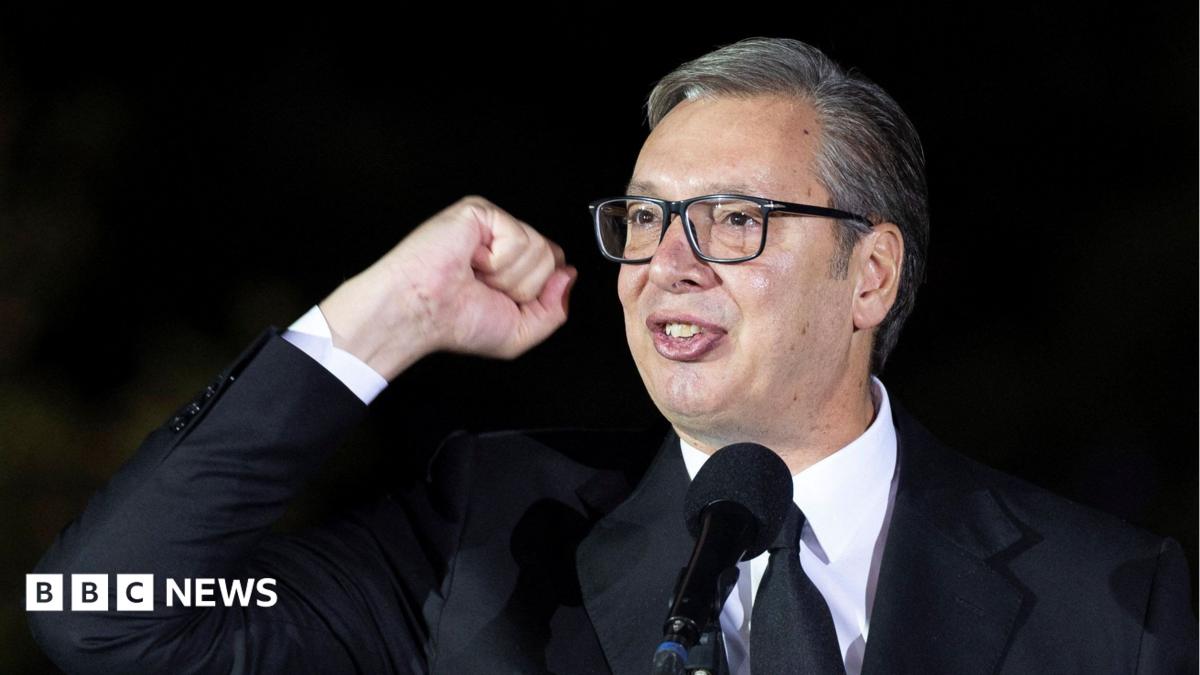
Serbia's President Aleksandar Vučić has stepped down from office, bringing an end to a presidency that spanned nearly a decade and handing his country a political calendar that will require voters to cast ballots twice before the close of the year. In remarks delivered to supporters gathered outside the presidential building in Belgrade, Vučić framed his nine years in power as a period in which his administration had safeguarded peace and stability, even as he acknowledged the turbulence that had engulfed Serbian public life.
The resignation did not arrive as a surprise. Vučić had signalled his intention to leave the post as far back as June, and his departure now formalises a transition that has been building for more than a year. Because Serbia's constitution bars him from seeking a third presidential term, the move also resolves a legal barrier that would have prevented him from remaining in the country's highest office regardless of the political pressure he faced.
What made the moment extraordinary was not simply the resignation itself but the wave of civic anger that forced it onto the agenda. Since the collapse of a railway station roof in Novi Sad in 2024, which killed 16 people, public outrage had been building steadily. That disaster became a focal point for grievances that stretched far beyond a single infrastructure failure, with many Serbians interpreting the tragedy as evidence of deeper problems within the governing system.
Demonstrators came from across the breadth of Serbian society. Students and teachers marched alongside factory workers and farmers, forming a coalition of protest that cut across class, profession, and region. Their central complaint was that the country had been governed for more than a decade by the Progressive Party under conditions that tolerated corruption and allowed accountability to wither. The station renovation had been closely associated with Vučić himself and was promoted as a showcase of national progress, which made its failure all the more symbolically damaging.
The government's response did little to calm the streets. A series of officials resigned as pressure mounted, but the concessions failed to satisfy protesters, who continued to gather throughout the summer months. Rather than dissipating, the movement grew more confrontational, particularly after allegations of police brutality toward demonstrators circulated widely. In Belgrade and elsewhere, the protests shifted from peaceful assembly toward unrest, deepening the sense of a government losing control of the public conversation.
Now the political consequences are unfolding on a compressed timetable. Under Serbian constitutional rules, a presidential election must be held within three months of the president's resignation. Vučić has indicated that the presidential vote will take place slightly more than a month after an early parliamentary election scheduled for late October. That parliamentary election was itself called in response to the protest movement, whose participants had added a demand for fresh elections to their list of grievances.
In the interim, parliamentary speaker Ana Brnabić will serve as the country's acting president until a successor is chosen. Brnabić is also a member of the Progressive Party, meaning the party retains a foothold in the presidency during the transition period even as its leader steps away from the office. The arrangement ensures continuity of state functions, but it also keeps the ruling party at the centre of a political moment defined by public rejection of its record.
Vučić is not exiting the political stage entirely. He is standing as his party's candidate for prime minister in the approaching parliamentary contest, and he had already announced his intention to lead the Progressive Party into that election. That decision leaves open the possibility that he could remain a dominant figure in Serbian politics, simply operating from a different institutional perch. Critics are likely to argue that a shift from president to prime minister does not constitute the change protesters have demanded.
The electoral field is taking shape as a contest between three distinct forces. Vučić's Progressive Party will face a student-led, anti-corruption movement known as Students Win, which emerged directly from the protest wave that began in 2024. A coalition of pro-Western opposition parties operating under the name European Serbia will also compete. The result will serve as a measure of whether the street movement can convert its energy into parliamentary representation.
By the end of that process, Serbia will have selected both a new parliament and a new president, a rapid sequence that leaves little room for the political system to stabilise between votes. For a country with a history of turbulent transitions, the compressed schedule carries both opportunity and risk. It offers voters an unusually direct chance to pass judgment on more than a decade of Progressive Party rule, but it also raises the prospect of instability if the results are contested or if no clear governing majority emerges.
Vučić's long tenure has been defined by a balancing act between competing international commitments. He has stated publicly that he wants Serbia to join the European Union, while simultaneously cultivating close ties with Russia and welcoming Chinese investment into the country. That posture drew support from voters who valued his relationships with Moscow and Beijing, but it also generated friction with Brussels and with pro-Western constituencies at home. The election campaign is likely to sharpen questions about which direction Serbia should ultimately face.
In one of his final acts before leaving office, Vučić used his constitutional pardoning powers to release 49 people. According to the Serbian public broadcaster RTS, those pardoned included 23 students as well as party loyalists who had been suspected of offences connected to what he described as the terrible events of the past year and a half. The pardon has already drawn scrutiny, since it appears to extend leniency to individuals on multiple sides of the unrest and could complicate efforts to establish accountability for what occurred.
What comes next depends largely on how Serbia's voters interpret the past eighteen months. The protest movement succeeded in forcing a presidential resignation and an early parliamentary election, achievements that would have seemed unlikely when the Novi Sad roof collapsed. Yet the deeper grievances that brought people into the streets, concerns about corruption, institutional failure, and the concentration of power in a single party, remain unresolved. The two elections ahead will determine whether Serbia's political establishment can adapt to those demands or whether the pressure from below will continue to reshape the country's leadership.






Comments (0)