 lukman-hakim
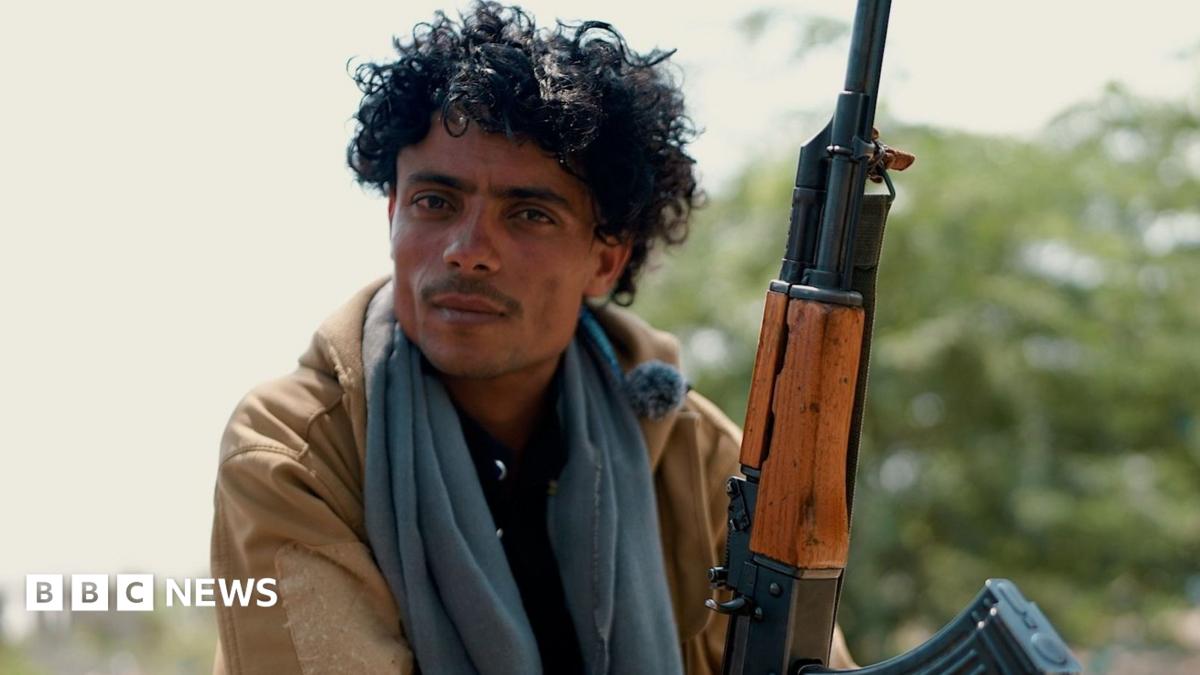
TAIZ, YEMEN — The first warning came seconds before the sky darkened with a low hum. A soldier escorting a BBC team in south-western Yemen pointed upward and offered a grim prediction: "This is the first drone," he said, "it's usually followed by an attack."
The report was interrupted as the buzz of the approaching drone grew louder overhead. The crew took cover beneath roadside bushes, then climbed back into their vehicle and drove on. Within roughly ten minutes, the boom of airstrikes echoed across the hillsides, one blast after another, with no indication of where they fell.
Such scenes have become routine in the mountains south-west of Taiz, Yemen's third-largest city, where Saudi-backed government forces are struggling to hold back Houthi fighters advancing from the north. The precise location of the front line is notoriously difficult to pin down. On the ground, it is defined less by a trench or a wall than by an abrupt absence — the point where government control ends and no man's land begins.
A Journey Through a Fractured Battlefield
The BBC travelled with government forces from Taiz through a series of checkpoints to reach the contested zone, arriving at the closest point to the fighting late in the evening. The route itself illustrated the fragmented nature of the government coalition: around 30 checkpoints marked stretches of road controlled by different commanders, a patchwork of authority that speaks to the fractured alliances underpinning efforts to hold the city.
As the convoy neared Taiz, ambulances began streaming past. At least five were counted within half an hour, all heading toward the city's main hospital. The scene offered a stark indication of what lay ahead: a densely populated urban centre caught in the middle of a brutal battle.
Yet the city itself showed no outward sign of collapse. The team arrived after dark to find shops still lit, restaurants packed and children playing in the streets. Only periodically did the soundtrack change, as the thud of shelling and the crack of gunfire from the surrounding mountains cut through the noise of ordinary life.
Homes in Retreat
On the slopes above the road, the signs of departure are stark. Houses stand scattered across the terrain, many of them abandoned after families fled to escape the violence. The contrast with the city below is sharp: the streets of Taiz are eerily quiet, the constant stream of cars and motorbikes that would normally fill them gone, replaced only by the bleating of livestock and the exchange of incoming and outgoing fire.
One resident, who gave only his first name, Ali, out of fear of retribution if the Houthis take the area, has refused to leave. Sitting outside his home roughly 1km (0.6 miles) from the front line with a herd of goats, he described the damage sustained by his property. "Two mortars landed here on my property," he said.
Ali said he had sent his children to a displacement camp because they could no longer cope with the shelling and gunfire. He stayed behind with his wife and his sisters to tend the animals. "I am terrified," he said, "but I have no choice, we will all go hungry without our animals and die anyway."
The human cost of the front line is thus measured in both displacement and endurance — some families flee to camps, others stay to guard livestock and livelihoods with little more than stubbornness for protection.
The Narrowing Corridor
At the checkpoint nearest the front line, the BBC met fighters who had just returned from positions high on the mountain, only a few hundred metres from advancing Houthi fighters. One of them described the grim arithmetic of holding ground in the mountains: the bodies of 18 government soldiers lay in an area his unit could fire across but was unable to reach.
"We shoot over them, but we can't pull them out," he said.
The remark captures a defining feature of the Taiz front. Government forces can dominate high ground with their weapons, but the terrain and the picket of opposing positions make casualty recovery — and reinforcement — almost impossible.
Momentum Shift After the Ceasefire Collapse
Fighting around Taiz has intensified dramatically since the Houthis seized the strategic Red Sea port of Mokha, 85km to the west of the city, on 10 September. The capture came after a ceasefire that had largely held for four years, and effectively unravelled it.
The offensive gave the Houthis control of a swathe of territory overlooking the Bab al-Mandab Strait, the narrow waterway that serves as a crucial shipping corridor linking Europe and Asia. The strategic prize is not merely territorial. Control of the chokepoint raises the risk of disruption to global trade routes, and fears of further upheaval in regional supplies contributed to a rise in oil prices.
Why Taiz Matters
Taiz is not only Yemen's third biggest city by population — it is home to close to a million people and is widely regarded as the country's cultural capital. Geographically, it occupies a vital intersection between Houthi-controlled areas in northern Yemen and government-held territory in the south, meaning it is hemmed in by front lines in several directions at once.
Government forces hold the centre of the city, while Houthi positions lie to its north and east. The fiercest recent fighting has taken place on the western approaches, where both sides are contesting high ground overlooking the city's main route south. The stakes are direct: if the Houthis secure these areas, government forces could find it far more difficult to retake Mokha, turning a tactical fight for ridges into a strategic question about the port and the strait beyond it.
Signs of a Bigger Offensive
The BBC was told by contacts on the Houthi side that fighters are consolidating troops and preparing for a major offensive. Government forces, when asked, said they were aware of the preparations and were doing the same.
The team reached Taiz by travelling from Aden in the south, where Yemen's internationally recognised Presidential Leadership Council and government are based. The road north traced the seam of a country divided, passing through stretches where checkpoints proliferate and allegiances shift with each new commander.
With both sides braced for escalation and the western hills in dispute, the outlook for Taiz's residents remains precarious. The city continues to function after dark, but the sound of artillery and the constant movement of ambulances point to a confrontation that is far from over — and whose consequences will be felt well beyond Yemen's borders.










Comments (0)