 lukman-hakim
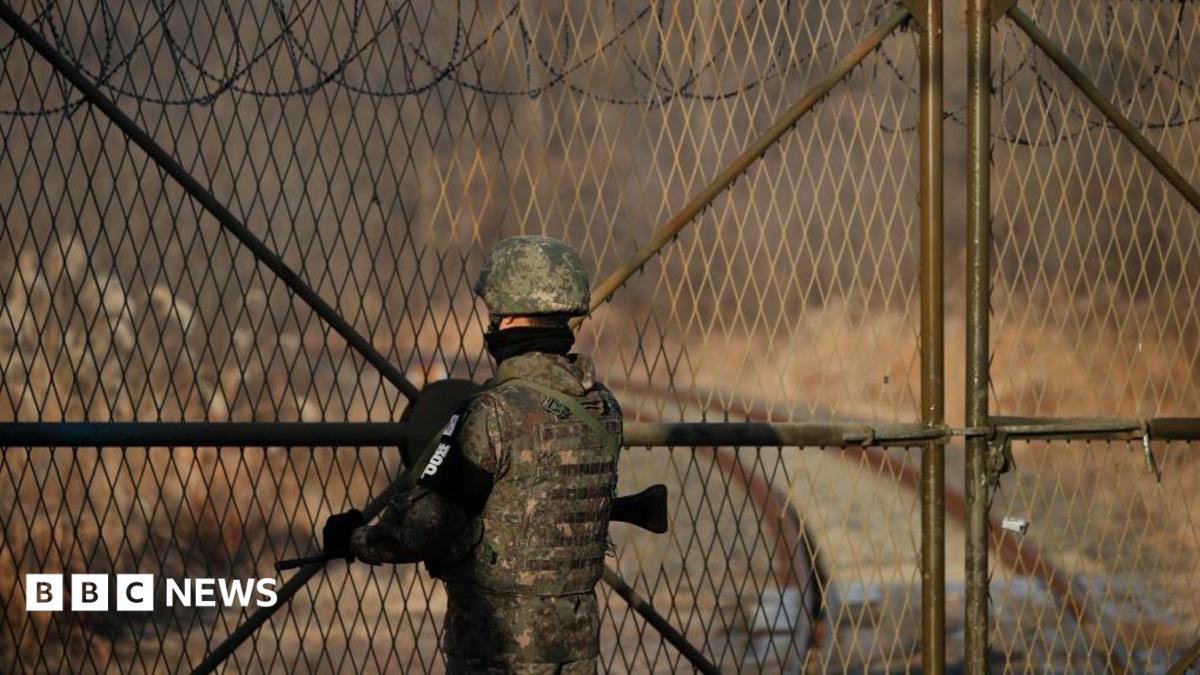
South Korea's military has formally demanded that North Korea issue an apology for landmine explosions along the heavily fortified inter-Korean border that wounded three South Korean personnel earlier this month, sharply escalating tensions between the two neighbours.
The blasts occurred on 21 September inside the Demilitarised Zone (DMZ), the buffer strip that has separated the two Koreas since the Korean War ended in an armistice more than seven decades ago. Three South Korean personnel were injured in the explosions, which Seoul says took place on its side of the demarcation line.
Seoul's assessment, announced on Tuesday, concluded that the explosions were "highly likely" caused by mines planted by North Korean forces. South Korean officials vowed to pursue "corresponding measures" against what they described as a violation of the 1953 armistice agreement that halted active combat in the Korean War.
In a statement issued on Wednesday, South Korea's military went further, calling on Pyongyang to apologise for the blasts and to immediately halt any fortification work along the border. Seoul believes the mines were laid by North Korean troops as part of efforts to reinforce their side of the frontier, a practice that would breach the terms of the decades-old truce.
North Korea has rejected the accusations outright. Pyongyang described Seoul's claims as "groundless" and dismissed them as a "farce" designed to inflame tensions on the Korean peninsula. The denial was delivered with the characteristic bluntness that has come to define inter-Korean exchanges in recent years.
Kim Yo Jong, the influential sister of North Korean leader Kim Jong Un, issued a sharply worded statement carried by state media on Wednesday accusing South Korea of fabricating the allegations for what she called "political and military provocation." She rejected any suggestion that North Korean personnel had crossed the border to plant mines, calling the accusation "a deliberate and planned strained assertion to shift the responsibility for escalating tension" onto Pyongyang.
Kim also warned the South to be "prepared for paying price for the farce of their own making," language that signals Pyongyang may retaliate rather than de-escalate. Her intervention is significant because she frequently serves as her brother's most prominent spokesperson on matters involving South Korea and the United States, and her statements are widely read as reflecting the leadership's official position.
The dispute has revived painful memories of a similar incident in 2015, when two South Korean soldiers were maimed by landmines while patrolling the DMZ. At the time, Seoul said the devices had been secretly planted by North Korean soldiers near a South Korean guard post, a claim Pyongyang also denied. Kim referenced that episode in her statement, arguing that South Korea had used it as a "pretext" to escalate tensions and was now repeating the same playbook.
South Korean Defence Minister Kang Shin-chul said on Tuesday that the recent blasts represented a "clear" violation of the 1953 armistice. That agreement ended three years of active fighting on the Korean peninsula and established the DMZ, a strip roughly 4km (2.5 miles) wide that straddles the Military Demarcation Line, the de facto land border between North and South.
The 1953 agreement was never replaced by a formal peace treaty, meaning the two Koreas remain technically at war. The DMZ has consequently become one of the most heavily militarised frontiers in the world, and despite its name, it has witnessed repeated episodes of violence over the decades, including sporadic firefights, incursions, and mine explosions.
The United Nations Command, the multinational force that oversees the armistice, conducted on-site investigations into the blasts alongside the South Korean military. It said it would address the alleged violation "through established Armistice mechanisms," without specifying what measures might follow. The command added that it "remains committed to maintaining and enforcing the Armistice Agreement and fulfilling its responsibilities to preserve stability and prevent escalation on the Korean Peninsula."
The cautious wording from the UN Command suggests it is seeking to avoid inflaming an already volatile situation while still acknowledging the seriousness of the incident. The command's involvement matters because it is the only body with a formal mandate to police the armistice, and its findings could shape how the international community responds.
For Seoul, the incident presents a delicate balancing act. The government of President Lee Jae-suk faces domestic pressure to respond firmly to what many South Koreans see as a pattern of North Korean belligerence. Yet any military retaliation risks triggering a cycle of escalation that could spiral beyond the two Koreas, drawing in the United States, which maintains roughly 28,500 troops in the South, and potentially China, the North's principal economic and diplomatic backer.
Analysts note that Pyongyang has historically alternated between provocations and outreach, often timing its actions to influence diplomatic dynamics or to shore up internal cohesion. Whether the current standoff follows that pattern, or marks a more durable deterioration in relations, will depend largely on whether either side chooses to de-escalate in the coming weeks.
For now, the two Koreas remain locked in a war of words, with Seoul demanding accountability and Pyongyang warning of consequences. The injured soldiers are recovering, but the political fallout along one of the world's most dangerous borders is only beginning to unfold.









Comments (0)