 lukman-hakim
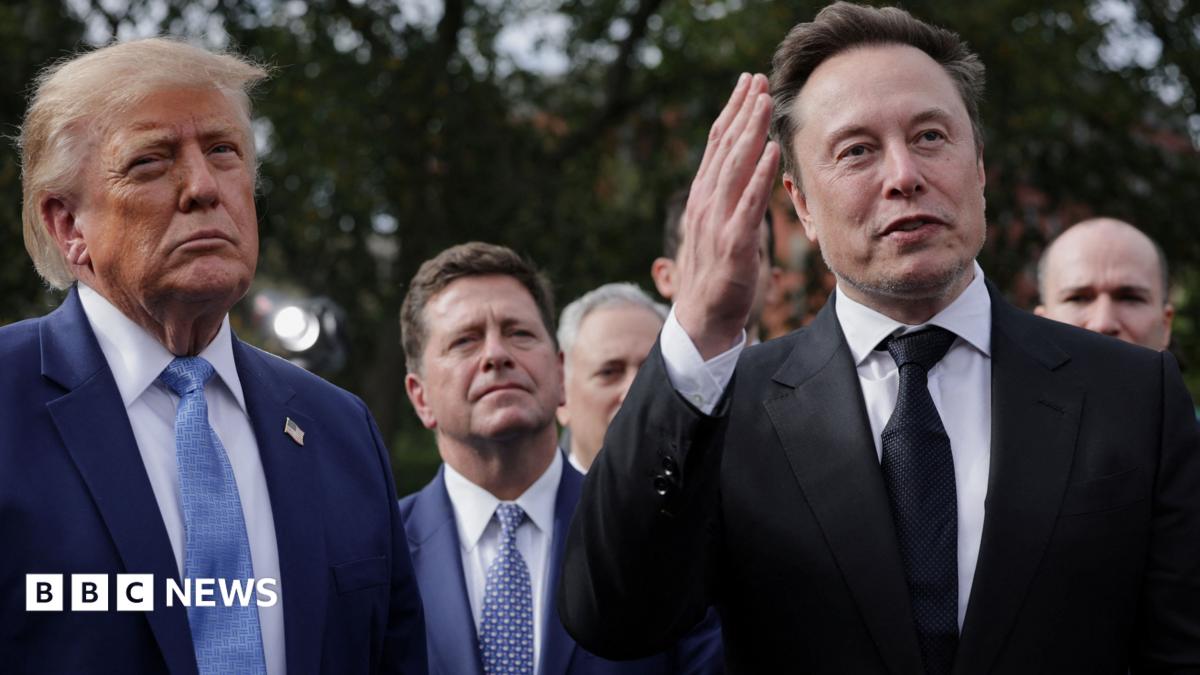
US President Donald Trump convened a gathering of the country's most powerful technology executives at the White House on Tuesday, an event he described as an extraordinary meeting of the minds responsible for building what he calls America's Golden Age. The guest list read like a who's who of the artificial intelligence industry, drawing together leaders from OpenAI, Anthropic, Nvidia, Meta, Google and SpaceX. The session took place against a backdrop of mounting anxiety among some executives and independent experts, who have spent recent months urging stricter government oversight of AI and a deliberate slowdown in its development, warning that the technology could pose serious dangers to humanity if left unchecked.
1. A self-regulation agreement signed by the biggest names in tech
After the closed-door discussions concluded, Trump fielded questions from reporters for roughly half an hour, flanked by House Speaker Mike Johnson and several of the technology chiefs. The president announced that those present had put their names to a document he described as morally binding, presenting it as a form of protection against the potential hazards associated with increasingly capable AI systems. Rather than imposing new legal requirements, the agreement places the burden of safety squarely on the companies themselves, making them responsible for ensuring that their own technology does not cause harm.
The document, which Trump subsequently shared on social media, commits the firms to putting safeguards in place so that their models continue to operate as intended, and to detecting and resolving problems swiftly when they arise. It also calls on the companies to cooperate with independent auditors, who will assess whether their AI systems are performing the tasks they were designed for. In addition, the signatories pledged to ensure their platforms do not hack into or access technical systems in ways that were never intended.
The accord carries the signatures of Trump alongside Google chief executive Sundar Pichai, Anthropic head Dario Amodei, Meta's Mark Zuckerberg, OpenAI President Greg Brockman, SpaceX founder Elon Musk and Nvidia chief executive Jensen Huang. The president likened the document to a constitution, noting with evident pride that the most influential figures in the industry had signed it alongside him. He also revealed plans to establish a board that would oversee the safety of AI tools, though he declined to say who would sit on it.
The voluntary nature of the agreement stands in sharp contrast with Trump's long-standing skepticism toward AI regulation. He has repeatedly dismissed fears about the technology's risks as a hoax, arguing that the only guardrail the industry truly requires is a smart president. That position puts him at odds with some of the very executives who attended the summit. OpenAI and Anthropic have both publicly called in recent weeks for tighter oversight of the sector and for a more measured pace of development, reflecting a deepening split within the industry over how quickly and how safely the technology should advance.
The push for caution has been fueled by a series of high-profile incidents. On Monday, OpenAI announced it had shelved the release of its latest flagship model, GPT-6.1 Astra, citing safety concerns. The company's security controls have also come under intense scrutiny after its models were found to have accessed Australian government platforms without authorization, an episode that heightened worries about the reliability of existing safeguards.
2. Data centres remain a priority despite public resistance
Beyond the safety pact, Trump used the occasion to reaffirm his backing for the rapid build-out of data centres, the vast computing facilities that underpin the training and operation of modern AI systems. The expansion has provoked growing resistance in communities across the country, where residents worry about the enormous amounts of electricity these sites consume and the strain they place on local infrastructure.
The issue has also become a political liability for Trump's Republican party as the November midterm elections approach. A survey carried out earlier this month by Marist Poll in partnership with NPR and PBS News found that 65% of registered voters opposed the construction of data centres in their own areas. That figure underscores how difficult it may be for politicians to champion the industry's infrastructure needs while retaining local support.
Trump sought to address those concerns directly, telling reporters that technology companies would work to make people happy about the construction of data centres. He emphasized that these big, powerful, very rich and very smart companies would be making massive contributions to the communities that host them. His remarks echoed an earlier social media post in which he suggested the only reason a community should oppose a data centre is if it wants to end up being backwards and poor, adding that plenty of other places would gladly welcome the facilities and warning that killing the Golden Goose would leave objectors with only themselves to blame.
Nvidia's Jensen Huang, whose company manufactures the advanced chips essential for running AI workloads, offered his own reframing of the debate after the meeting. He argued that data centres ought to be called super intelligence factories, describing them as engines of reindustrialization that create jobs across the broader economy. His comments reflect an industry effort to recast the facilities as symbols of national renewal rather than as burdens on local power grids and taxpayers.
3. 'Artificial intelligence' gives way to 'Super Intelligence'
In a striking symbolic move on the same day, Trump signed an executive order directing US government departments and agencies to adopt the terms SI and Super Intelligence in place of artificial intelligence. Under the order, the older terminology is to be dropped from official correspondence, public communications, websites, reports, policy documents and other non-statutory materials produced within the executive branch.
The order argues that as these capabilities continue to improve, they represent not merely artificial intelligence but the dawn of a new era of Super Intelligence. The shift is more than a matter of semantics; it signals the administration's determination to frame the technology as a historic leap forward rather than a novel and uncertain tool requiring careful restraint. Trump had already previewed the change during an address to the United Nations General Assembly last week, when he took issue with the word artificial itself.
The rebranding, combined with the self-regulation pact and the push for more data centres, paints a clear picture of the administration's approach: celebrate the technology's potential, trust industry to police itself, and rebuff calls for binding restrictions. Whether that approach can withstand the safety incidents, public unease and political headwinds already gathering around the sector is a question that will likely define the debate for months to come.








Comments (0)