 lukman-hakim
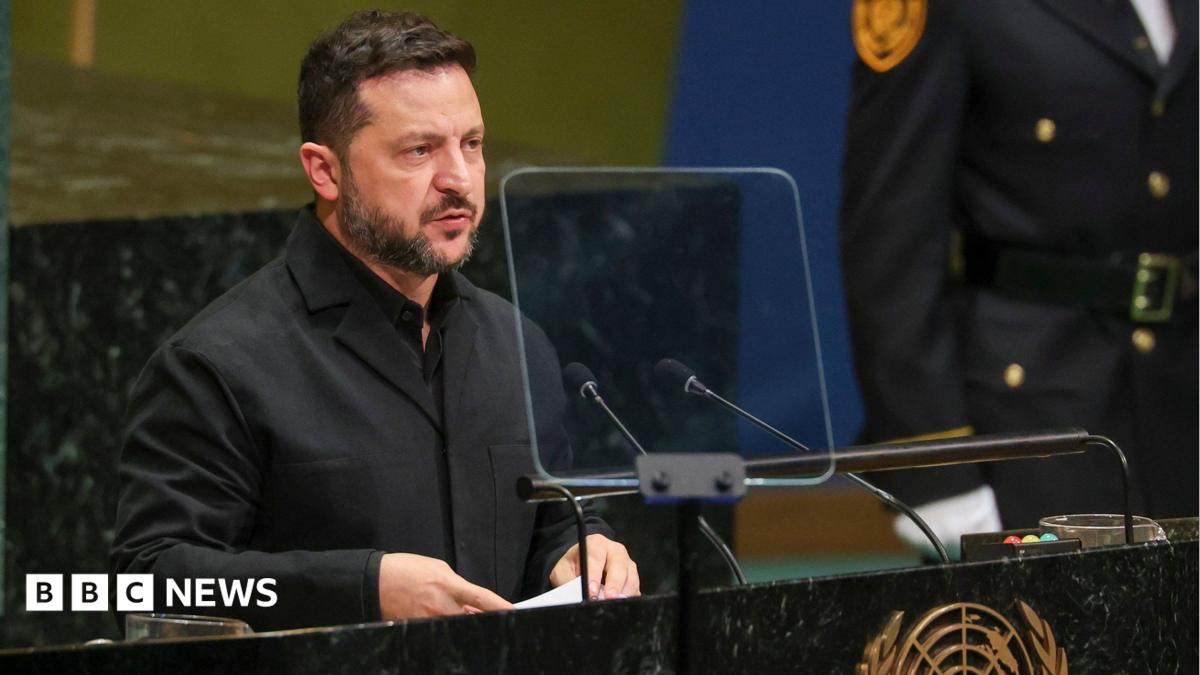
South Korea has formally summoned Ukraine's acting ambassador in Seoul, lodging a sharp diplomatic protest over President Volodymyr Zelensky's public disclosure that two captured North Korean soldiers had been quietly transferred to South Korean custody. Vice Foreign Minister Park Yoon-joo delivered the complaint directly to Andrii Vieshkin, expressing what Seoul described as "strong regret" that the Ukrainian leader had revealed a transfer that South Korean officials insist was meant to remain confidential.
The diplomatic row marks an unusually public rupture between two governments that have otherwise maintained friendly relations since Russia launched its full-scale invasion of Ukraine. Seoul has repeatedly voiced solidarity with Kyiv and provided non-lethal assistance, but the two capitals now find themselves at odds over how the sensitive prisoner handover was handled.
According to the account provided by President Lee Jae Myung's office, the two North Korean soldiers were moved to South Korea only after more than a year of quiet negotiations between Seoul and Kyiv. The prisoners had been captured by Ukrainian forces in Russia's Kursk Oblast in early 2025, a detail Ukraine publicised at the time. Zelensky's announcement at the United Nations General Assembly last Wednesday confirmed their arrival in South Korea, and he remarked that the soldiers had not been "easy to capture alive."
Seoul confirmed that the transfer had taken place but directed its anger at the manner of the disclosure. Officials in the president's office said the secrecy was intended for two purposes: protecting the North Korean soldiers' relatives, who could face reprisals from Pyongyang, and shielding Ukraine from domestic criticism that it had forfeited a valuable bargaining chip by handing over prisoners who might otherwise have been exchanged for Ukrainian captives held by Russia.
The dispute intensified when Zelensky's office pushed back, claiming that the two countries had never signed a non-disclosure agreement covering the transfer. That response drew a further demand from Seoul, which called on Ukraine to apologise for what it characterised as "announcing a falsehood." South Korean officials argued the episode had seriously damaged trust between the two nations.
Ukraine's foreign ministry declined to comment when approached by the BBC, leaving the public disagreement unresolved. The lack of a Ukrainian response has added to the uncertainty over how quickly the two sides might repair the damage.
The political fallout has also been felt domestically in South Korea. President Lee, whose party favours a conciliatory approach toward Pyongyang, faced heavy criticism at home after Zelensky's disclosure. Opposition lawmakers accused him of concealing the transfer in order to avoid provoking North Korea. Lee has been striving to reopen peace talks with the North, so far with little success, and the revelation handed his critics a fresh line of attack.
The two North Korean soldiers had earlier told local media that they wished to be sent to South Korea, a request that gave Seoul a compelling humanitarian rationale for accepting them. Their arrival places South Korean authorities in the delicate position of deciding how to handle defectors who were combatants in a foreign war, a situation with potential intelligence value as well as significant diplomatic risk.
Since Russia's full-scale invasion, South Korea has been sympathetic to Ukraine's plight but has refused to abandon its longstanding policy of not supplying lethal weapons to any country engaged in active conflict. That restraint has been tested as North Korea deepened its military support for Moscow. After North Korean troops were deployed to assist Russia in 2024, Kyiv intensified pressure on Seoul to provide cutting-edge anti-air missiles capable of defending Ukraine's energy infrastructure against Russian drone and missile attacks.
Mykhailo Podolyak, a senior adviser to Zelensky, made the case publicly, arguing that South Korea could no longer stand apart. "When North Korea actively participates in a war in Europe, South Korea cannot remain a distant observer," he said. He framed the transfer of defence technologies and capabilities from Seoul to Kyiv as a matter of South Korea's own long-term security, describing it as a way to contain "the expansion of an aggressive totalitarian axis."
Seoul has nonetheless continued to extend non-lethal support. In July, it announced a $100 million assistance package for Ukraine, which Lee's office described as an expansion of earlier aid consisting of items such as helmets, personal body armour and medical equipment. Russia's foreign ministry has warned that it would have "no choice but to retaliate" if South Korea supplied arms to Ukraine, without specifying what measures it might take.
The episode reflects the narrow path South Korea is attempting to walk. It has long pursued cordial ties with countries opposed to the United States, and since the collapse of the Soviet Union it has worked to deepen trade and diplomatic relations with Russia, which shares a border with North Korea. Seoul views both Moscow and Beijing as essential partners in any effort to influence Pyongyang, giving it strong incentives to avoid crossing Moscow's red lines.
At the same time, the presence of North Korean troops on European battlefields has drawn Seoul closer to Kyiv's orbit, at least rhetorically. The prisoner transfer was, in theory, a rare example of concrete cooperation. Instead, it has become a public dispute over trust and discretion, leaving both governments to manage the consequences of a secret that Zelensky chose to tell the world about — and that Seoul believed should have stayed hidden.








Comments (0)