 lukman-hakim
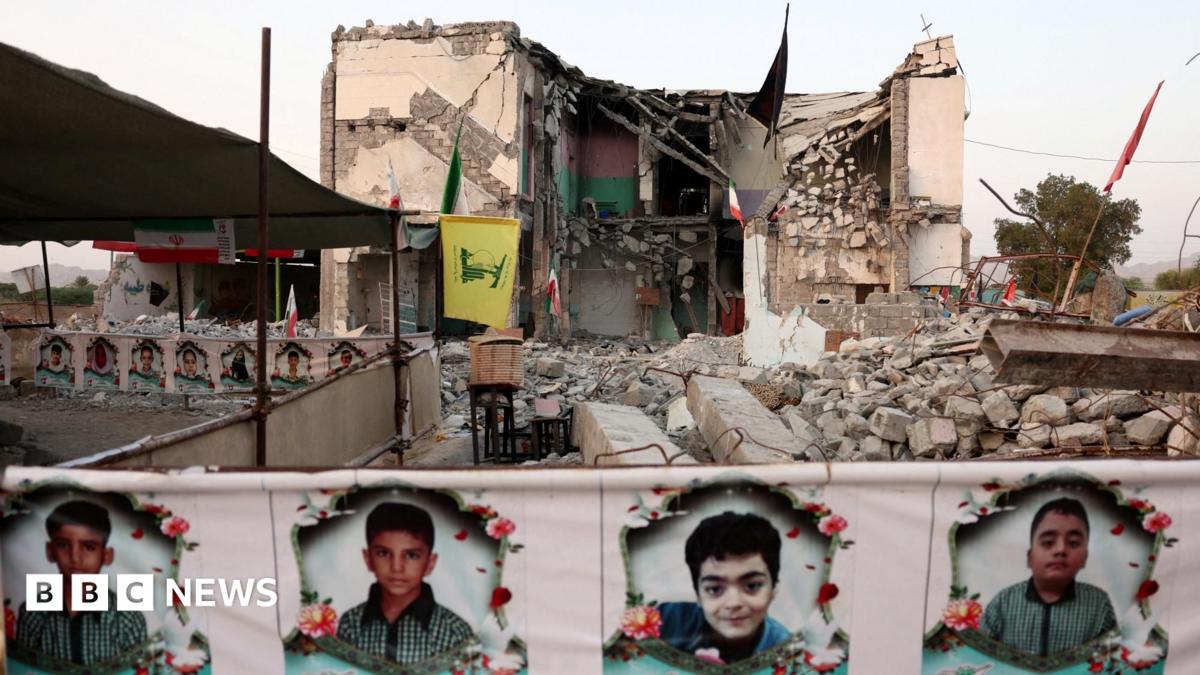
United Nations human rights investigators have determined there are reasonable grounds to believe the United States military committed war crimes during operations in Iran earlier this year. The findings center on two February bombardments that destroyed civilian infrastructure and claimed the lives of at least 177 non-combatants.
According to a formal report submitted to the UN Human Rights Council by the Independent International Fact-Finding Mission on Iran, the strikes involved unlawful, indiscriminate assaults against clearly identifiable civilian structures. The panel emphasized that these operations resulted in substantial loss of life, severe trauma, and widespread physical destruction.
The three independent experts warned that the general population across Iran finds itself caught in an increasingly catastrophic vise. The mission noted that ordinary citizens are enduring grave human rights abuses and state-sponsored violence from their own authorities while simultaneously suffering the devastating effects of the military confrontation involving the United States and Israel.
The deadliest incident detailed by the investigators occurred on February 28, the opening day of the broader military campaign. Tomahawk cruise missiles struck the Shajareh Tayyebeh Primary School located in the southern municipality of Minab. Local administrative officials reported that the bombardment killed at least 156 individuals, including 120 school children.
While the educational facility sat adjacent to an Islamic Revolutionary Guard Corps naval compound that was targeted during the same operation, the UN panel established that the school was plainly recognizable and showed no indication of being utilized for military activities.
Investigators concluded that the primary school was the deliberate point of impact rather than the victim of an off-target missile or collateral fallout from the adjacent naval base. Survivors recounted that the school was hit on two separate occasions, reinforcing the assessment that the building itself was directly targeted.
The UN mission pointed to the exclusive possession of Tomahawk cruise missiles by the United States among the belligerents, alongside journalistic accounts citing a preliminary American internal inquiry, as foundational evidence linking US forces to the Minab strike.
The United States military has not publicly released its formal findings regarding the school attack. However, US Defense Secretary Pete Hegseth has previously maintained that American armed forces adhere to strict protocols and would never deliberately aim at civilian installations.
On the same date, a second fatal strike occurred in the town of Lamerd, where advanced Precision Strike Missiles released clouds of tungsten shrapnel across a residential district and a local sports complex. The incident resulted in the deaths of at least 21 civilians, including seven children.
Similar to the educational site in Minab, the sports center was clearly identifiable as a community facility and showed no signs of hosting military assets or personnel. Because the United States is the sole combatant in the conflict equipped with Precision Strike Missiles, the UN panel concluded there were solid grounds to hold American forces responsible.
The Pentagon has consistently rejected responsibility for the casualties in Lamerd, asserting that US forces conducted no combat missions in the town that day and challenging technical assessments that identified the munitions as American-made PrSM ordnance.
In both cases, the UN experts asserted that the military actions met the legal threshold for war crimes under international humanitarian law, specifically identifying them as indiscriminate attacks launched with foreseeable civilian casualties and destruction of non-military objects.
Beyond foreign military actions, the fact-finding mission’s report delivered an extensive condemnation of the Iranian government's domestic security apparatus. The panel found that state authorities committed crimes against humanity during their suppression of nationwide demonstrations between December 2025 and January 2026.
The findings outlined an unprecedented wave of state violence that spanned all 31 of Iran’s provinces. Investigators documented extensive use of lethal force by security forces, leading to mass fatalities, widespread injuries, and thousands of arbitrary detentions aimed at crushing anti-government dissent.
Testimonies gathered from eyewitnesses, medical personnel, and relatives of victims described security personnel taking up positions on rooftops and elevated structures to discharge assault rifles directly into crowds of demonstrators, inflicting catastrophic injuries.
Tehran has historically dismissed international reports alleging systematic human rights violations by its forces and offered no immediate formal response to the newly issued findings. The UN fact-finding mission reiterated that the Iranian public remains severely vulnerable to both domestic state terror and external military violence.










Comments (0)