 lukman-hakim
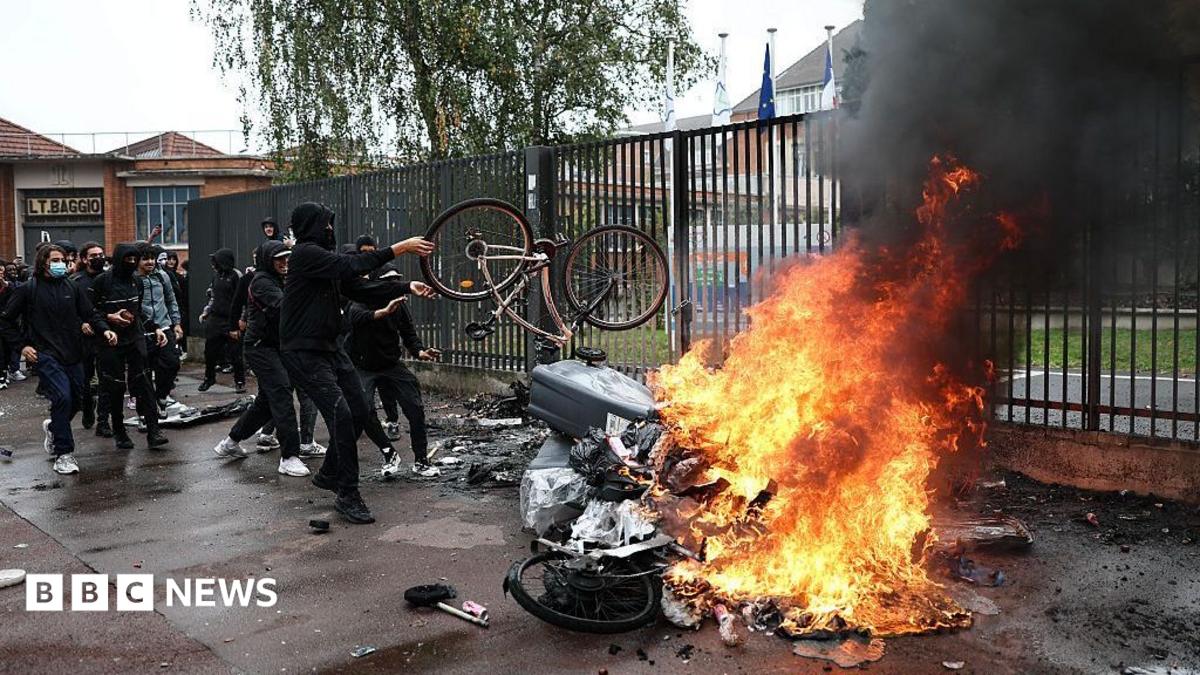
French authorities detained more than 400 people, the majority of them minors, on Tuesday as student demonstrations at high schools intensified across the country, according to Interior Minister Laurent Nuñez. The mass detentions mark a significant escalation in a protest movement that has spread from the Paris region to schools nationwide, driven by long-simmering frustrations over overcrowded classrooms and a shortage of teachers.
The protests, which began last week in the Île-de-France region surrounding the capital, have seen teenagers blockade their schools for consecutive days. On Tuesday, the movement reached a new peak, with the education ministry reporting that at least 400 schools were affected by the disruptions. Students erected barricades, set bins alight, and damaged bus stops at various locations, according to pictures and videos circulating from the scene.
"We're here to deliver a message," a 16-year-old female student told the AFP news agency. "We're not here to smash everything up for no reason. We're here precisely to say that the education system is completely broken. There are 34 of us in each class, and it's just not feasible. The teachers are overworked." Her words capture the core grievance animating the movement: a perception that years of underinvestment have pushed France's public education system to a breaking point.
Interior Minister Nuñez told BFMTV that 440 people had been detained as of Tuesday, though he cautioned that authorities did not yet have a final tally. "We don't have the final tally yet, but I'm told two thirds led to police custody," he said, indicating that a substantial number of those held could face formal legal proceedings. The scale of the detentions underscores the government's determination to restore order, even as critics question whether such a heavy-handed response is appropriate for a movement largely composed of teenagers.
The day's unrest came at a cost. Officials said at least 10 teachers and several students were injured during Tuesday's protests, along with 48 law enforcement officers. The injuries on both sides highlight the volatile atmosphere that has developed as blockades have hardened and police have moved in to clear them. French media reported that protesters hurled projectiles at police, who responded with batons and tear gas.
The confrontations have drawn sharp criticism from student representatives and some politicians. Ryad Rani, president of Union Syndicale Lycéenne, which represents students, accused the French government of "repression" and claimed police had used excessive force against demonstrators. When pressed on the police response, which has been criticised by several French politicians across the spectrum, Interior Minister Nuñez insisted it had been "carried out in an extremely proportionate manner."
The government's messaging has sought to balance an acknowledgement of the right to protest with a firm condemnation of violence. Taking to X, French Education Minister Édouard Geffray said students have the right to demonstrate, but he described reports of violence as "indefensible." Writing on social media on Tuesday evening, he added: "The right to demonstrate is a fundamental freedom that cannot serve as an excuse for such actions." He warned that legitimising such behaviour or calling for extended blockades would "endanger our students as well as public employees. It is irresponsible."
The tensions had been building for days. On Monday, Prime Minister Sébastien Lecornu warned that any escalation in the student protests would be "irresponsible," following the arrest of 164 people the previous day. Lecornu cited reported incidents at protests in a post on X, saying: "Fireworks, fires, violence near high schools: nothing justifies endangering students, staff, or police officers." His intervention signalled that the government was closely monitoring the situation and prepared to take a harder line if disruptions continued.
The student demonstrations on Tuesday coincided with nationwide walkouts by unions representing teachers, hospital staff, and civil servants. These separate protests targeted issues including low wages and deteriorating working conditions across France's public sector. Nuñez said these broader protests, with at least 200,000 participants reported, mostly went ahead without incident, suggesting that the violence was concentrated around the high school blockades rather than the union-led marches.
The overlap between the student movement and the wider public sector strikes reflects a broader climate of social discontent in France. Teachers' unions have long argued that pay has failed to keep pace with inflation and that staffing shortages have left classrooms overcrowded. The students' complaints about class sizes and overworked teachers dovetail with these union grievances, creating a potentially powerful coalition of dissent that spans generations.
The movement at French lycées, equivalent to sixth form in the UK or high school in the US, began last week in the Île-de-France region around Paris. It has since spread to other parts of the country, with students organising blockades through social media and word of mouth. The decentralised nature of the protests has made them difficult for authorities to contain or negotiate with, as there is no single leadership to engage in dialogue.
The decision to detain hundreds of young people is likely to remain politically contentious. While the government frames the detentions as a necessary response to violence and disruption, critics argue that arresting minors en masse risks criminalising a generation of young people for expressing legitimate concerns about their education. The coming days will test whether the government's firm stance quells the movement or, as some observers fear, inflames it further.
For now, the standoff shows no signs of abating. With teachers and civil servants also mobilising, the French government faces the prospect of managing multiple fronts of social unrest simultaneously. How it handles the student protests — whether through dialogue, concessions, or continued force — could shape the trajectory of a broader wave of discontent across the country's public services.
The education ministry has not indicated whether it plans to address the students' specific demands. The protesters, meanwhile, have shown little inclination to back down, with calls circulating on social media for further blockades in the days ahead. The question now is whether Tuesday's mass detentions will serve as a deterrent or a rallying cry.






Comments (0)