 lukman-hakim
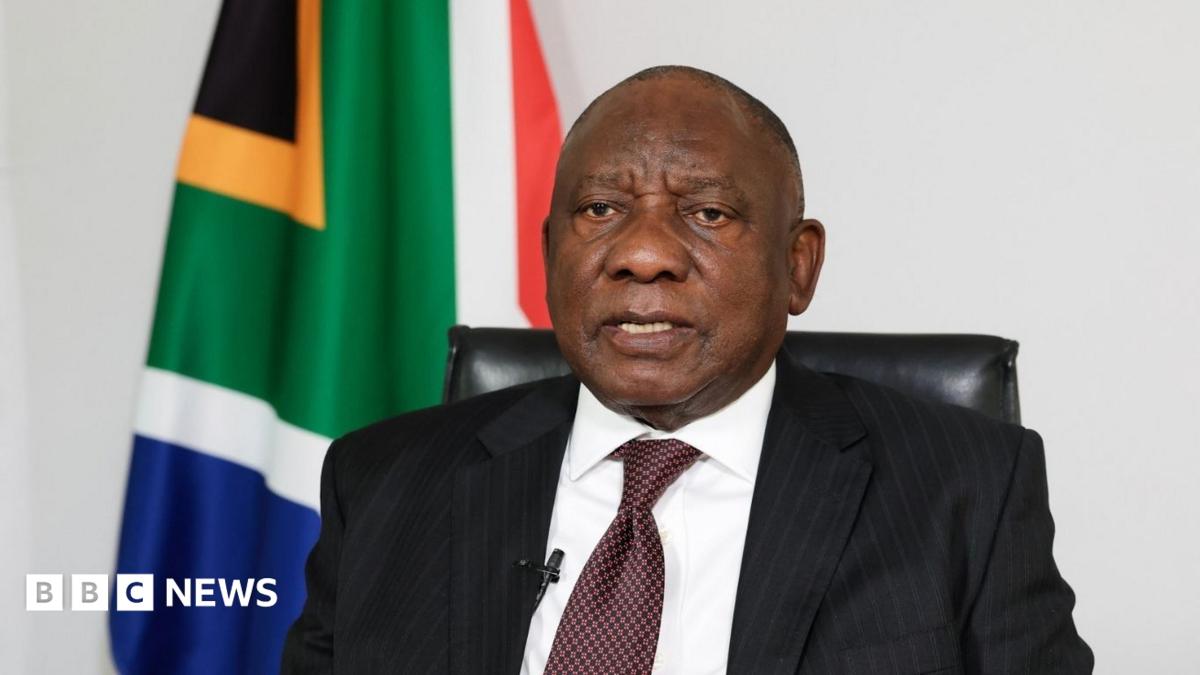
South African President Cyril Ramaphosa said on Tuesday that the government would begin identifying and cleaning up high-risk areas across the country after the bodies of 12 women were found in a single district east of Johannesburg over a two-month period. The discoveries have triggered an angry national debate about the scale of violence against women, in a country the president himself acknowledges has "one of the highest rates of gender-based violence in the world."
Speaking in an address to the nation, Ramaphosa announced a clean-up of what officials describe as high-risk locations, together with what he called a multidisciplinary, national-level emergency response to the murders. Police have so far made four arrests in connection with the killings, but no charges have been detailed in the immediate coverage of the announcement, and the investigation remains at an early stage.
The case has grown from a localised horror into a national symbol. Reporting has documented grim successive discoveries of murdered women in the same area, a missing person's poster displayed near one woman's home, and street protests in which demonstrators have held up anti-abuse placards. The clustering of the bodies in one place has produced widespread fear that the killings could be the work of a single, serial offender — a possibility that would make the case even more alarming, but which investigators have not been able to confirm.
"There has understandably been widespread fear that the discovery of these women in close proximity could indicate the work of a single perpetrator," Ramaphosa said. "At present, the police have not found evidence establishing that these killings were committed by a single perpetrator." The president's framing of that gap — between public expectation and established fact — is significant: it suggests investigators are treating the case as a series connected by geography and vulnerability rather than, on present evidence, by one suspect.
The announcement amounted to an admission of failure by the government. Ramaphosa conceded that the country has "not done enough" to protect women and girls, and he said gender-based violence "cannot be accepted as a normal part of life in South Africa." That framing matters because it locates the problem not only in individual criminals but in the state's own preventive record — an acknowledgement that earlier efforts have failed to stem the killing of women.
At the centre of the new measures is a sweeping instruction to local government. "Every municipality must begin a women's safety audit without delay," Ramaphosa said, adding that "high-risk areas must be identified" and then addressed. The audits are expected to catalogue the physical conditions that create openings for violence: broken streetlights, overgrown public spaces, abandoned buildings, unsafe transport routes and facilities, and poorly secured parks. "These audits must identify broken streetlights, overgrown public spaces, abandoned buildings, unsafe transport routes and facilities, poorly secured parks, and other conditions that place women at risk."
The list is a significant shift in emphasis. Rather than relying primarily on additional police capacity or tougher sentencing, the audits focus on the physical environment — lighting, sightlines, neglected buildings and the safety of the journeys women make at night. It is an approach that treats the setting of crime as a cause in its own right, and one whose success will depend almost entirely on whether cash-strapped municipal administrations can carry out the work once the audits are complete.
Ramaphosa also announced an "enforcement package" aimed at reducing alcohol-related violence, a measure that follows months of campaigning by women's groups for restrictions on the sale of alcohol. He was careful, however, to avoid suggesting that alcohol excuses the violence. "Alcohol does not cause gender-based violence and it can never excuse it. Responsibility always lies with the perpetrator," he said. "But harmful alcohol use is a significant aggravating factor in interpersonal violence, and it must be addressed as part of our wider prevention effort."
Beyond enforcement and legislation, the president argued that the deeper change has to be cultural. Saying the problem of violence against women "does not begin when a fist is raised" or when a woman is raped or murdered, he said: "It begins much earlier... It begins in attitudes that regard women as inferior… with the belief that a man has the right to control a woman. It begins when jealousy is mistaken for love, when control is mistaken for protection and coercion is mistaken for affection. It begins when a man refuses to accept the word no."
He then made an explicit appeal to men and boys to take the lead in ending gender-based violence, adding: "We have placed the burden of male violence on women. That must change. The solution to violence against women cannot be to make women less free." The last line is a pointed rebuke to arguments, popular in some quarters, that women should be restricted or protected by limiting their freedom in the name of safety.
The scale of the underlying problem is illustrated by South Africa's crime statistics. The country has one of the highest homicide rates in the world, with 5,427 people murdered between April and June this year alone. Those official figures do not break victims down by gender, a gap that complicates any assessment of the government's response.
That data gap is why figures from the South African Human Rights Commission have become central to the argument. The commission said recently that 569 women were killed and 1,052 others survived attempted murder between April and June this year — a grim quarterly tally that, even on its own, would represent a national emergency.
The coming weeks will determine whether Tuesday's announcement amounts to a turning point or another promise. The measures themselves are concrete and testable: four arrests, a national emergency response, municipal safety audits and an alcohol enforcement package. Whether the 12 women found east of Johannesburg can be given a measure of justice may ultimately depend on those institutional commitments being sustained after the cameras move away.







Comments (0)