 lukman-hakim
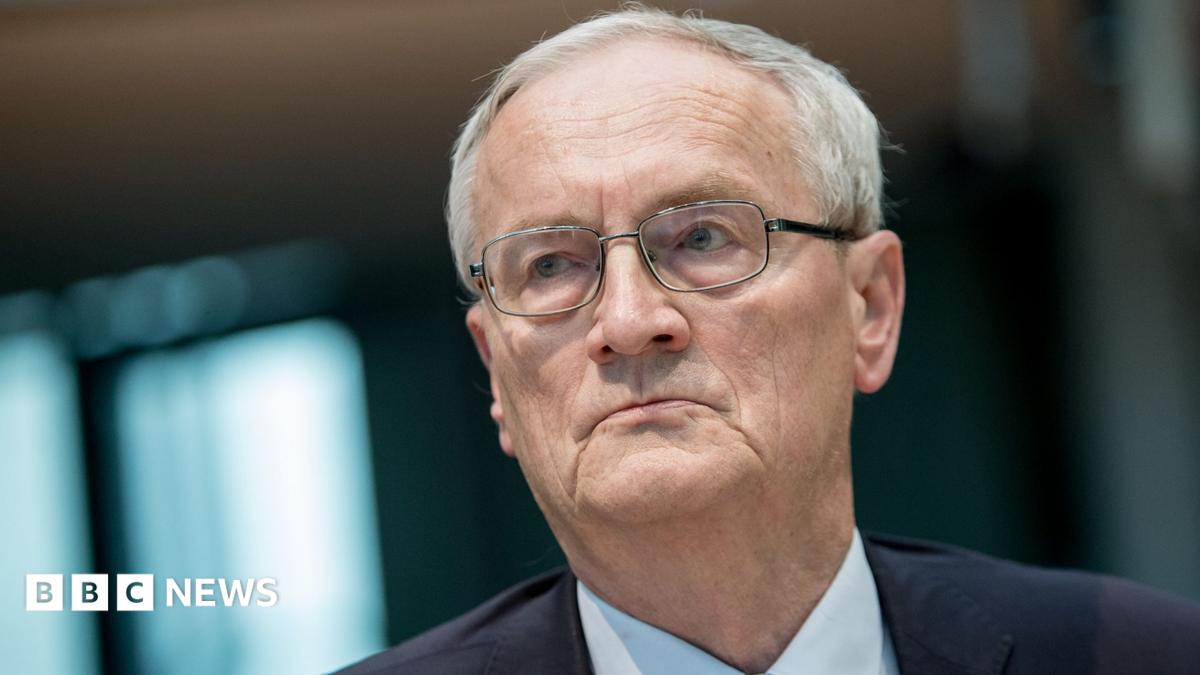
August Hanning, who led Germany's Federal Intelligence Service (BND) from 1998 to 2005, has been arrested on suspicion of espionage, treason, and obtaining classified information on behalf of a foreign power, according to the German Federal Prosecutor's Office. The arrest represents one of the most serious security breaches involving a former head of the country's foreign intelligence agency, raising uncomfortable questions about oversight, vetting, and the long shadow cast by senior intelligence officials after they leave public service.
Agents detained Hanning at his home in Nordwalde, a town near Münster in western Germany, according to local media reports. The operation was coordinated with the arrest of a second suspect, identified only as Manfred D under German privacy conventions, who was taken into custody in Bavaria. Hanning is scheduled to appear in court on Wednesday, while Manfred D was due before a judge on Tuesday. The two men were not arrested in the same region, suggesting investigators moved simultaneously to prevent either from alerting the other.
Prosecutors allege that Hanning drew on classified intelligence to prepare an analysis for an officer of one foreign intelligence service, and that he also maintained a close, years-long relationship with a representative of a second foreign spy agency. Investigators have not identified which foreign powers are alleged to have received information, leaving open the question of whether the case involves adversarial states, allied services, or a combination of both. That silence is likely deliberate: confirming the identity of a recipient could expose sources, damage diplomatic relations, or reveal the scope of an ongoing investigation.
Central to the case is Manfred D, a former BND employee who prosecutors say passed roughly 2,000 classified documents to Hanning in exchange for money. Manfred D served as Hanning's bureau chief and remained inside the BND until this year, giving him sustained access to sensitive material. The Federal Prosecutor's Office states that between 2012 and 2026 he also served as chief of staff for Hanning's successors, a position that placed him at the heart of the agency's leadership structure for more than a decade. He now faces charges of aiding and abetting attempted treason and treasonous espionage.
According to prosecutors, Manfred D exploited his role to obtain highly confidential information and then funneled documents to Hanning. Many of those documents, the office says, contained classified material intended exclusively for internal BND use. The sheer volume of material — approximately 2,000 documents over a period of years — suggests a sustained and systematic leak rather than an isolated lapse in judgment. Investigators believe Hanning paid Manfred D for the material, an arrangement that, if proven, would establish a financial motive running alongside any ideological or personal sympathies.
In one alleged instance, Hanning used classified intelligence to draft an analysis for an officer of a foreign intelligence service. Prosecutors noted that it remains unclear whether the material actually reached the intended recipient, a detail that could prove significant at trial. It also hints at the logistical complexities of espionage cases: intent, transmission, and receipt are distinct legal elements, and a failed handoff may affect the severity of charges.
The investigation reportedly began to take shape through an unrelated matter. Local media say Hanning's alleged possession of intelligence documents surfaced during a separate case involving Christina Block, a German steakhouse heiress. Hamburg prosecutors accused Block of orchestrating the kidnapping of her two youngest children in 2023 amid a custody dispute. Investigators allege Hanning was involved in an earlier attempted kidnapping of the same children, a claim he denies. During that inquiry, state criminal police officers reportedly discovered an electronic storage device containing sensitive material, including recent BND documents. What began as a custody-related investigation thus expanded into a national security case reaching the highest levels of Germany's intelligence establishment.
The case is not the first time the BND has confronted allegations of betrayal from within. In 2023, a high-ranking German intelligence officer was charged with treason for allegedly passing state secrets to Russia. Prosecutors accused Carsten L of sharing intelligence about the war in Ukraine and the Wagner mercenary group and of receiving roughly €400,000, equivalent to about $450,000 or £340,000. His trial is ongoing. The parallel is uncomfortable for the agency: two significant espionage cases in quick succession raise the question of whether the BND's internal controls are adequate.
For Germany, the political implications are considerable. Hanning was a prominent figure in German security circles long after leaving the BND, working as a private consultant. That transition from public service to private advisory work is common among former senior officials, but it also creates opportunities for foreign intelligence services to maintain or re-establish contact. If the allegations are substantiated, the case could intensify debate in Berlin over post-employment restrictions, security clearance reviews, and the monitoring of former intelligence officials who retain sensitive knowledge.
The arrest also carries reputational weight for Germany's intelligence community and its allies. Foreign partners share information with the BND on the assumption that it will be protected. A leak allegedly originating with a former BND president and involving a long-serving bureau chief could prompt allied agencies to reassess what they share and with whom. Trust between intelligence services is difficult to rebuild once broken, and the damage may extend well beyond the specific documents described in the charges.
Details of the investigation remain limited, and both suspects are presumed innocent until proven otherwise. Prosecutors have disclosed only the broad outlines of their case, and the identities of the foreign services allegedly involved have not been made public. Further hearings are expected to clarify the timeline, the nature of the classified material, and the evidence supporting the allegations. For now, the case stands as a striking reminder that the greatest vulnerabilities in intelligence work are sometimes not technological but human.







Comments (0)