 lukman-hakim
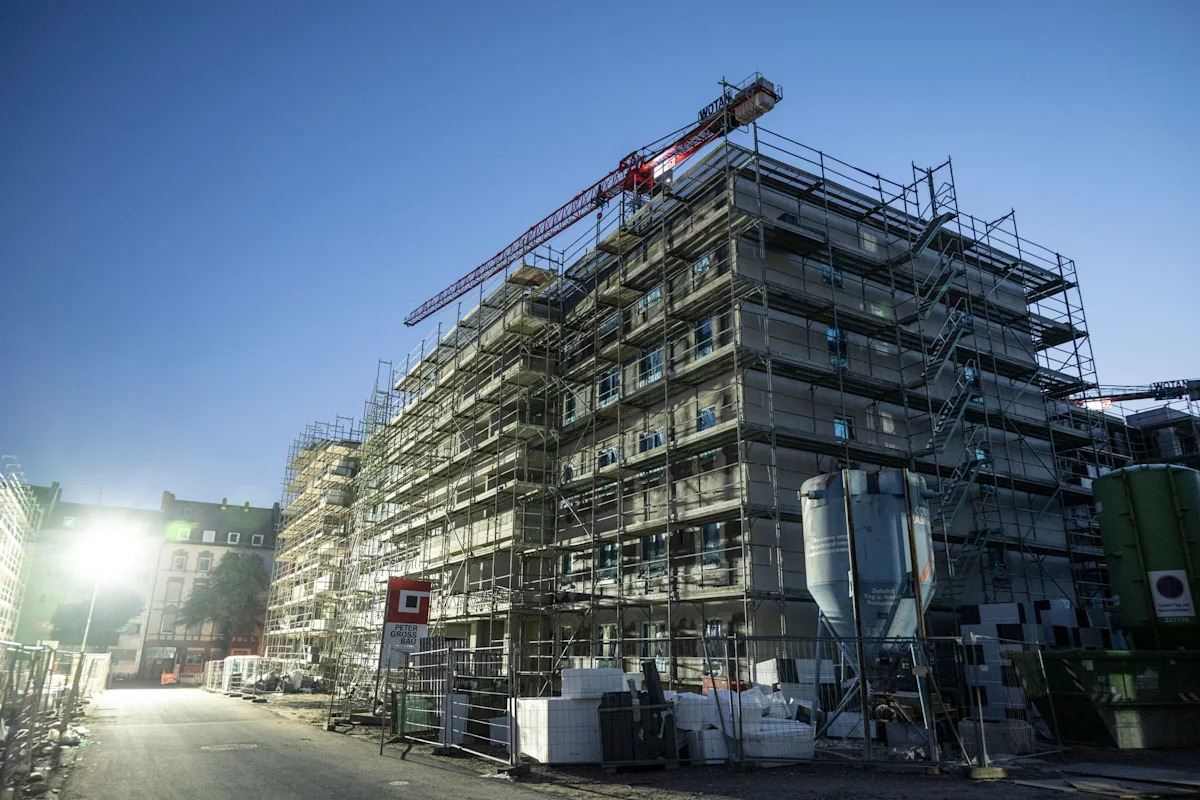
Germany's deep downturn in homebuilding has taken a measurable toll on Europe's largest economy, according to new research published Wednesday, which estimates that roughly 84,600 fewer apartments and houses were completed in 2025 than in 2023.
The analysis, known as the Construction Monitor 2026, was prepared by the Pestel Institute for the Federal Association of German Building Materials Retailers. It calculates that the construction industry lost out on approximately €26.9 billion ($31.4 billion) in revenue across the two-year period, dragging national economic output down by 0.6 percentage points. Tax receipts also suffered, falling short by an estimated €7 billion.
To arrive at these figures, the institute measured actual activity against a scenario of stable construction levels, asking what output would have looked like had Germany completed around 300,000 homes in 2025, consistent with earlier years. Official statistics show just 206,600 dwellings were finished last year.
The study underscores a broader structural deficit: Germany is short about 1.35 million homes, a gap the institute had previously quantified earlier this year for the Social Living Alliance. The shortage is unevenly distributed, with North Rhine-Westphalia lacking at least 364,000 dwellings, Bavaria 220,000, Baden-Württemberg 201,000, Berlin more than 58,000 and Hamburg around 23,000.
Beyond the headline economic losses, researchers warn the crisis is acting as a drag on the labor market. In prosperous regions where affordable homes are scarce, employers struggle to attract workers because newcomers cannot find suitable places to live. Matthias Günther, who leads the Pestel Institute, argued that robust economic growth simply cannot happen without a functioning residential construction sector, adding that workers will not relocate for jobs when they cannot afford housing at their destination — a dynamic he said was suppressing growth and prosperity.
There are some tentative signs of recovery. Figures from the Federal Statistical Office show building permits rose 15.1% year-on-year in the first half of 2026, reaching 126,300 units. Industry representatives, however, remain unconvinced a turnaround is underway. Katharina Metzger, president of the building materials retailers' association, described the state of residential building as catastrophic and forecast that only 185,000 new homes would be constructed in 2026.
Metzger also criticized the federal government's plans to trim €1.4 billion from housing construction support, which would leave just €2 billion in funding available in 2027. Rather than cutting back, she called for dependable, sustained financing and urged swift adoption of the proposed Type E simplified construction standard, under which apartment blocks of up to 12 units could proceed without individual planning permission provided they conform to the local development plan.








Comments (0)