 nadia-rahmawati
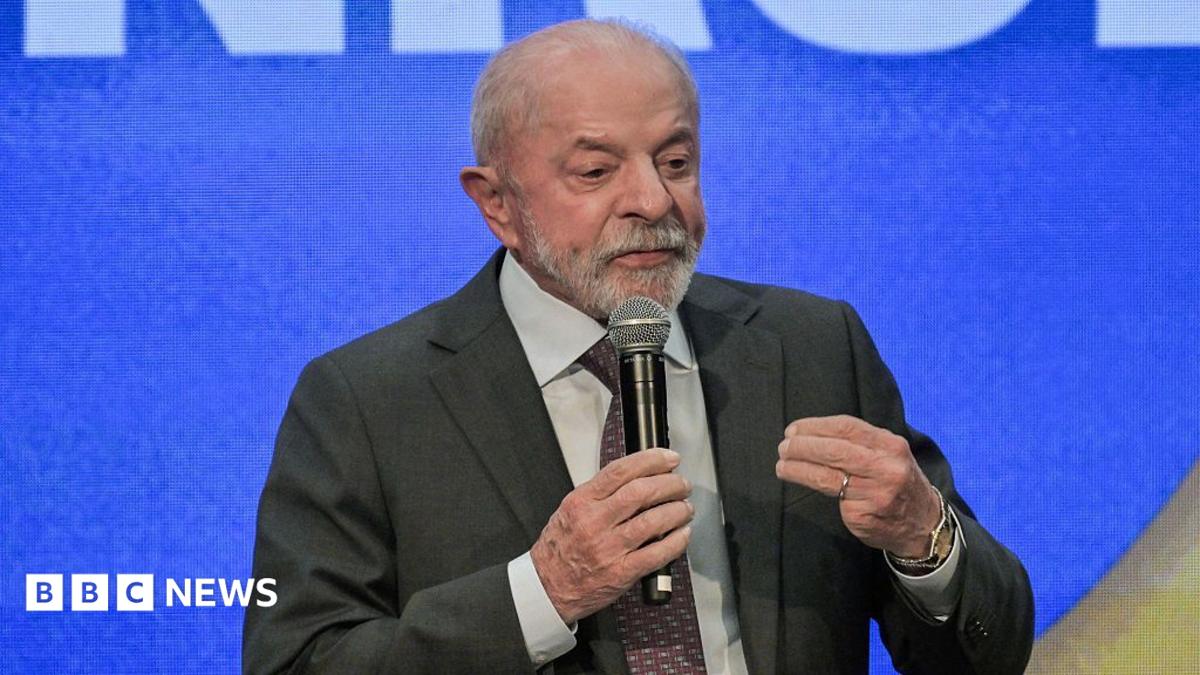
Brazilian President Luiz Inácio Lula da Silva has signed a provisional order banning online gambling, delivering a sweeping crackdown on a fast-expanding industry barely a week before Brazilians go to the polls. The left-wing leader, 80 years old and seeking a fourth term, signed the measure on Friday prohibiting all sports betting and online casinos.
The timing is politically charged. Lula's announcement comes just over a week before the first round of Brazil's presidential election, in which recent polling has him almost neck-and-neck with Flávio Bolsonaro, the son of the incarcerated former president Jair Bolsonaro. The two men have sparred throughout the campaign, and the gambling ban lands as a test of who can better position himself as a defender of household finances in a country where the betting boom has become a lightning rod for public anxiety.
Online gambling was legalised in Brazil in 2018, and in the years since it has grown explosively, drawing widespread criticism for driving household income losses through addiction. Lula framed the decision in stark medical terms, describing the industry as a "cancer" and warning that "either we remove the tumour, or it kills us". The president said he had heard from families who had sold everything they owned because of a member's gambling compulsion.
In a statement posted on X, Lula said there were "no restrictions" on the industry, particularly in preventing children and teenagers from accessing online betting. He added: "We won't allow betting companies to profit at the expense of Brazilian families' income and lives." Earlier in the week, addressing the UN General Assembly, Lula accused the industry of "transforming addiction into profit" — a theme that will likely echo through his campaign speeches in the final days before voting.
The order also lands on a government that has been unusually direct in assigning blame. Lula acknowledged that online betting was permitted under the administration of former President Michel Temer, but argued that it had expanded "without regulation under Bolsonaro's management". That framing sets up a direct contrast with his rival, whose family administration is intimately associated with the industry's unchecked growth.
Separately, Lula signed a bill establishing criminal offences connected to fixed-odds betting, the most common form of online sports wagering. Taken together, the two actions suggest a comprehensive strategy — shuttering the legal market while simultaneously criminalising parts of it — rather than a narrow tweak to licensing rules.
Practical details of the ban include a wind-down period: punters and bookmakers have until 5 October to withdraw any existing funds from online betting accounts, and new deposits have already been barred. Crucially, the measures must still receive approval from Congress within 120 days to remain in force. That requirement hands the opposition and congressional blocs leverage, and means the ban could be diluted, delayed or reversed during a period in which the presidential campaign will dominate the political agenda.
Public opinion appears to be on Lula's side. A survey published this week by Atlas and Bloomberg found that 59.9% of Brazilian adults support banning internet betting — a striking level of consensus for a measure that critics argue could damage a sector worth tens of billions of reais.
The financial stakes are substantial. Broadcaster Globo reports that the main clubs were paid 1.1bn Brazilian reais ($212m; £160m) by sports betting firms in 2025, while the industry as a whole took in 62.5bn reais in the same period. Football has therefore become financially dependent on betting money, and the prospect of sponsorships being withdrawn has prompted strong resistance from the sport.
Grêmio, one of the so-called "big twelve" Brazilian clubs, had warned before the announcement that sports betting firms had become "one of the main sources of revenue for sports" since the sector was made legal. The club said a change in the law "will not only be an open door for illegal betting, but a fatal blow to Brazilian football, leading many clubs to insolvency". Other teams have made similar warnings about losing income as betting companies withdraw their backing.
The industry group most directly affected is the Brazilian Institute for Responsible Gaming (IBJR), a trade body representing around 75% of the domestic betting sector. It said a total ban on fixed-odds betting jeopardised the industry as a whole and put 58bn to 73bn reais in revenue at risk. The IBJR also argued that the ban does not remove the underlying demand: "The ban also doesn't eliminate existing demand," it said, warning that punters turning to illicit operators would lose "access to protection mechanisms provided in the regulated environment". It urged the federal government to strengthen betting regulations instead of outlawing online and fixed-odds betting entirely.
It is worth remembering how unusual Brazil's position is. Most forms of gambling, including casinos and slot machines, remain illegal in the country. It was the legalisation of online betting in 2018 that opened the door to the boom, turning a prohibited activity into a mass-market industry within a single decade.
With election day imminent, several questions remain open: whether Congress will approve the order within the 120-day window, whether the wind-down deadline of 5 October holds, and whether a surge in illegal betting follows. For now, Lula has placed a bet of his own — one that polls suggest most Brazilian adults are willing to back.





Comments (0)