 lukman-hakim
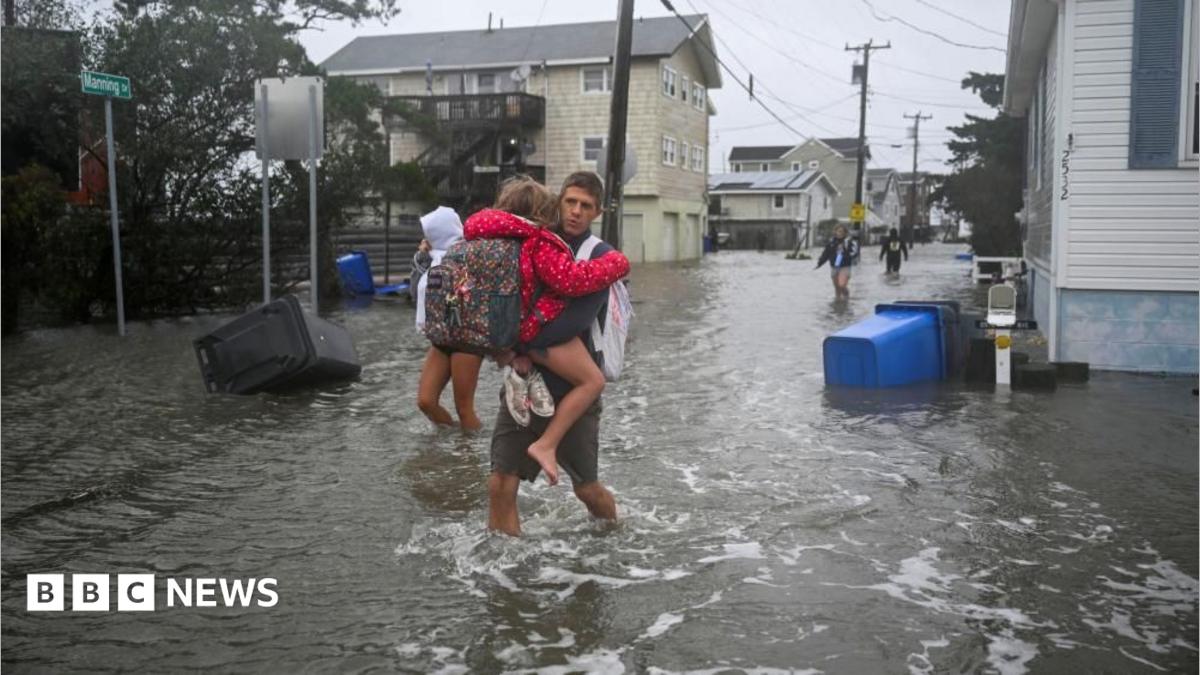
Tens of millions of people across the north-eastern United States are in the path of a powerful autumn storm that has already battered coastal communities with flooding, knocked out electricity and forced the cancellation of flights, sporting fixtures and major music events. Forecasters warned on Saturday that the worst of the weather was still to come, with the system peaking overnight and continuing into Sunday.
The storm is a so-called nor'easter — a weather set-up in which winds blow from the north-east across the north Atlantic and pile seawater and storm energy against the eastern seaboard of the United States. Such storms, which occur most often between October and March, are named not by an official meteorological body but by a decades-old convention among forecasters and coastal residents, after the persistent north-easterly winds they generate. They typically bring a combination of heavy rain or snow, strong gusts, rough seas and, crucially, storm surge — a rise in sea level driven by wind and falling pressure that pushes water ashore on top of the ordinary tides.
The US National Weather Service said the storm would peak on Saturday and would bring "dangerous coastal flooding and beach conditions, strong winds, and heavy rainfall" to a wide swathe of territory, including New York City and Boston. Rain and strong winds were forecast from Virginia all the way to Maine, a span of more than 500 miles. The service urged residents in low-lying areas near the shore to prepare immediately for significant inundation, warning that roads could run underwater and that homes and businesses could be affected. Beach-goers were advised to stay out of the water entirely, where conditions were expected to be life-threatening.
States of emergency have been declared in both New York and New Jersey, the latter already suffering a coastal deluge in some areas. New Jersey Governor Mikie Sherrill urged people in the state to take the storm seriously, stay alert and follow local guidance from officials. By Saturday afternoon, streets and homes in the coastal New Jersey communities of Surf City and Manasquan were under water, residents paddling through submerged roads on kayaks and wading with children on surfboards.
One of the factors making this particular storm so destructive is the timing of Saturday's full moon. A full moon raises the height of the astronomical tide, and when that higher-than-normal water level coincides with a storm surge driven by onshore winds, the two effects compound. The result is inundation well above what a given storm would otherwise produce, pushing water into streets and dunes that residents might expect to stay dry. The coincidence has left forecasters and coastal emergency managers bracing for the highest water levels of the weekend around the time of high tides late Saturday and again on Sunday.
The storm is also causing widespread power outages. Nearly 150,000 households have lost electricity, according to the poweroutage.us tracking service, with downed lines and trees reported across the affected states. Utility companies in the region are typically overwhelmed during nor'easters by a combination of felled trees, saltwater intrusion and equipment failures, meaning restoration can take days rather than hours in the hardest-hit areas.
Travel has been badly disrupted. The Federal Aviation Administration advised passengers to check with their airlines for the latest status of flights, and the data tracker FlightAware recorded more than 1,100 delays and some 400 flights grounded. Boston Logan International Airport displayed a board of cancelled departures as the storm battered the coast. Rail and road services across the region were also expected to run into disruption, with travellers advised to expect cancellations and long delays through the weekend.
In New York, officials warned of wind gusts of up to 55mph (86km/h) throughout the weekend, a speed capable of bringing down trees and branches onto roads, cars and power lines. Mayor Zohran Mamdani urged residents not to travel unless absolutely necessary and issued a blunt warning against driving or walking through floodwater, which can conceal dangerous currents and deep holes even when it appears shallow.
Sporting and entertainment events have fallen casualty to the weather. Ed Sheeran's long-awaited concert at Gillette Stadium in the Boston area was cancelled "for safety reasons", according to the venue, with fans told to await further information. Separately, the Boston Red Sox moved the Sunday afternoon game of their weekend series against the Chicago Cubs forward to next Friday. A professional football match between Red Bull New York and St Louis City SC was also called off, as was the Global Citizen Festival in New York City's Central Park, which had been due to be headlined by Lauryn Hill, Wyclef Jean and John Legend.
Photographs from the coast illustrate the scale of the seas. Waves were seen pounding the shoreline in Scituate, Massachusetts, as the tide came in, while residents elsewhere took to kayaks to move through flooded neighbourhoods. The combination of heavy surf, elevated water levels and persistent onshore winds means the danger will not necessarily recede when the rain stops: the main risk of drowning and erosion often comes from waves breaking over exposed barriers and dunes after the peak of the storm has passed.
Forecasters cautioned that the slow-moving nature of the system means the disruption is likely to extend into Sunday and possibly Monday, particularly along the New England coastline. Residents in coastal zones have been advised to remain where they are until officials give the all-clear, and to continue monitoring local emergency management channels. For the tens of millions in the storm's path, the immediate priority remains shelter, power and a safe journey home — with recovery of flooded homes, businesses and infrastructure certain to take considerably longer than the storm itself.








Comments (0)