 nadia-rahmawati
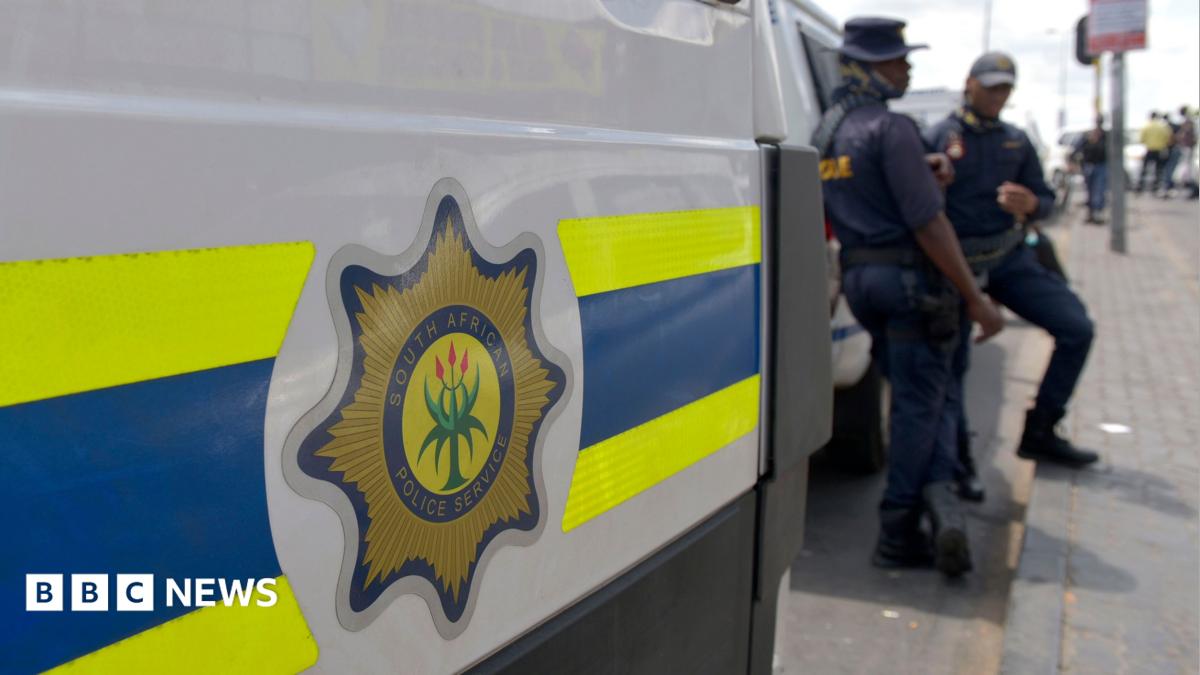
Police in South Africa say they have recovered the body of a woman in a Johannesburg suburb, the tenth in a series of killings that has prompted public outcry and raised urgent questions about violence against women in the country. The body was discovered on Saturday morning at a cemetery in Tembisa, a neighbourhood north-east of central Johannesburg, within the Ekurhuleni metropolitan area.
The woman was identified on Sunday after a friend who had been with her at a bar the previous evening was shown a photograph of the body and recognised the clothes the victim had been wearing. In an interview with the national broadcaster SABC, the friend struggled to contain her emotions as she spoke about the difficulty of breaking the news to her friend's children.
Gauteng Police Commissioner Tommy Mthombeni said it was too early to determine whether the latest death was connected to the others, but he confirmed that detectives had identified meaningful similarities between this killing and previous cases. He said the other bodies shared a "similar victimology" — a pattern in how victims were selected — and a comparable "modus operandi", or method of attack, which gives investigators a basis for testing whether the cases are connected.
Speaking to reporters, Lt Gen Mthombeni said his force could not rule out the possibility that a serial killer was at large, but equally could not assert it as a conclusion. "For now, it's not something which we can overrule to say there's a serial killer, but we cannot conclusively indicate as such," he said, adding that the early stage of the investigation meant links had yet to be established with certainty.
Police said in a statement issued shortly after the body was found that crime scene investigators had attended the site to collect evidence. Officials had not publicly named the victim at the time of publication, and the formal identification process was continuing.
The wider pattern of deaths is what has alarmed residents and campaigners. Most of the bodies in the series were recovered in and around Kempton Park, a neighbourhood immediately adjacent to Tembisa, with the first discoveries reported in July. Many of the victims were young women, and almost all appear to have suffered extreme violence before death. The Commissioner said similarities had also been drawn between the Ekurhuleni cases and a separate killing in Soweto, extending the geographical scope of the inquiry.
The killings have placed fresh pressure on the national government, less than a year after ministers declared gender-based violence a national disaster — a designation intended to unlock additional resources and coordination across a crisis that campaigners say has long been treated as an everyday reality for women in the country.
Official figures underline the broader scale of the problem. Police recorded 5,427 murders across South Africa between April and June this year alone, placing the country among the highest in the world for homicide rates. Those police statistics do not, however, break victims down by gender. The South African Human Rights Commission said last week that 569 women were killed and 1,052 others survived attempted murder over the same three-month period, a disclosure that sharpened criticism of the response to femicide.
Police say the sequence of cases around Johannesburg is what has left many women in the city reeling, rather than the national statistics alone. The clustering of killings in neighbouring neighbourhoods — bodies discovered within a short distance of one another, apparently in comparable circumstances — has created a sense of fear that the death toll may not yet be complete, and that whoever is responsible may still be at large.
The case has also moved into the courts. Three men appeared earlier this week accused of involvement in one of the nine earlier murders, with police working to trace additional suspects who may have been involved. Those proceedings are expected to be a focus of the inquiry, as investigators seek links between suspects, vehicles, DNA and digital evidence.
Investigators face a demanding task. Establishing that unrelated-looking cases share a single author typically requires converging forensic, digital and testimonial evidence, and the passage of time since the first bodies were found in July risks weakening some lines of enquiry. The Commissioner's caution reflects the reality that a pattern can look compelling to the public long before prosecutors can prove it beyond reasonable doubt.
For the family of the woman found in Tembisa, however, the distinctions drawn by investigators are of secondary concern. Her friend said she had been at a bar with her only hours earlier, and described the pain of having to tell the victim's children that their mother would not be coming home.
Attention now turns to two questions: whether forensic and investigative links confirm the Ekurhuleni killings as the work of a single offender, and whether the identification of suspects already in custody opens a path to prosecution. What is already clear, campaigners say, is that the cumulative effect of ten bodies found since July has turned a statistical crisis into a visible one — and left a city asking how many more families may yet face the same news.









Comments (0)