 lukman-hakim
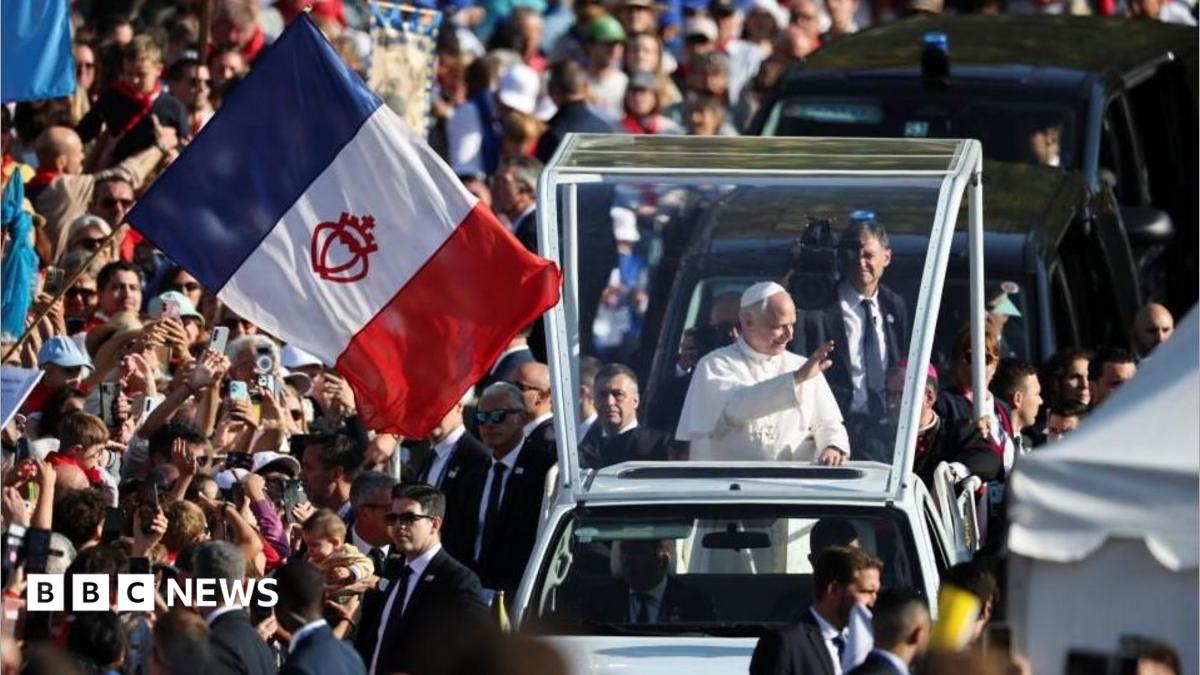
Pope Leo XIV delivered an unusually blunt message to French bishops on the third day of his visit to France, telling them the "scourge" of sexual abuse must be rooted out of the Roman Catholic Church and that its leaders must "maintain the greatest vigilance". The remarks were made during a private meeting at the Sanctuary of Our Holy Lady of Lourdes, the famous shrine in southern France, and came shortly before the pontiff was due to meet abuse survivors in private.
The instruction carried obvious weight because of what French reckoning efforts have documented. A 2021 inquiry concluded that clergy or lay members of the Church had abused about 330,000 people as children in France over a period of roughly seven decades — a figure that frames the issue as a matter of institutional scale, not isolated misconduct, and one that has permanently altered the relationship between the Church and French society.
In his remarks, the Pope acknowledged the work already done, telling the bishops: "You have faced with determination the painful scourge of abuse of minors committed by members of the clergy or within an ecclesial context." The wording is significant in itself. By referring to abuse committed "within an ecclesial context", he widened the frame beyond ordained priests to include lay members of the Church and incidents occurring in church-run settings — the categories that survivors and investigators have argued are most often overlooked.
"It is important to persevere along the path you have begun, maintaining the greatest vigilance," he added, urging the bishops to sustain the momentum of their response rather than treat it as a settled problem. The gathering of senior church leaders was held behind closed doors, but the remarks were later released to reporters, signalling that the substance was primarily addressed to the bishops themselves while the central message was made public.
The Pope said Mass in front of thousands of worshippers at the Meadow of the Shrine of Our Holy Lady of Lourdes, in a large open-air gathering marked by the colours of pilgrims' flags and the wide crowds that characterise major Lourdes pilgrimages. Before that ceremony, he was scheduled to meet survivors of abuse privately later in the day — a sequence that placed the institutional accountability message directly ahead of those who experienced the harm.
That emphasis on accountability followed an extraordinary day of public ceremony in Paris. An estimated 700,000 people flocked to the Place de la Concorde to hear the pontiff speak, and huge crowds cheered and waved as he rode down the Champs-Élysées in an open-topped popemobile, greeting followers along the avenue. The scale of that turnout is striking in a country where regular worshippers are now a small minority, and it complicates any simple narrative of a Church in terminal decline.
Earlier in the week, the Pope also met French President Emmanuel Macron, and on Saturday he celebrated Mass in Paris, where he urged Catholics not to keep their faith to themselves but to "let it overflow so that those you meet may be refreshed". The appeal was less about doctrine than about visibility: a Church that stays inside its own buildings, the argument runs, cannot expect the wider society to notice it.
The Pope also addressed young people directly, describing them as "today's Church". "How beautiful it is to see your enthusiasm, energy and commitment, and the joy you bring to Christian communities," he said, a clear counterpoint to the demographic data that dominates French church life. Regular worshippers have fallen from 35% of the population in 1960 to less than 5% today.
The shortage of clergy is equally stark. The number of priests in France has shrunk by two-thirds, from about 25,000 in 1990 to fewer than 9,000. That contraction has consequences beyond staffing: with fewer priests spread across more parishes, oversight structures thin out, the burden on remaining clergy grows, and the number of people positioned to receive complaints or spot warning signs declines.
Against that backdrop, there are signs of renewed interest in religious tradition. The number of adult baptisms more than doubled in five years, reaching 10,000 in 2025. The numbers remain modest beside the baptisms of the mid-twentieth century, but they point to a Church in France that is smaller and yet, in some quarters, actively attracting new members rather than simply losing them.
The visit is not yet over. Later on Sunday the Pope was due to meet staff and residents at the health facility at Lourdes, before taking part in a torchlight procession in the evening — a programme that again mixes pastoral care and institutional presence, in a town whose medical institutions are run by the Church.
This is the Pope's first official visit to France since he was chosen to lead the Roman Catholic Church in May 2025. Popes have visited France regularly, a country with an avowedly secular modern political history but deep Catholic roots, which makes each visit a delicate exercise in public legitimacy for the papacy.
Analysts note that the immediate test for the Pope's words will be whether they are followed by visible measures — compensation decisions, the opening of archives, stronger independent scrutiny of church-run institutions, and a willingness to accept greater oversight by civil authorities, none of which the pontiff has set out in detail in his remarks so far. France's state has its own investigative processes, and survivor campaigners have long maintained that internal church investigations cannot substitute for independent criminal justice.
For survivors due to meet the Pope privately, the most important part of the Lourdes itinerary may not be the Mass, the crowds or the procession, but whether the commitments made to bishops are matched by anything they can hold the Church to. The "greatest vigilance" language sets a standard; the next four years will show whether it is met.









Comments (0)